Dear friends and family,
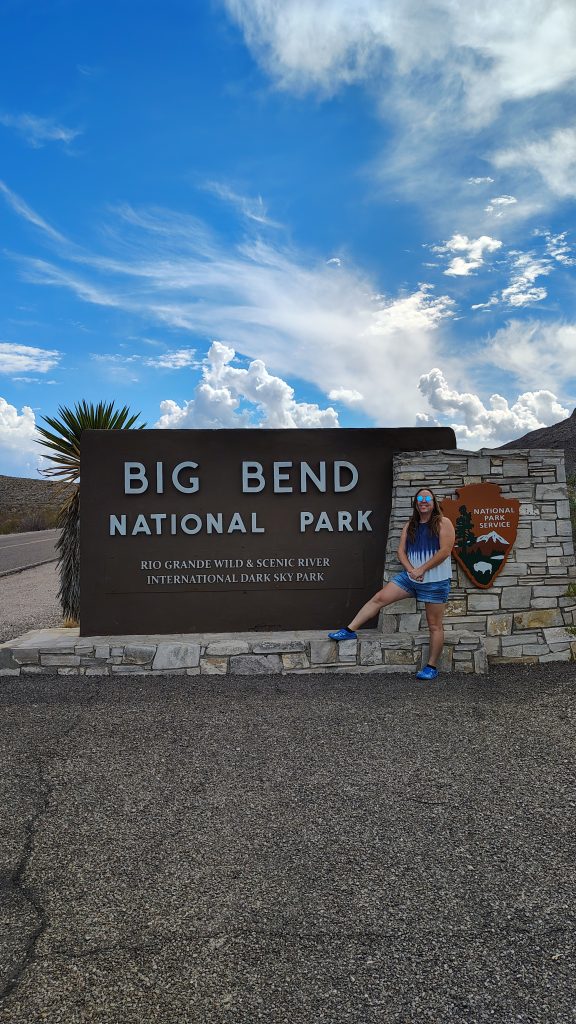
Give ’em the ol’ razzle-dazzle
So I’ve gone on a side trip!
I didn’t originally plan to go to Big Bend National Park on this trip; I’m not that partial to deserts, my tent is not very easy to set up in sand, and the wind-blown dust can be a huge issue in keeping yourself and your stuff clean.
Buuuut,
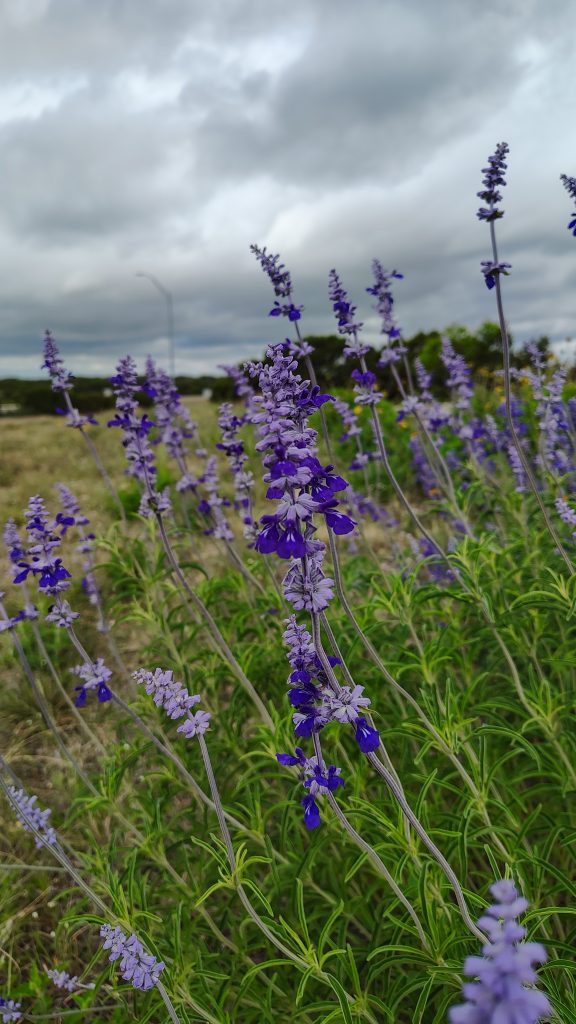
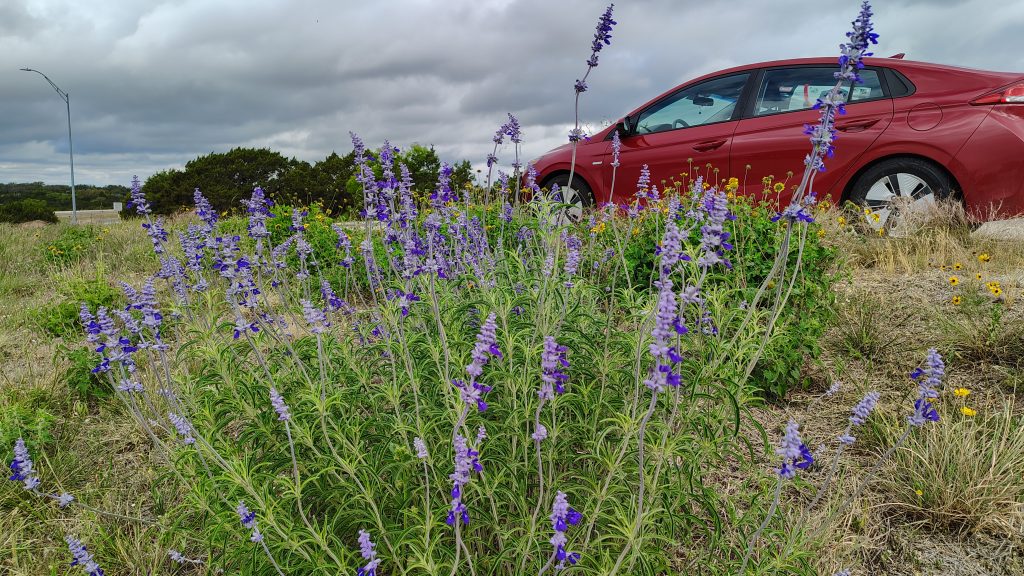
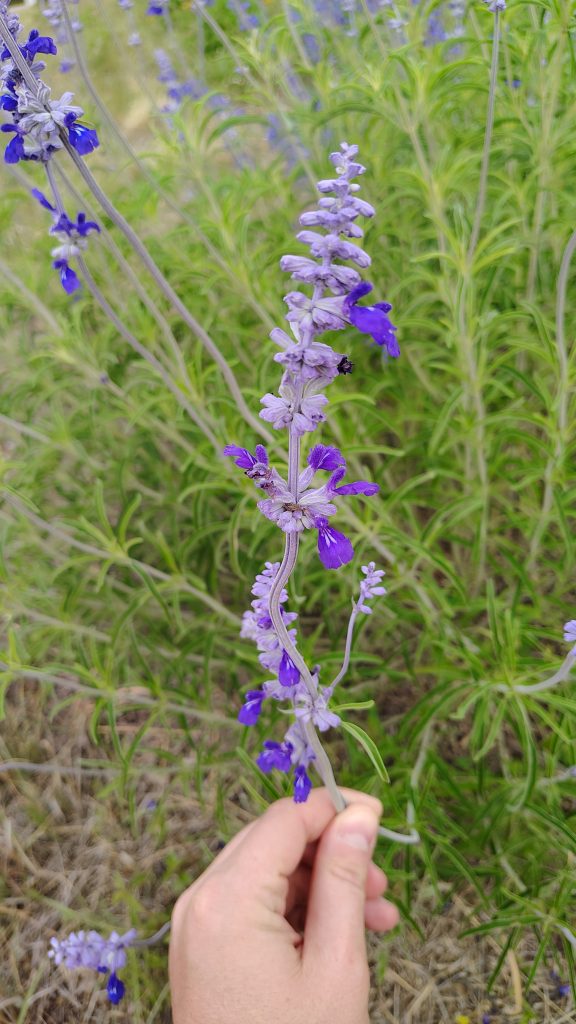
I consulted with some cool purple flowers along I-10 and they all strongly recommended that I go to Big Bend! And boy was I glad I did!
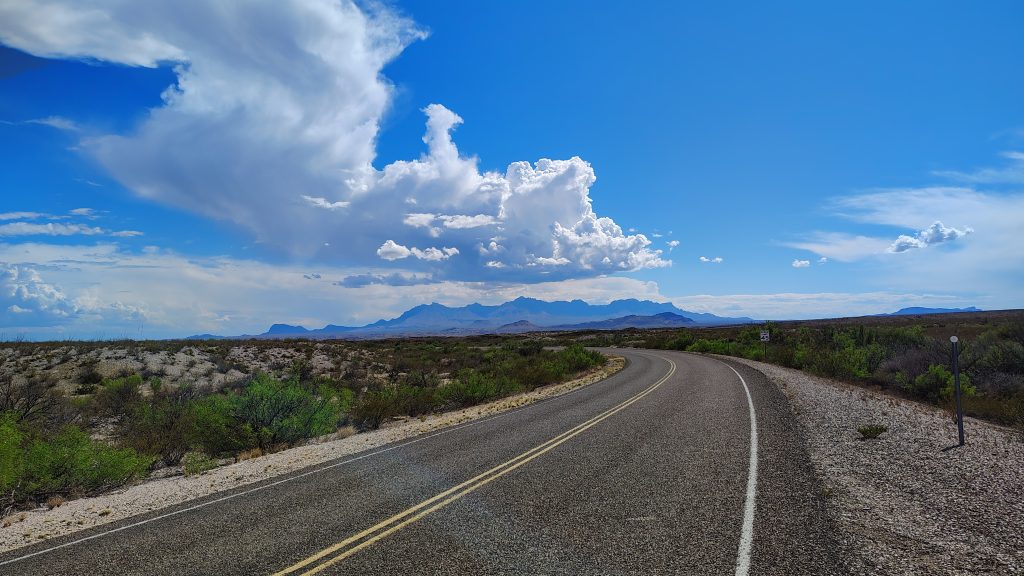
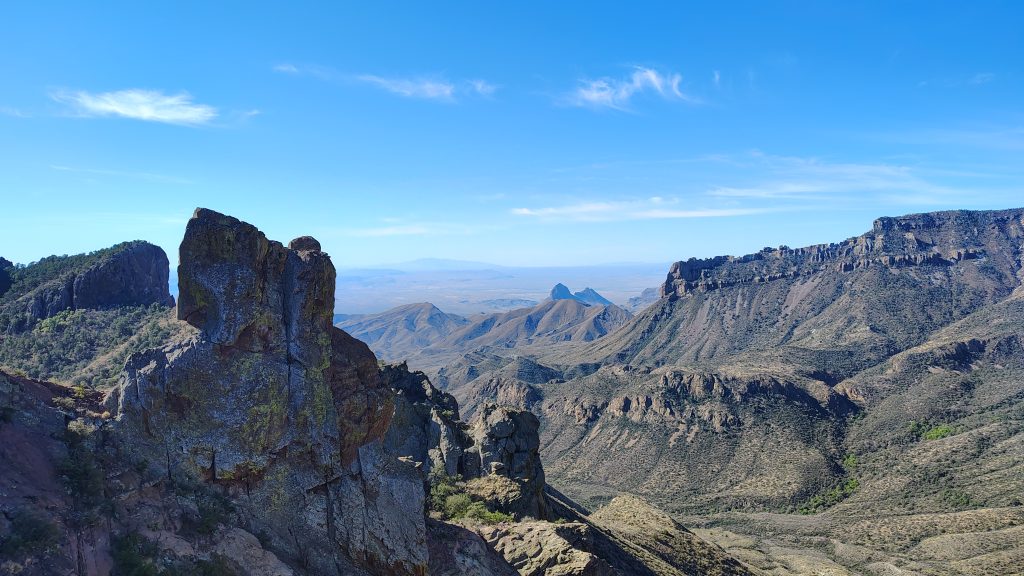
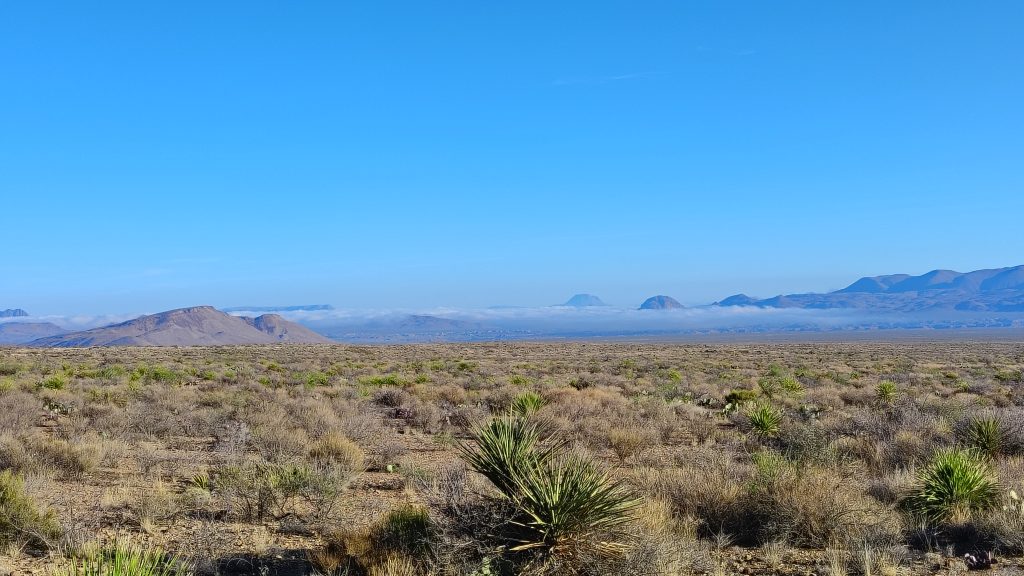
Big Bend is a stunning park in a sort of northern arm of the Chihuahuan Desert, most of which is in Mexico. The park is mostly arid, rocky, weather-worn plains, with the exception of the Chisos Mountain Range right in the middle:
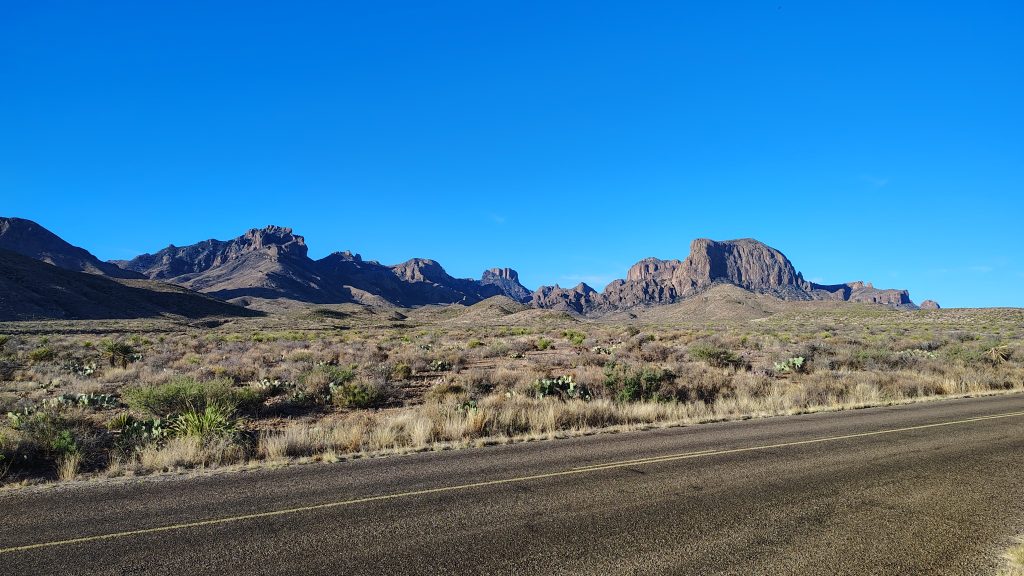
It’s really incredible, how these mountains emerge out of such a lifeless landscape. Well, lifeless except for:
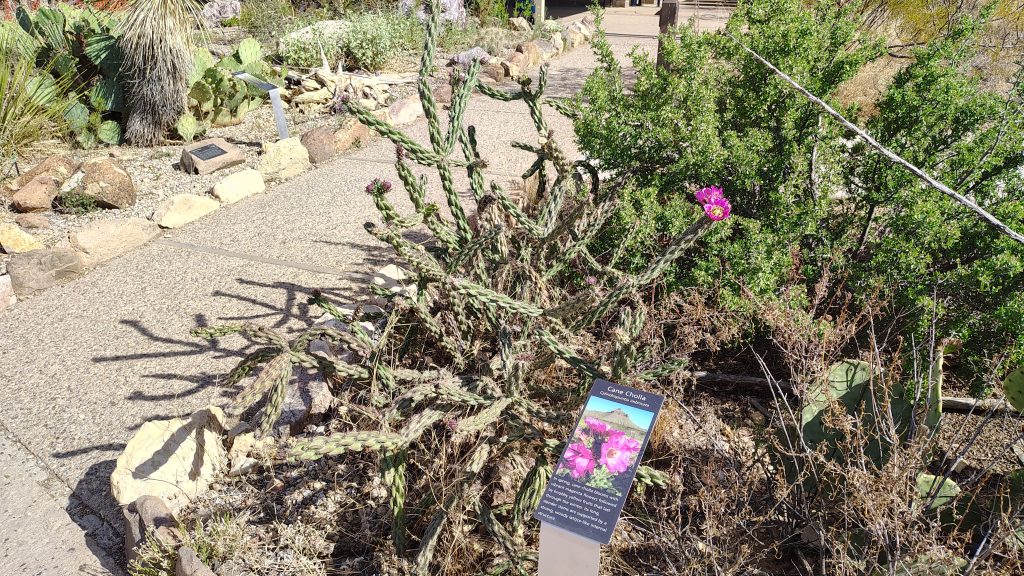
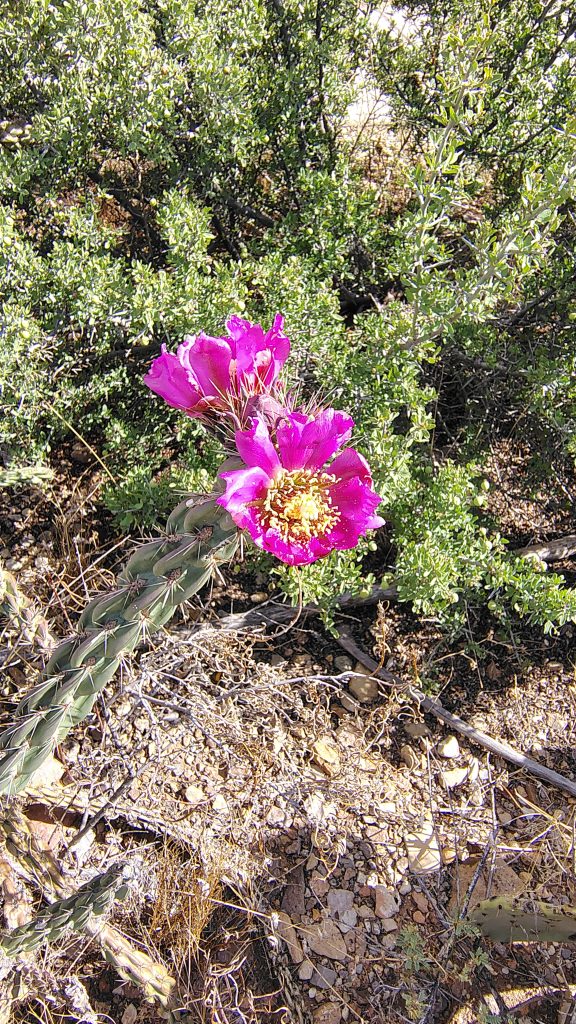
Cacti!!!!!! I really love cacti, they’re so alien and bizarre and so unlike any of the leafy greens I grew up with in Michigan. Their flowers are some of the most beautiful I’ve ever seen on a plant. And most surprising of all:
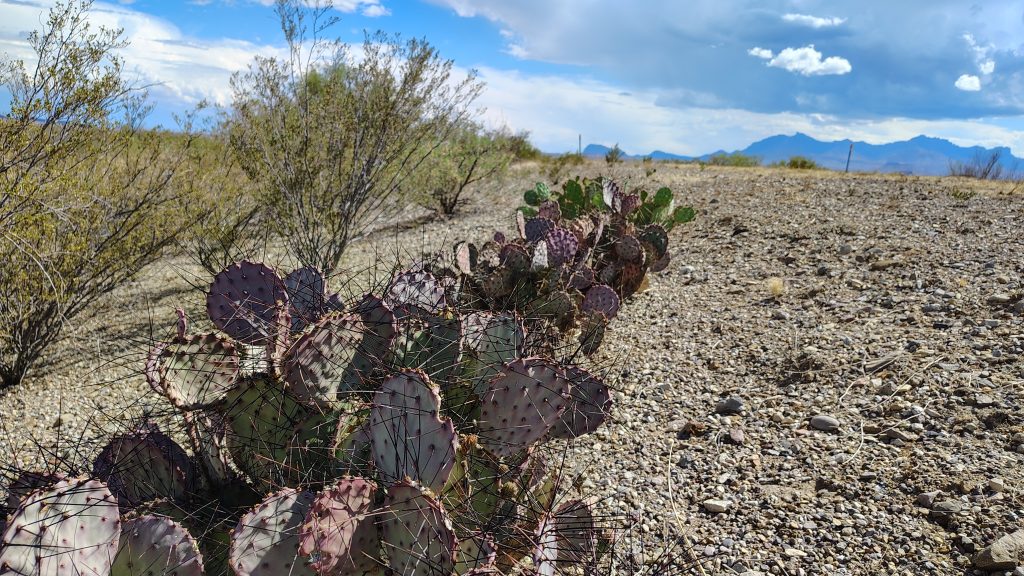
They can be purple!!!!! 💜💜💜 How cool is that??? I had no idea there were purple cacti; I asked a park ranger and he said they are a separate species of cactus that turn purple in stressful conditions. And honestly? Girl, me too.
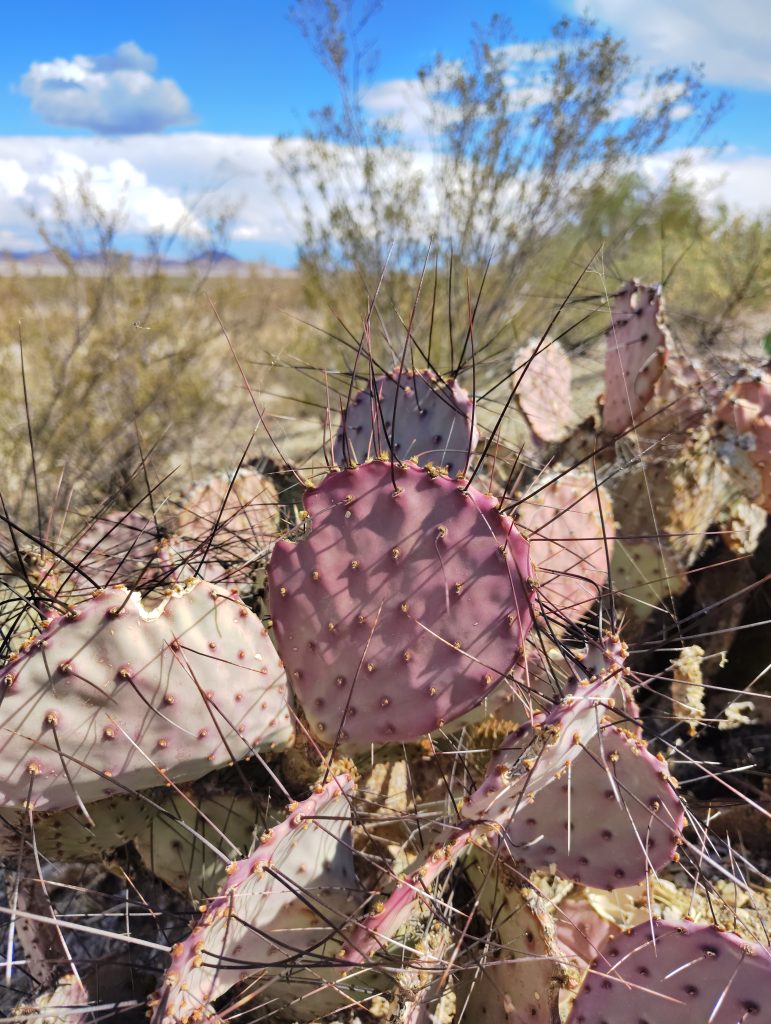
🏜️💜
Okay, so “lifeless” isn’t a totally fair description of the desert areas of Big Bend. I was very surprised to find these wild donkeys down at my campsite by the Rio Grande:
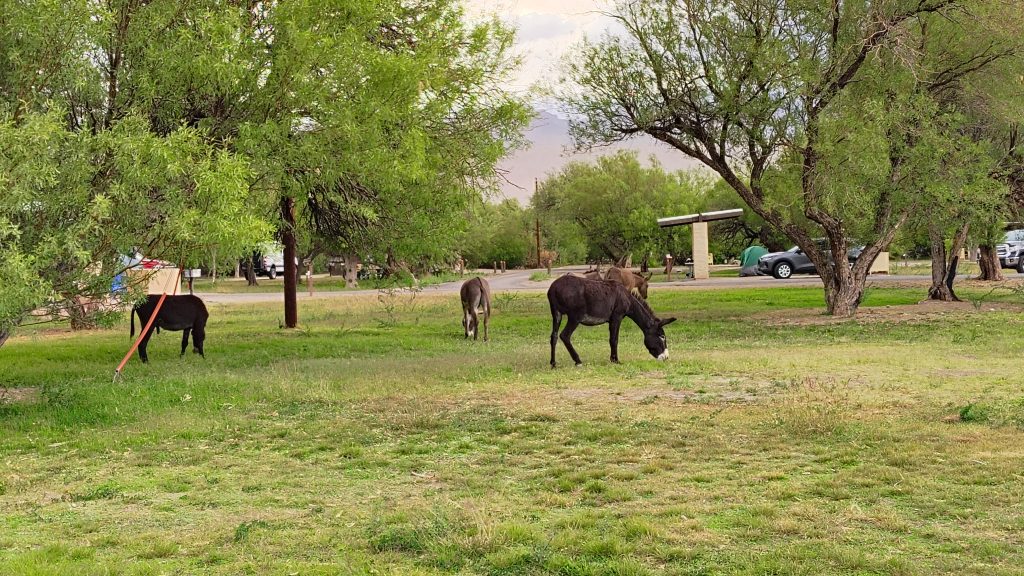
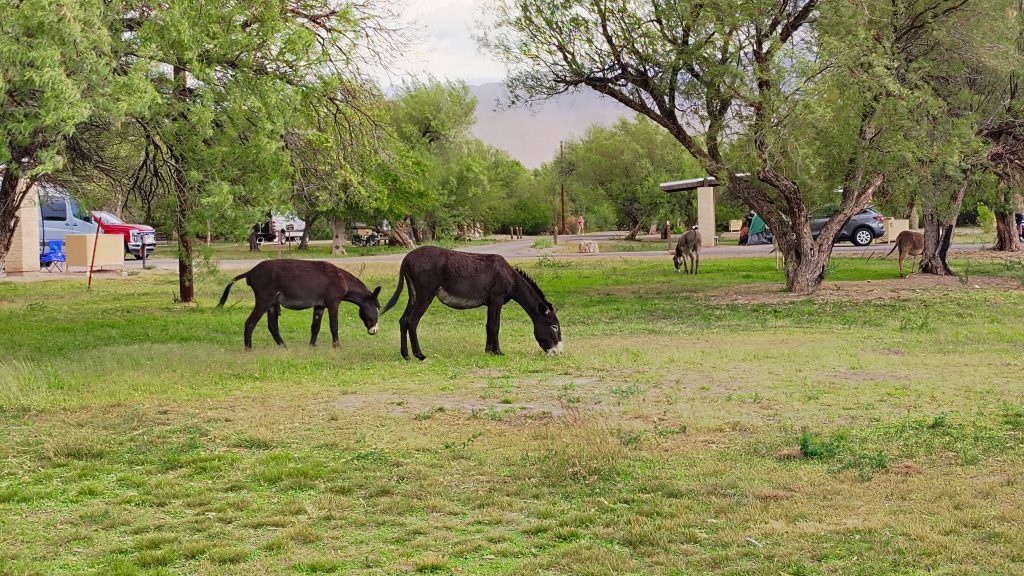
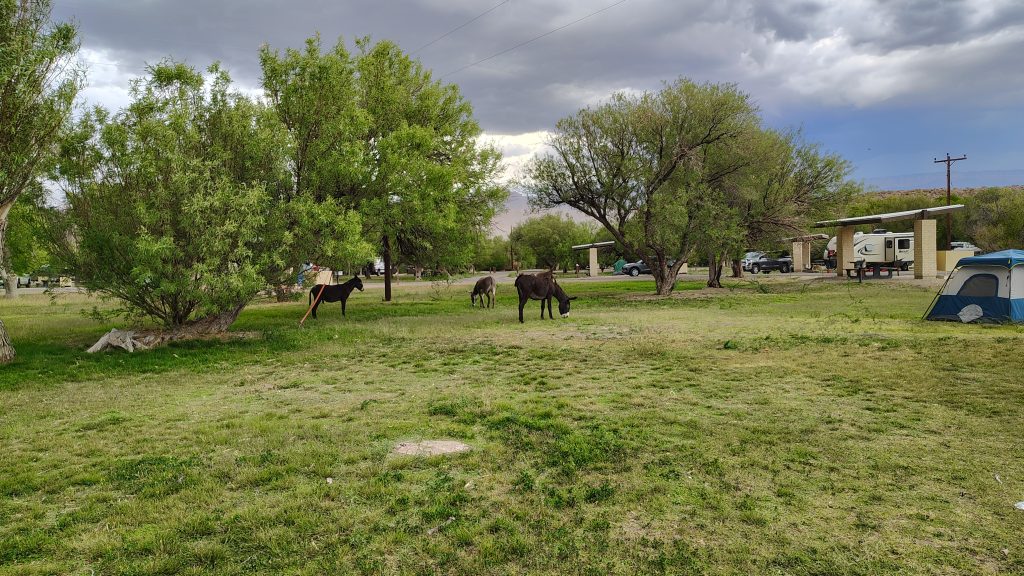
Everyone at this campground is such an ass :/
They just wander on through the Rio Grande Campground! They like to hang out and grave by the river, and apparently provide entertainment to campers. These things would let out that classic “HEEEEE-HAAAAWWW” sound like they were auditioning for a voice acting role. It was quite a funny punctuation to an otherwise completely silent and peaceful campground.
Another desert surprise I got: rain.
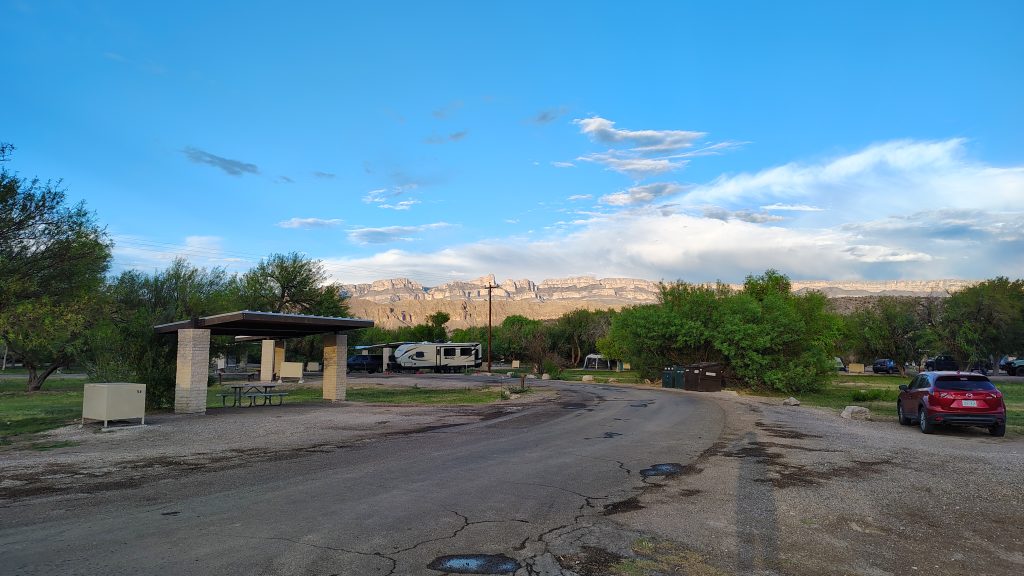
The little puddles here and there in the photo above were the leftovers of about an hour of rain we got on the evening I arrived. I was surprised it rained at all in such an inhospitable desert; and this wasn’t just a drizzle, it was a solid, regular, children-sing-rain-rain-go-away type rain. But it was manageable, and all I had to do was wait about an hour for it to stop before I set my tent up.
This is what those in literary circles call “foreshadowing.” More on that later.
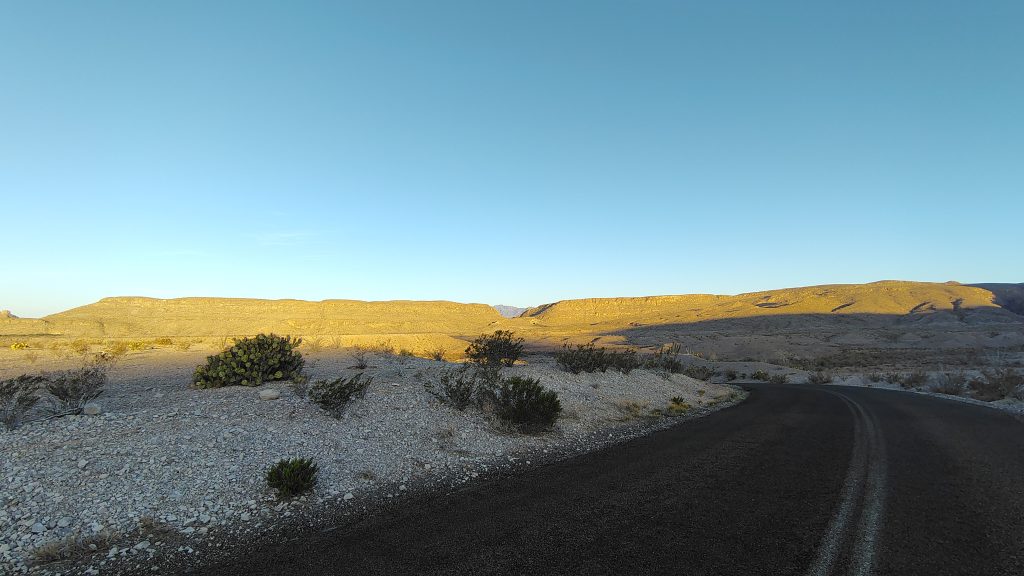
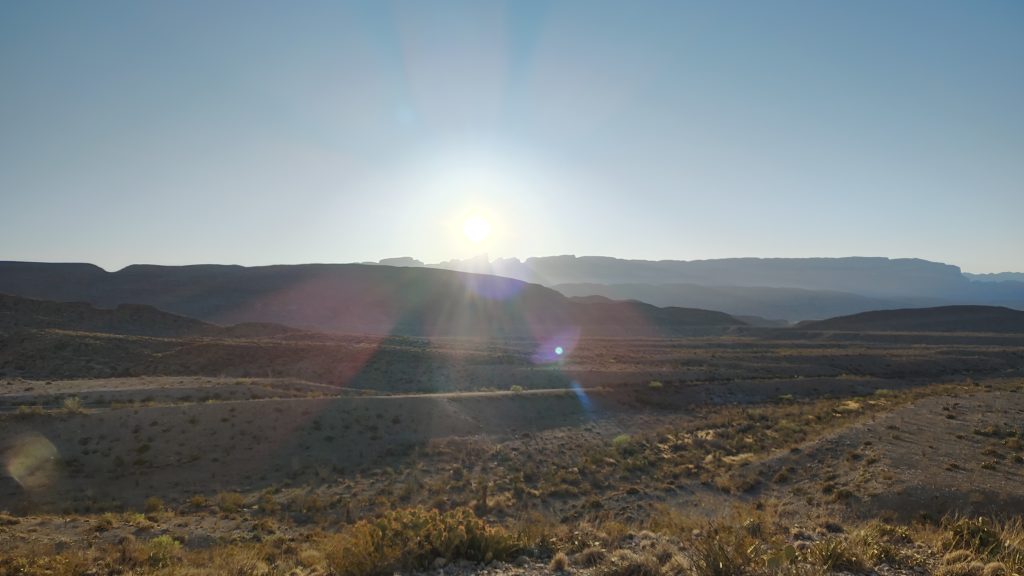
Being a desert, Big Bend National Park can be heinously hot during the day. Temps reached 95 degrees almost every day I was there, despite it being barely the second week of April. Signs throughout the park instructed hikers to begin their traipses at dawn and be off the trails by noon if at all possible. Thankfully, the temperature in the area varies considerably with elevation, and the Chisos Mountains provide a great refuge from the heat:
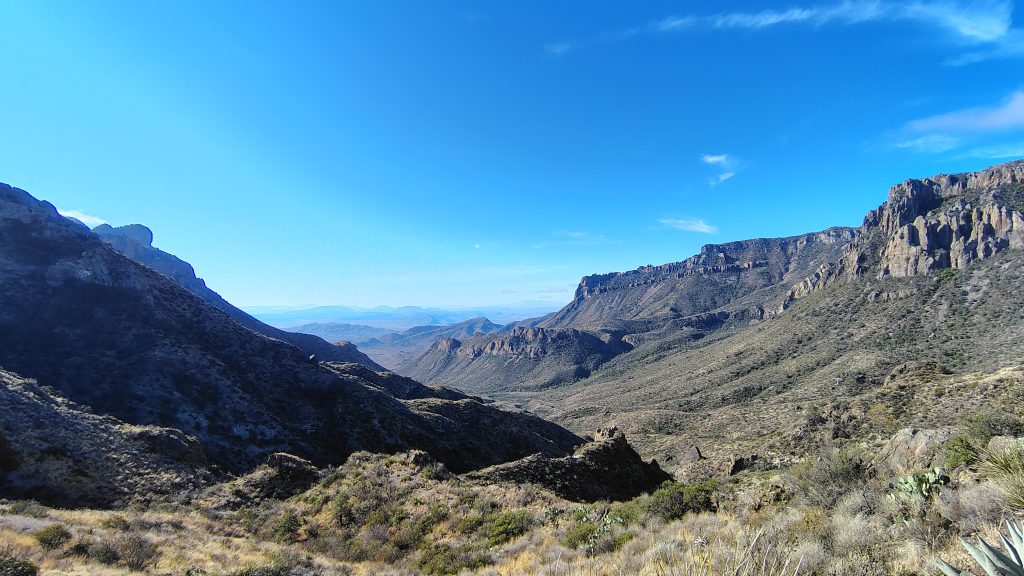
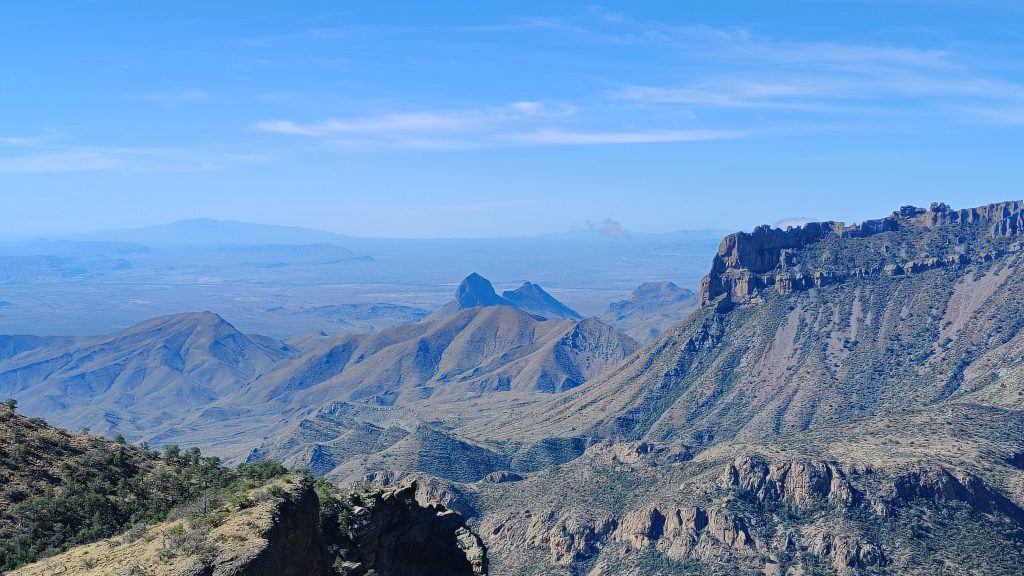
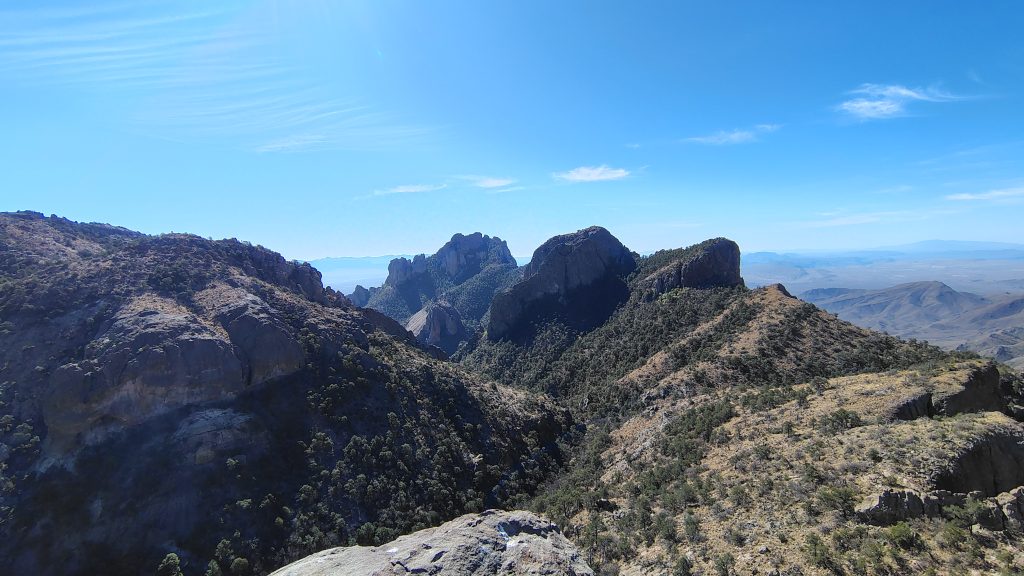
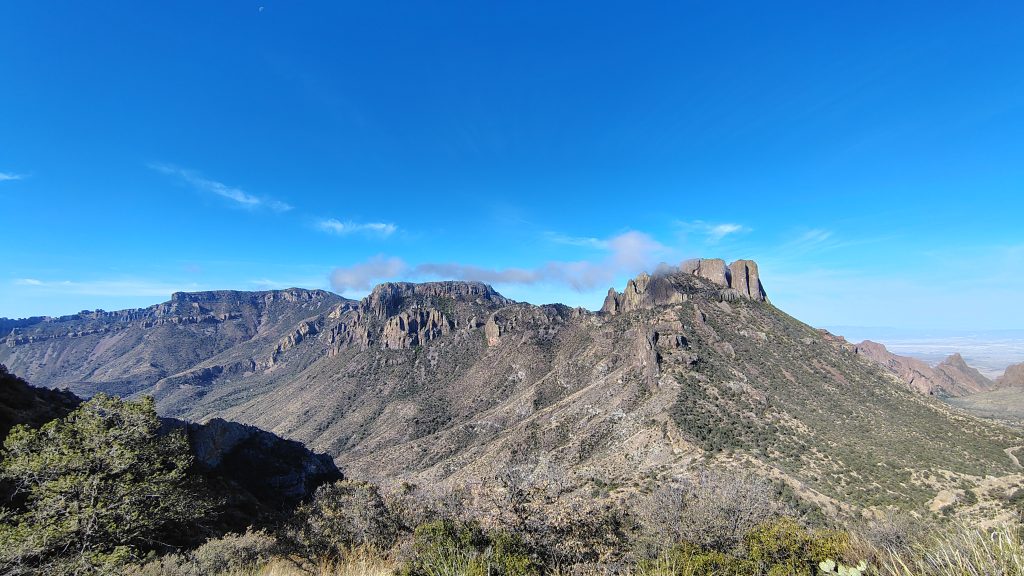
The extra couple thousand feet of elevation makes a humongous difference in the park’s character: trees reappear, as do the birds that live in them, and further up the food chain are bears and mountain lions. The peaks of the Chisos are about 20 degrees cooler than the desert floor and brother, I didn’t mourn any of the lost degrees.
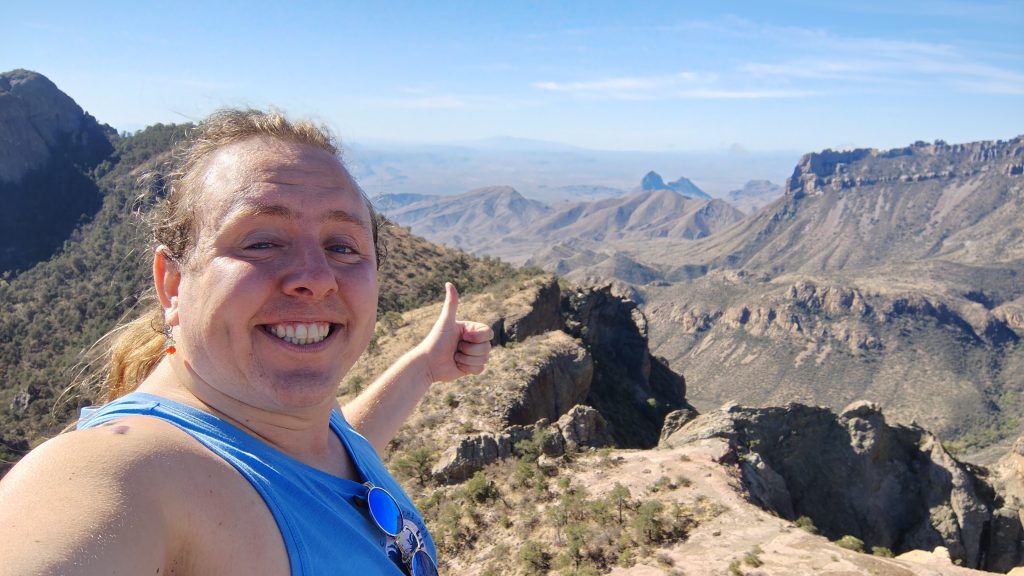
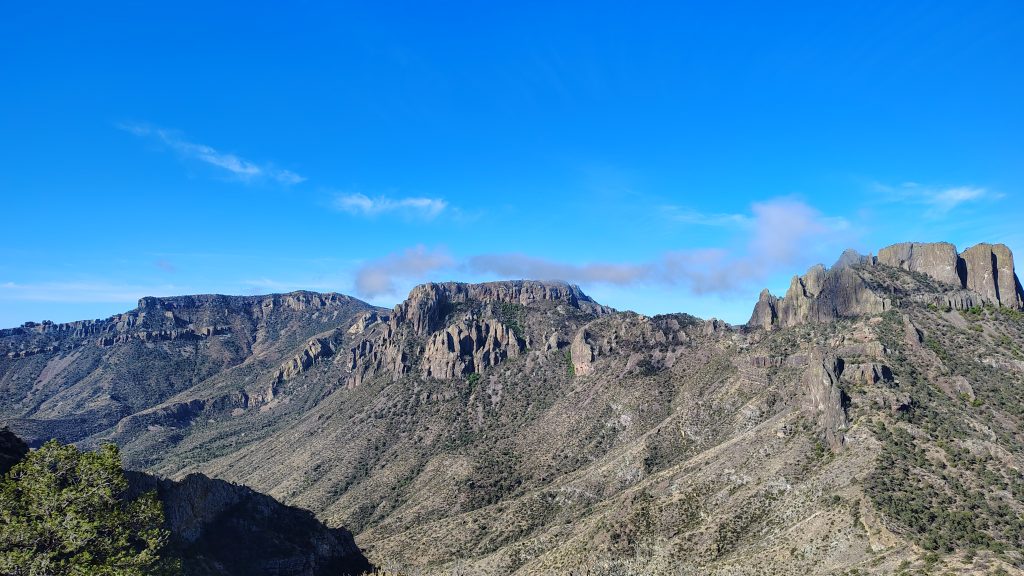
Cacti still persist in those higher, colder elevations though. Cacti are funny in their resiliency:
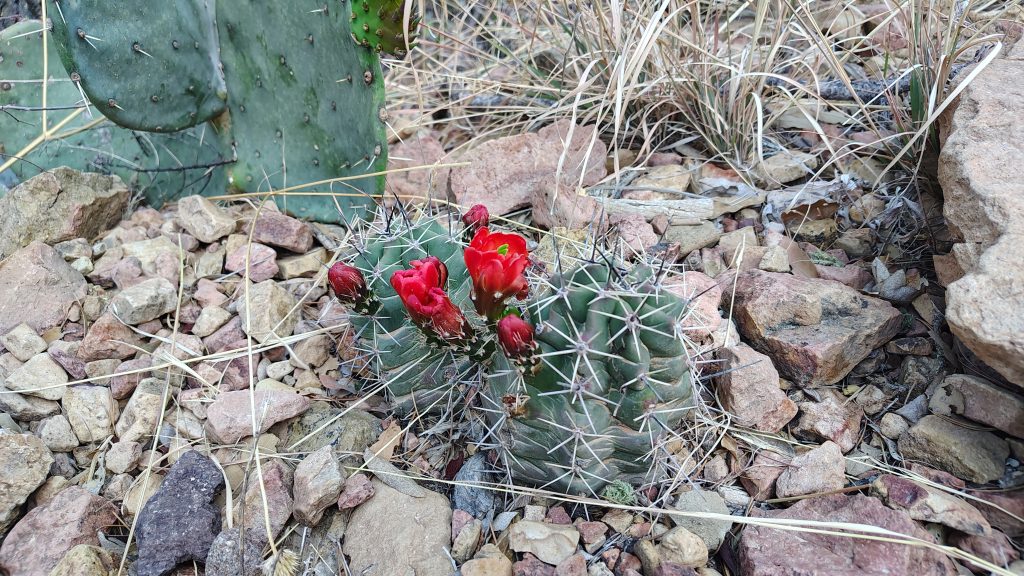
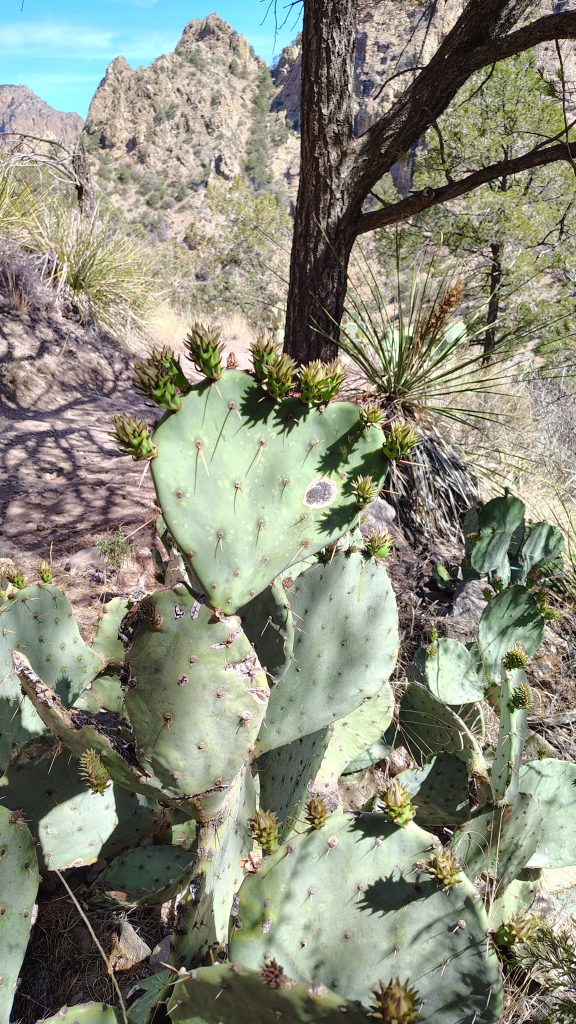
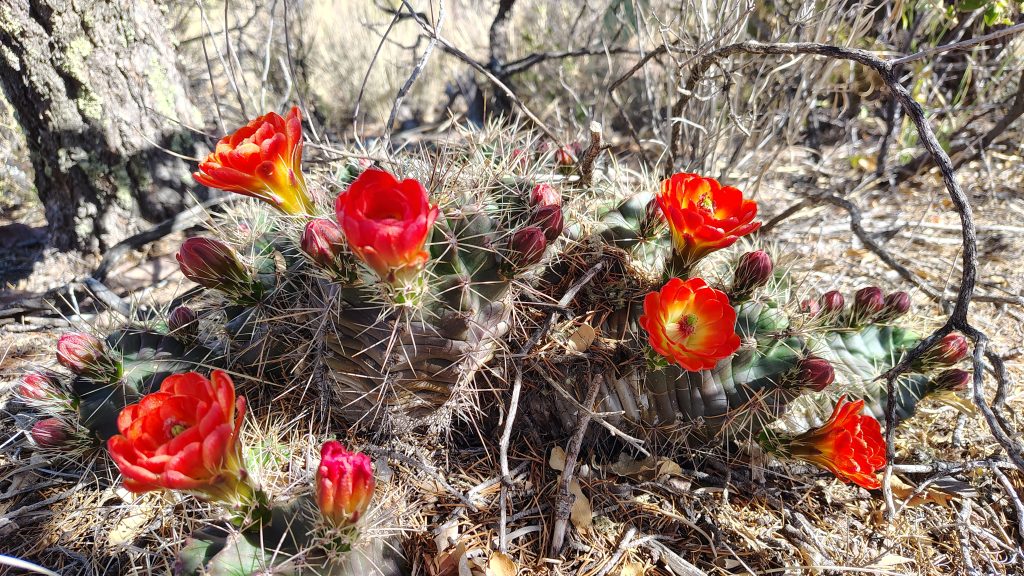
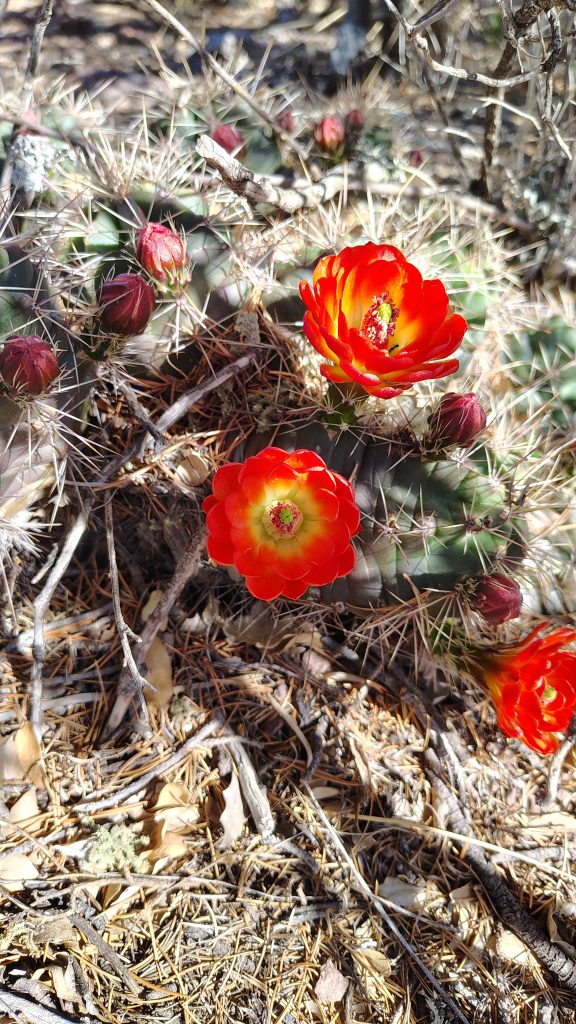
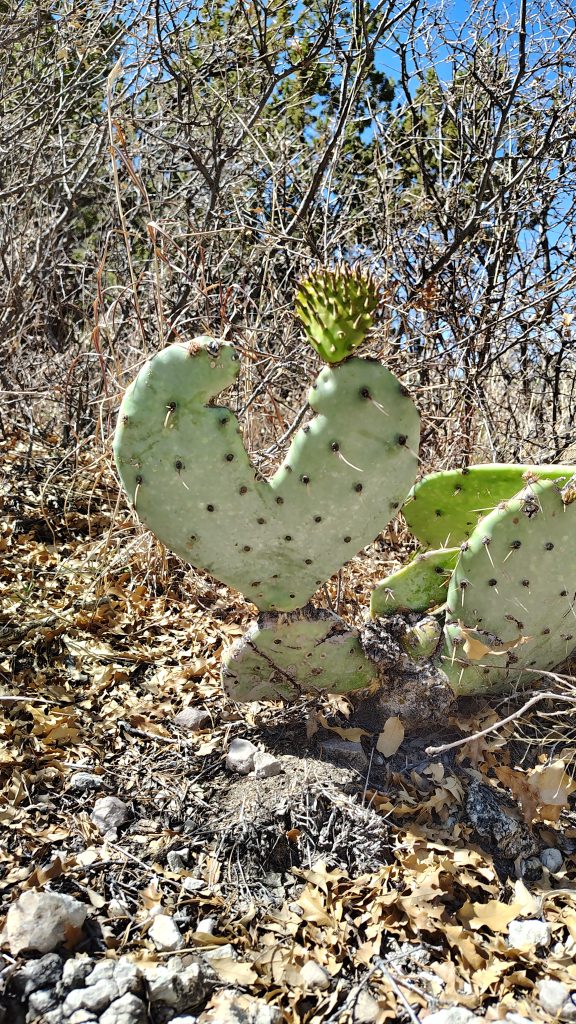
@Christina: if you know, you know
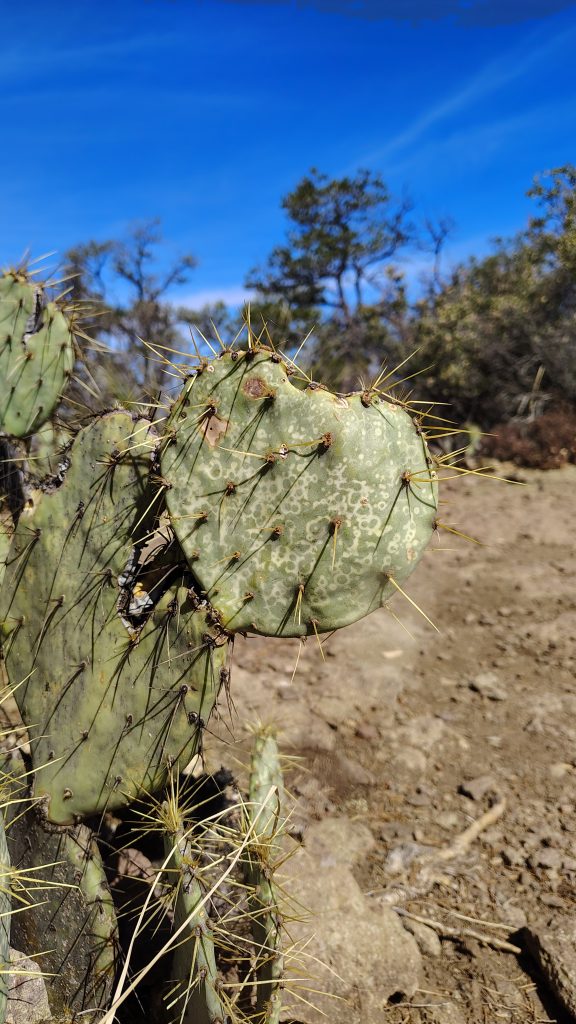
💚💚
The heat and dry air really were exhausting, though. I drank all 3 liters out of my camelback, despite the hike being only about 5 miles and despite me doing it from about 8 AM to 11 AM. I drank down a further 2 liters from water bottles just on my drive back to the campsite; by noon, it was 97 degrees. I ended up drinking 11 liters of water throughout the day, and not to be too gross, but my pee was still yellow every time; that’s just how much water your body needs to consume in this kind of environment!
At this point, the heat was getting oppressive and I needed some relief. Enter (as one information board indicated) “the joy of water in the desert”:
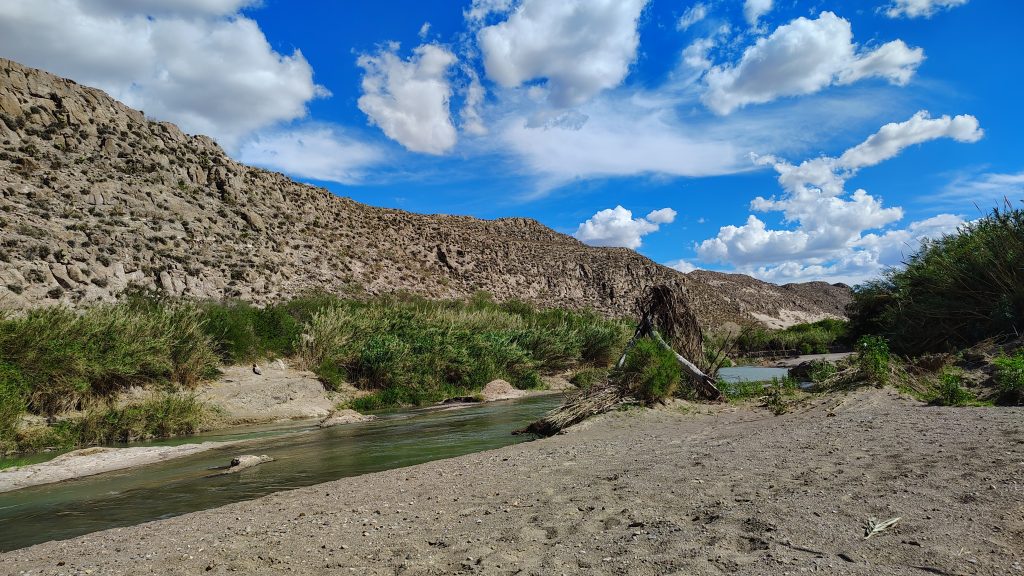
The Rio Grande River wraps around Big Bend like a cool, damp towel on the neck. It was a tremendous relief to dive into it, and I relished greatly in its refreshing waters:
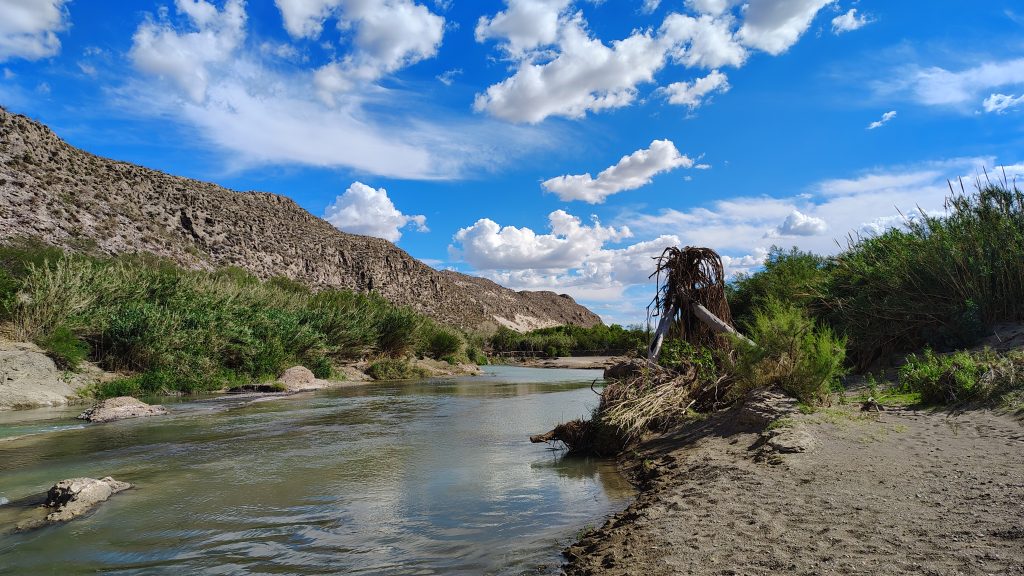
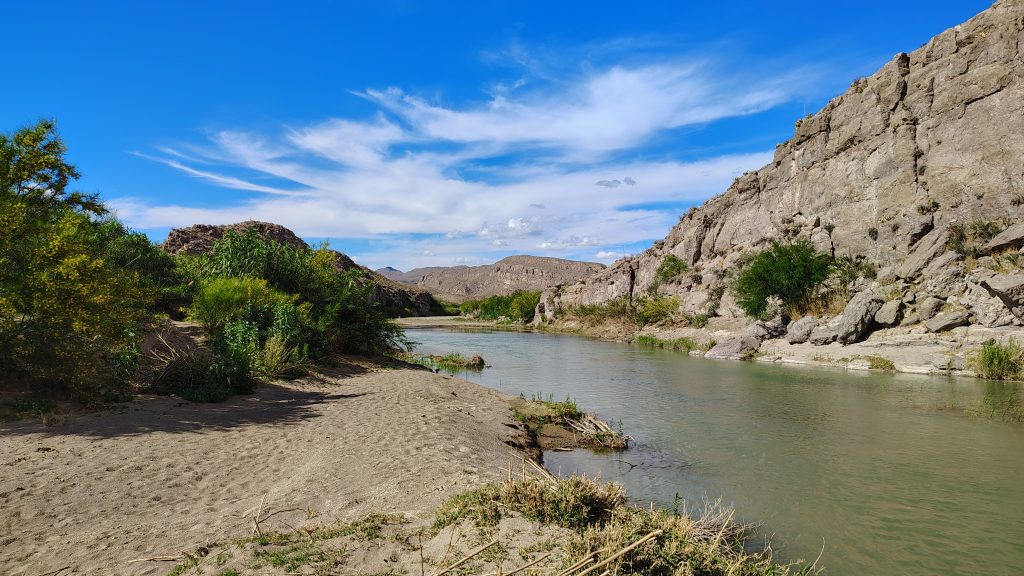
I’m grateful that the obscene border policies of this administration haven’t reached this stretch of the border (yet). The river was so peaceful, so rejuvenating, so joyous in its nourishment of the surrounds. I stayed on its banks for two hours or so and only saw one person other than myself: a single goatherd driving a flock along the cliff edges on the Mexican side. If we need borders at all, then this is all that borders should be.
Unfortunately, the Trump administration doesn’t agree:
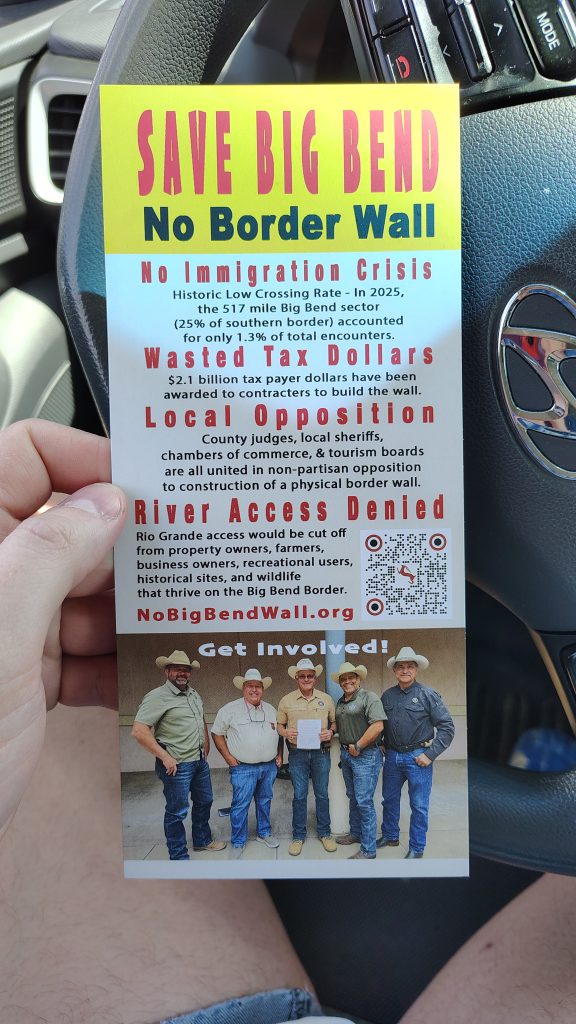
Despite an absolutely tiny flow of migrants through the Rio Grande region (the vast majority of which are interdicted on the roads out of the park, not at the river itself), the pants-shitter-in-chief wants to build a 50′-high slatted steel fence right at the river’s edge. This would completely destroy almost all of the wildlife in the park, as anything larger than a gecko depends on access to the Rio Grande for water. It would also completely destroy the livelihoods of everyone in the area who depends on the park for their business: canoe liveries, tour guides, ranchers, farmers, and and any number of small business outside the park that rely on tourist traffic. It’s worth noting that Brewster county went Republic in every single federal election since 2008, so all this does is hurt the absolute reddest core of Trump’s constituency. Oh, and did I mention the admin is already using eminent domain to confiscate private property along the river above and below the park?
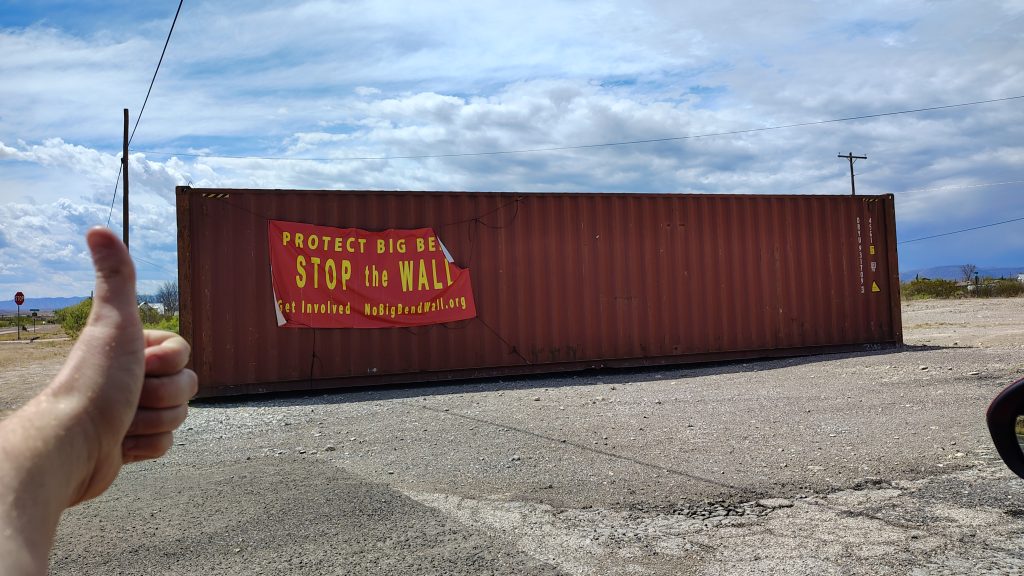
Waste your tax dollars, steal your land, and destroy your livelihood (of your own constituents!) for a vanity project that won’t succeed. Totally the party of “freedom and prosperity.” At least the local opposition is nice to see.
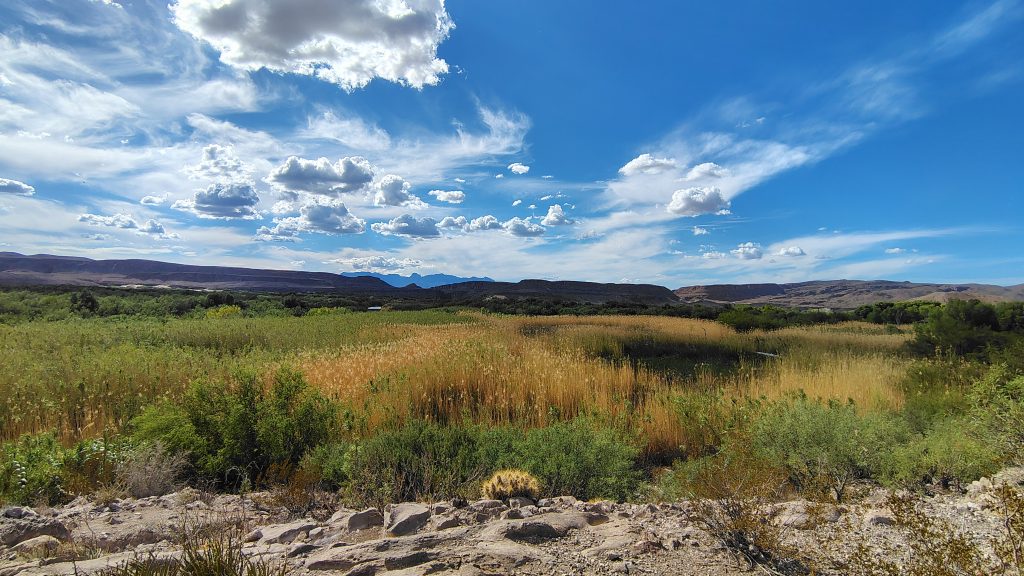
Back inside the park, things are peaceful, but quieted by the deleterious heat. You have to wait until nightfall for a lot of the wildlife to become active:
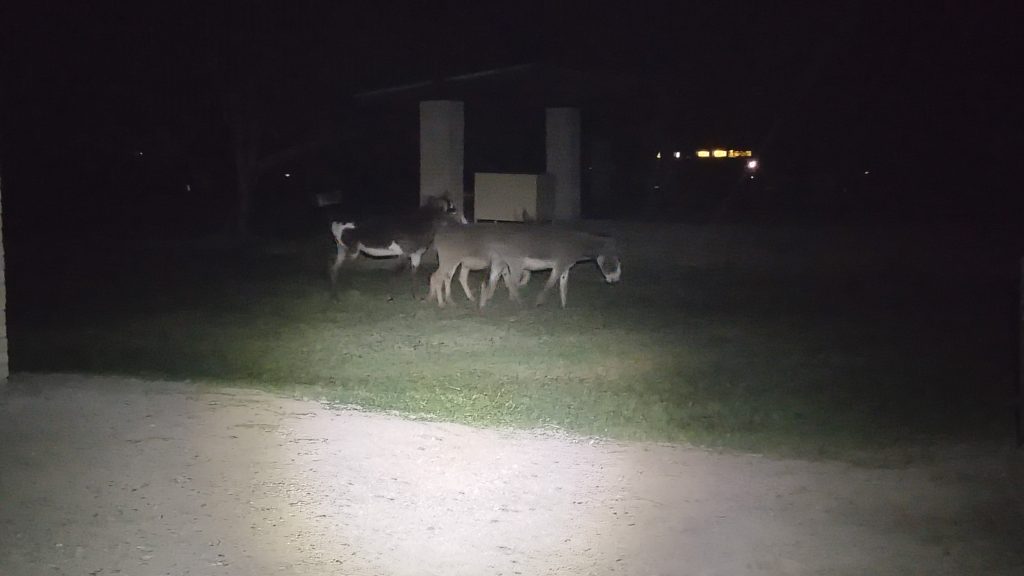
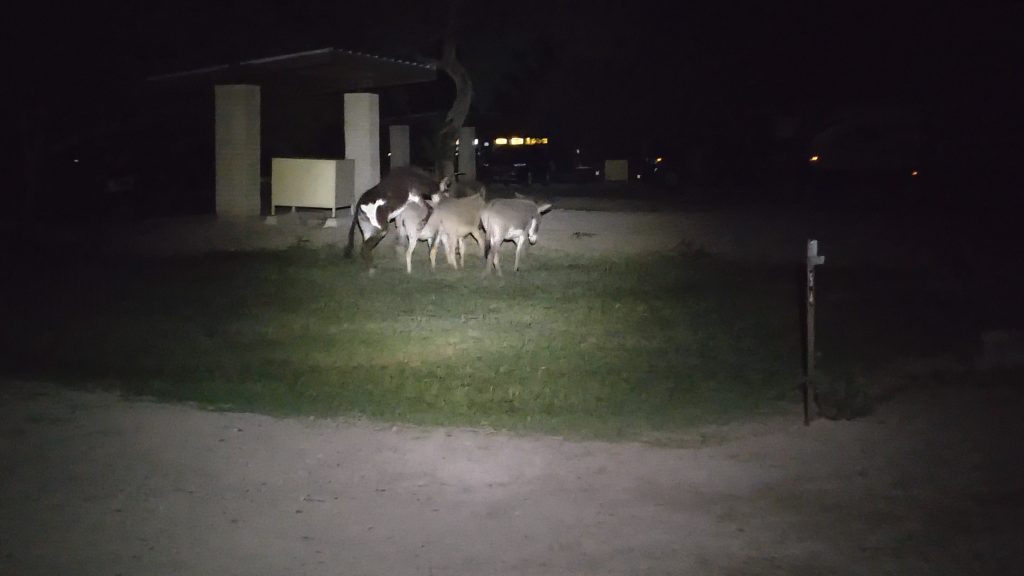
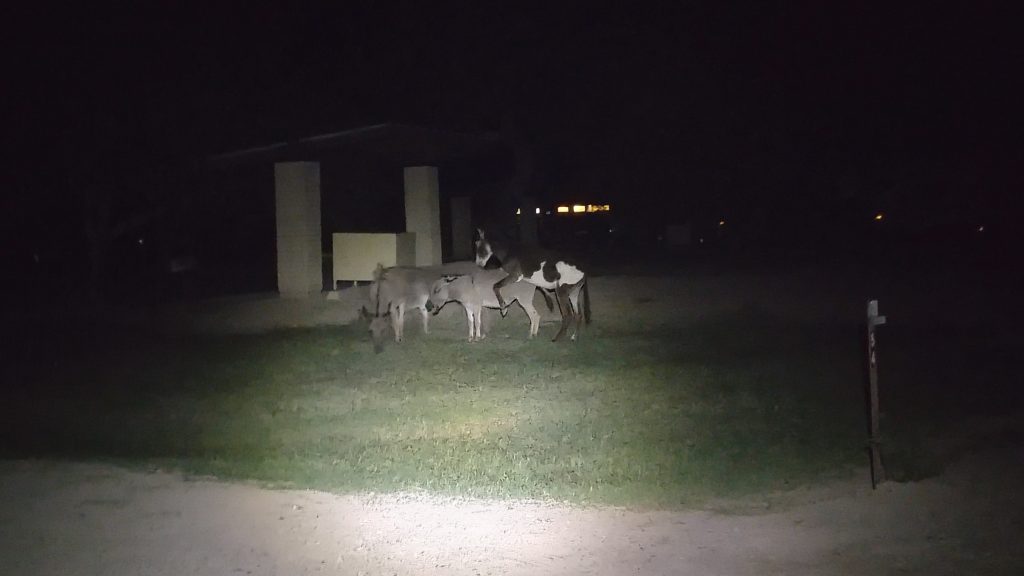
“HEE-HAW, a little privacy? Please? Damn tourists.”
Maybe too active, honestly! When you go back into the marshes, the sedge and cattail are filled to the brim with the sound of frogs mackin’ and gettin’ it on.
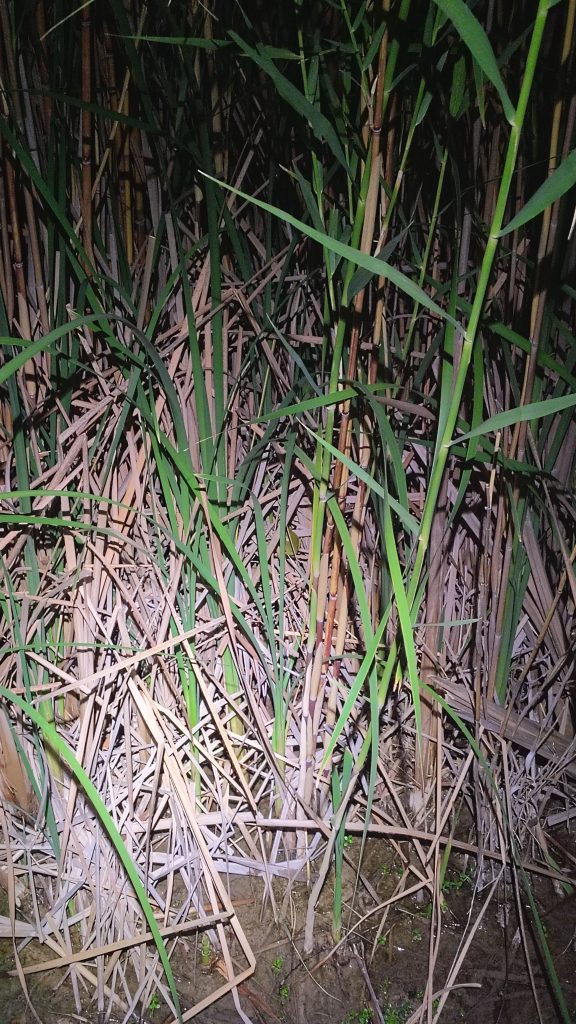
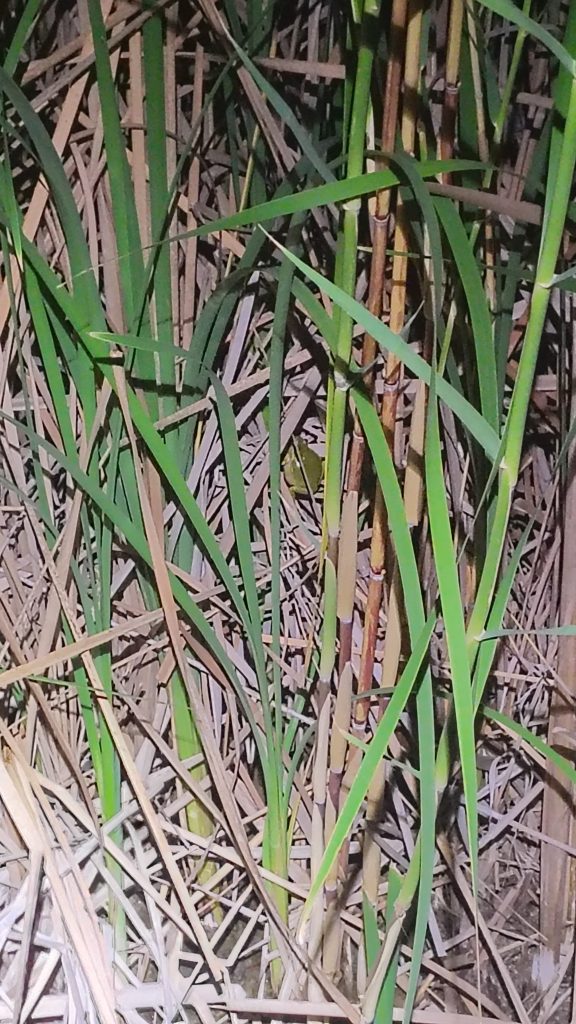
Look at this heinous voyeurism! Sir, please don some clothes immediately!
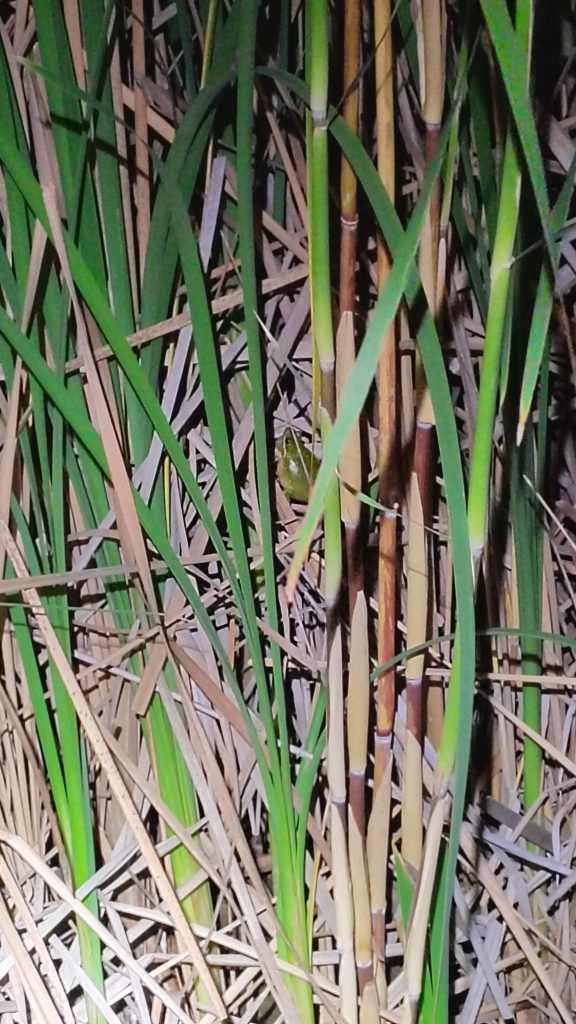
Yeah, I see the guilt in your eyes. Put on some pants, you deviant.
And even better than donkeys and frogs, the riverbanks are also home to:
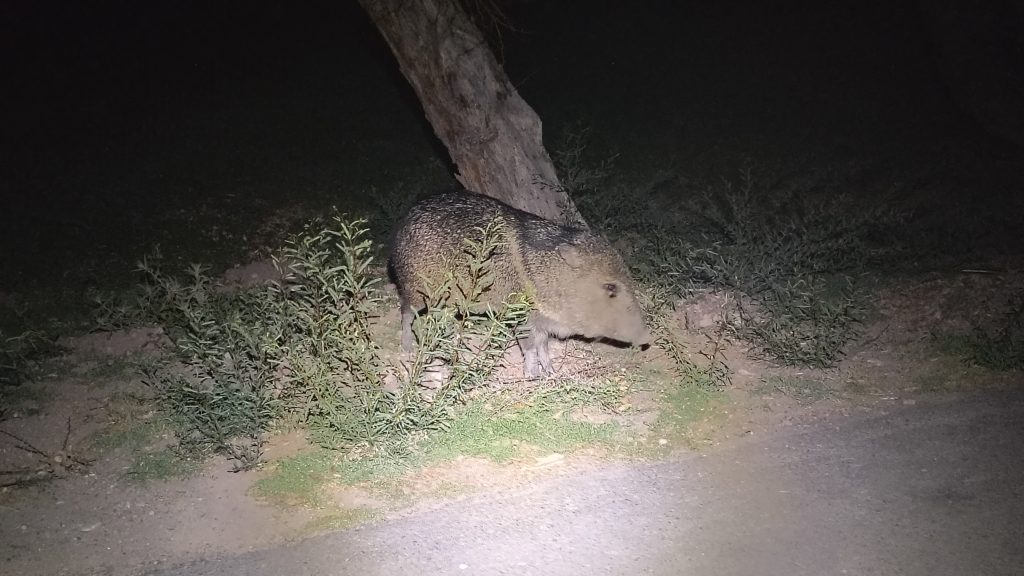
Pecaries!!!!!!! Locally called Javelinas, these animals are like if a medium-sized dog was also a pig, in both size and temperament.
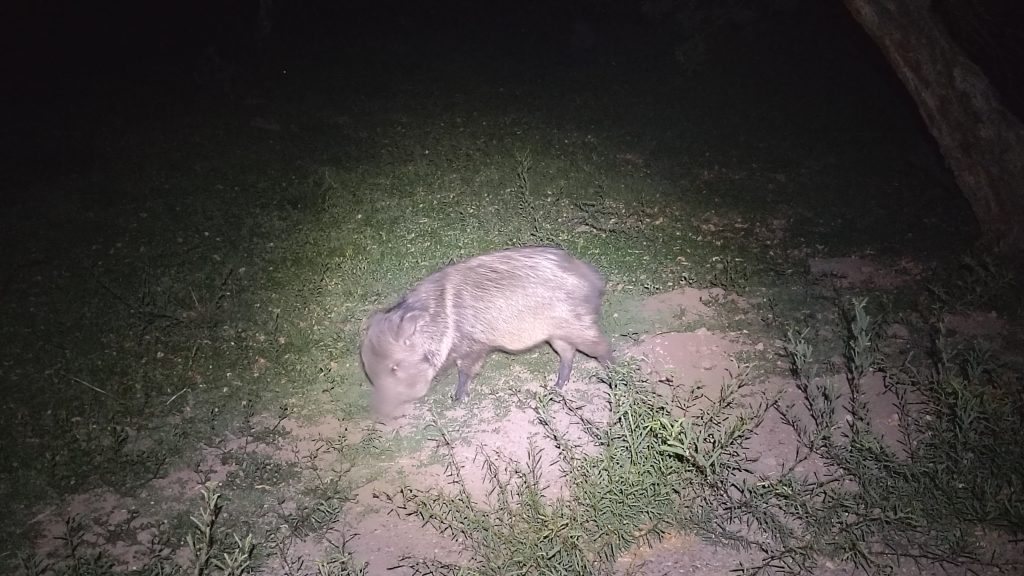
And in sniffing ability 💙
Pecaries/Javelinas are primarily nocturnal and come out during the cooler nights to eat grass, grubs, and really anything on or in the ground. They’re super nonchalant and have no tusks, so you can walk within like 10-15′ of them without bothering them.
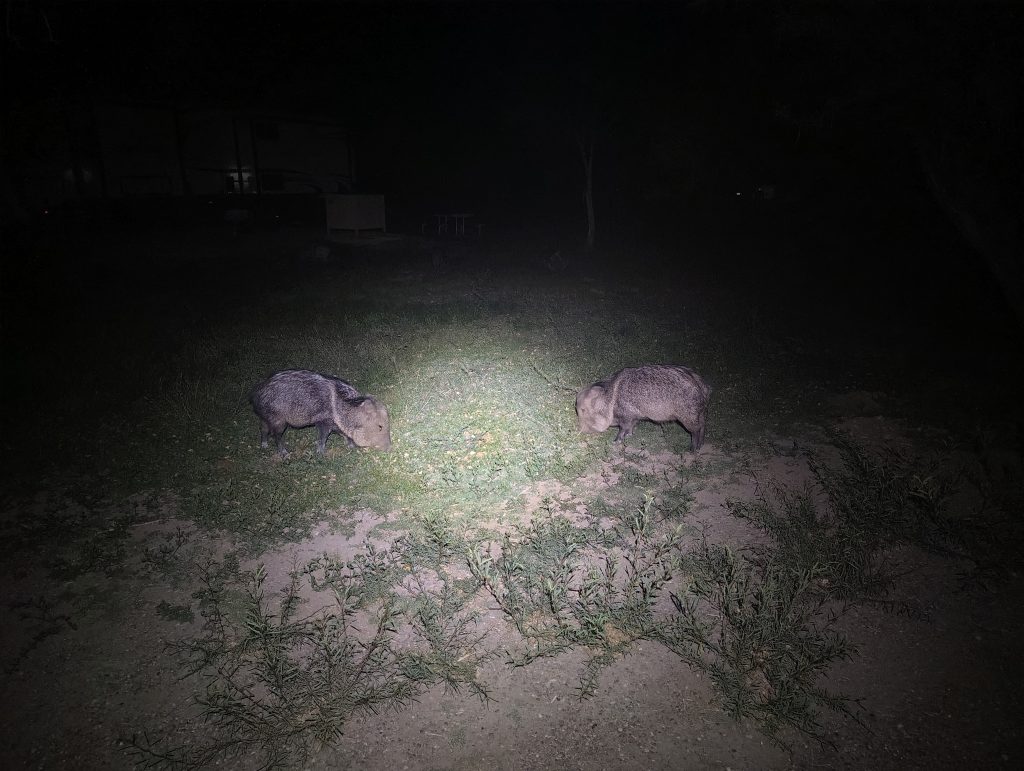
Despite looking like small hogs, they’re not related to old-world pigs. The nearest evolutionary relative of the Javelinas is the Guinea pig, oddly enough. I love them these weird little pig-dogs and I wish they smelled better so I could domesticate one as a pet 💙
Water in the desert: what joy it brings to so many!
And that’s just on the American side! There’s an entire foreign shore just steps away!
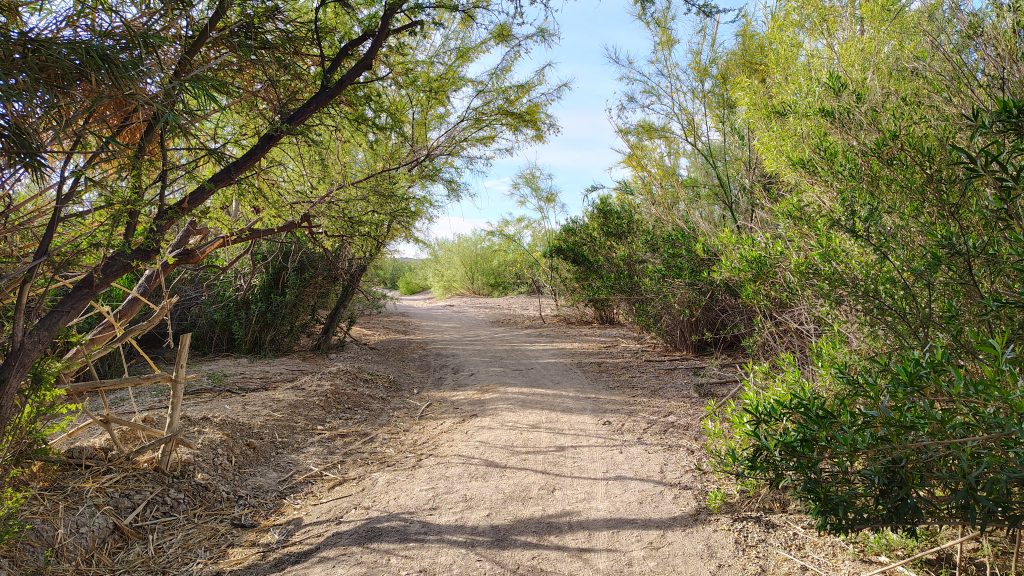
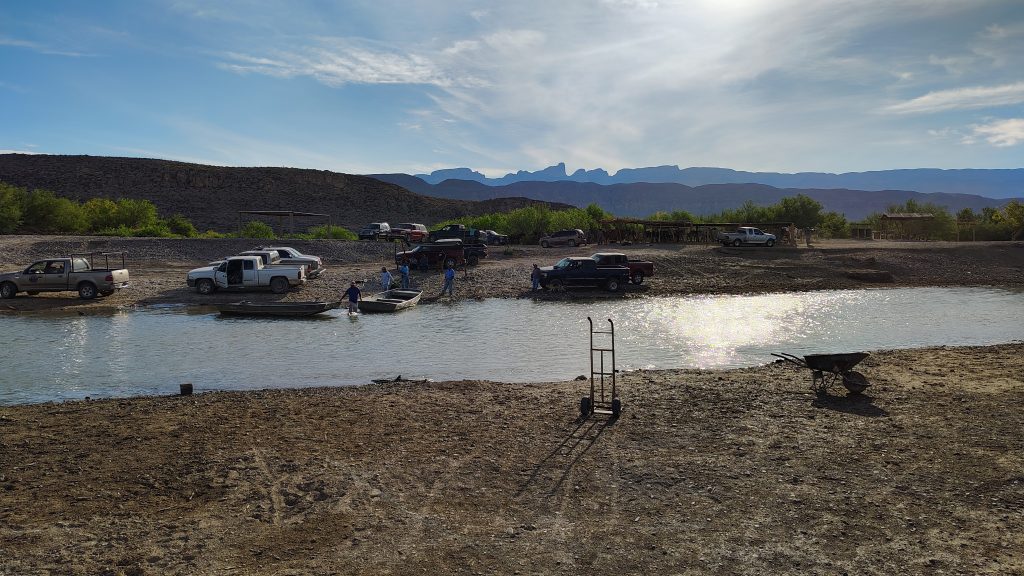
And I mean literally steps away.
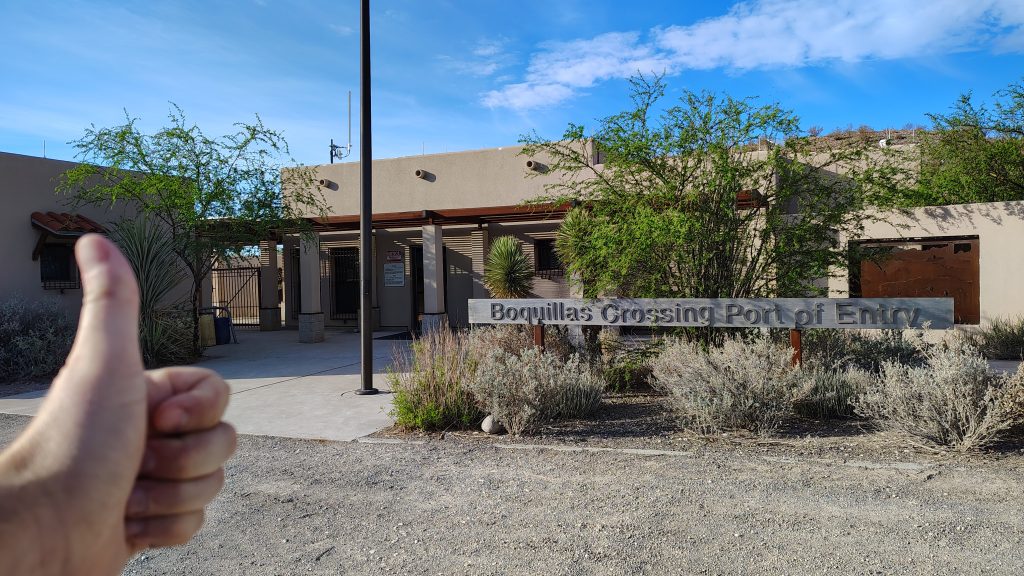
At Boquillas Crossing is one of the only remaining footpaths you can use to cross the US-Mexico border. As long as you have a passport and go between the hours of 9 AM and 4 PM, you can literally walk across the river to Mexico! I was really pleasantly surprised by this? There are two separate, internal border patrol checkpoints you have to stop at just to drive to the park itself, where some chud determines if you’re white enough to avoid getting your vehicle torn to shreds looking for “human contraband” (this is not hyperbole, I’ve been through 8 of these checkpoints by now and seen this happen several times). All of this is to say that I was very, very surprised you could still go to Boquillas, Mexico given this political climate.
And yet,
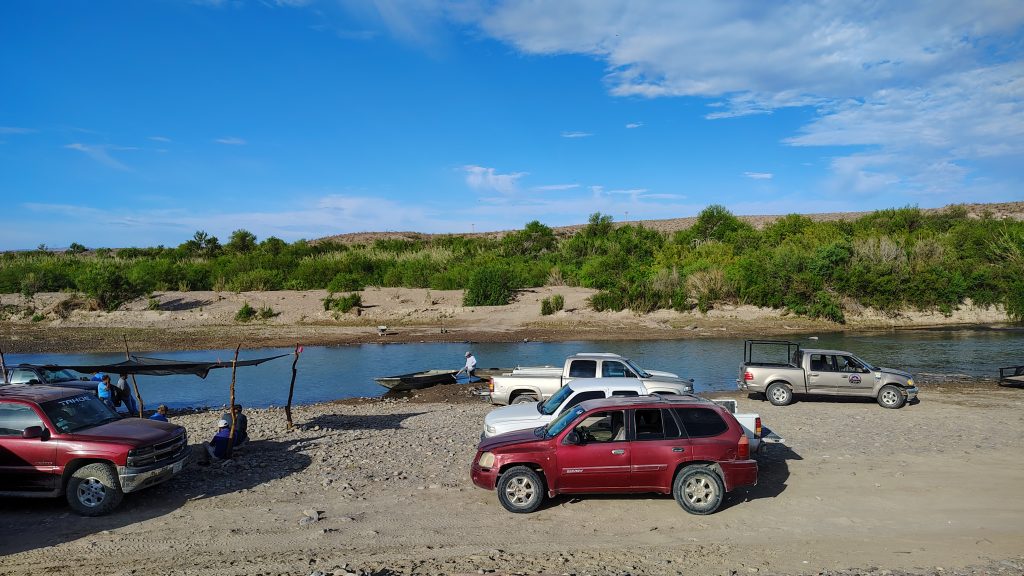
You can!
The river itself is only about 18 inches deep, although it flows pretty swiftly. The Mexican side of the Rio Grande is also comprised of several national parks and preserves, so the terrain is honestly pretty similar:
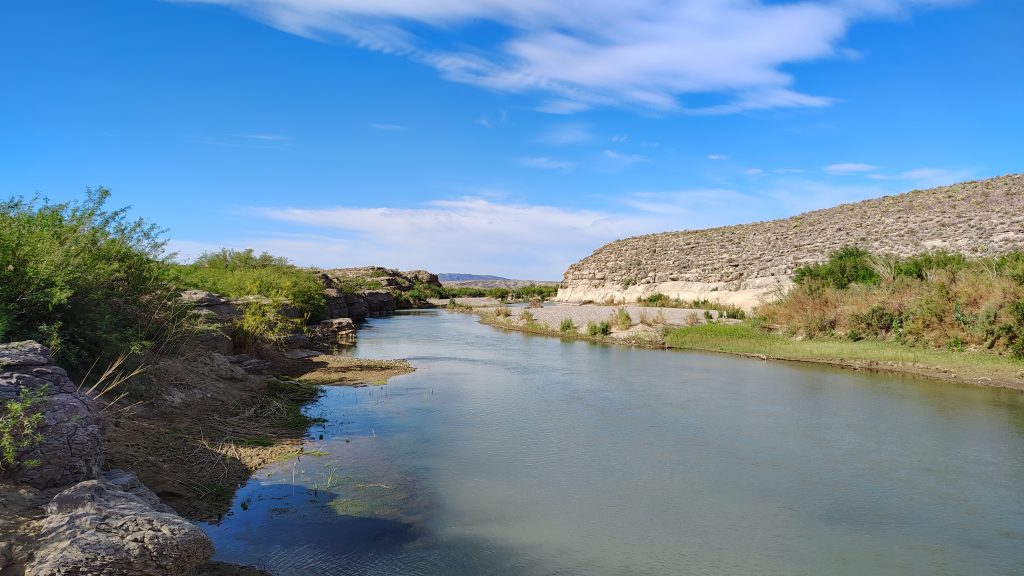
Oh whoops, sorry, forgot it’s Mexico:
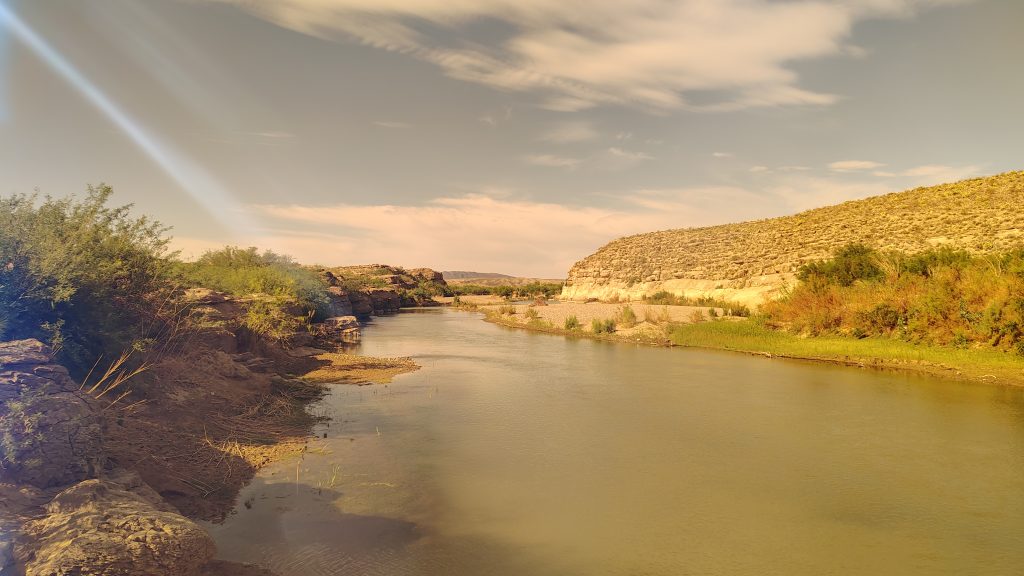
There we go!
There’s not much on the other side of the river, besides the town of Boquillas:
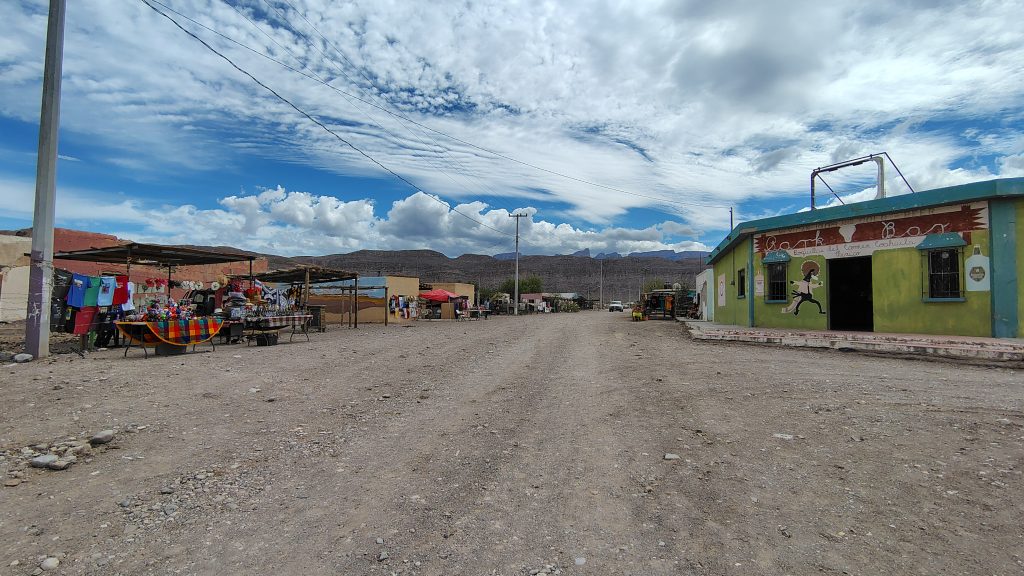
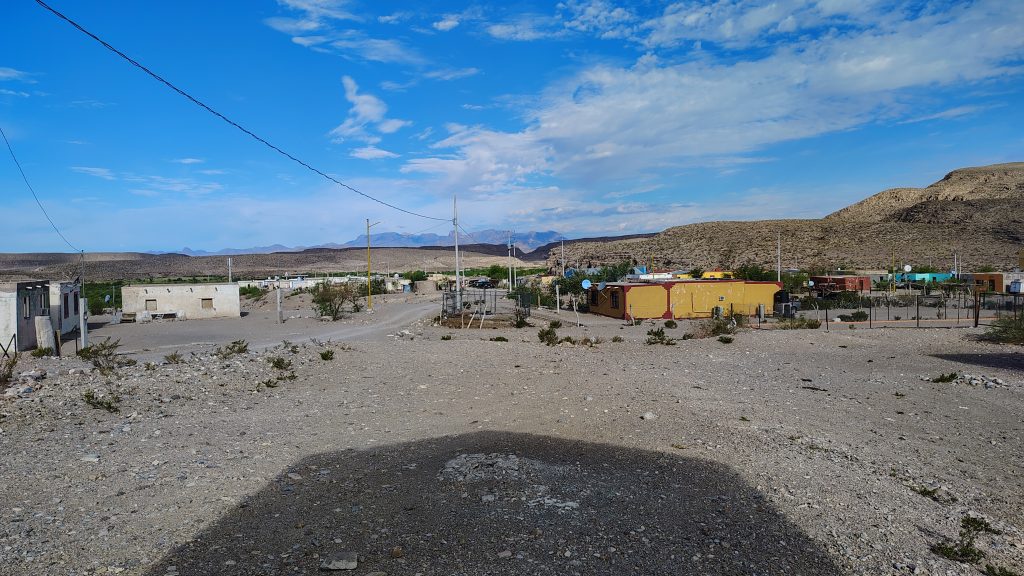
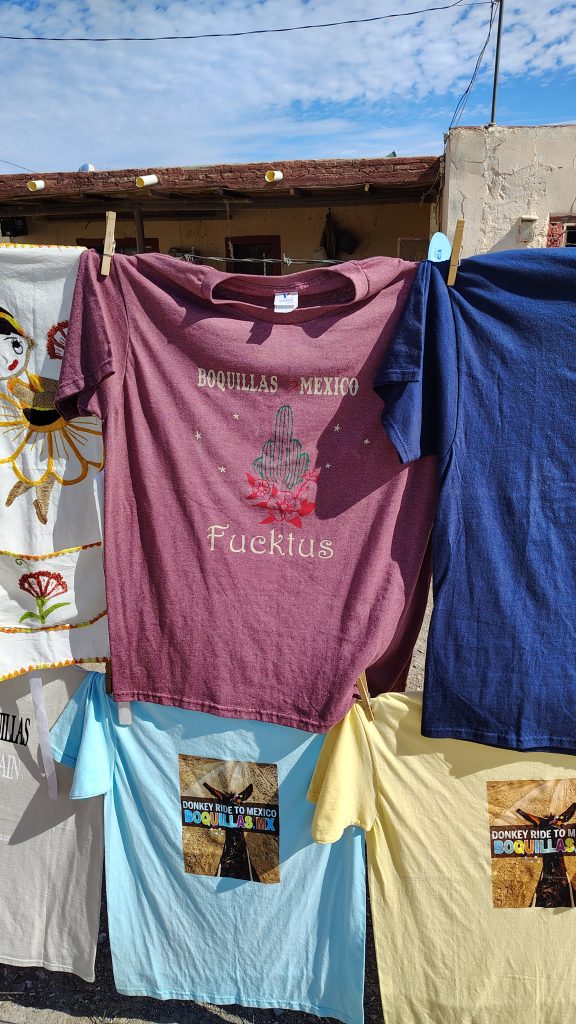
Boquillas is a very small town with two restaurants and about a dozen vendors selling t-shirts, blankets, ponchos, and other tourists trinkets. The food was quite cheap and extremely tasty; goat tacos are the specialty there, and I wondered if I was munching on some poor bar-eyed critter I’d seen just the day before. But I didn’t wonder too long ¯\_(ツ)_/¯.
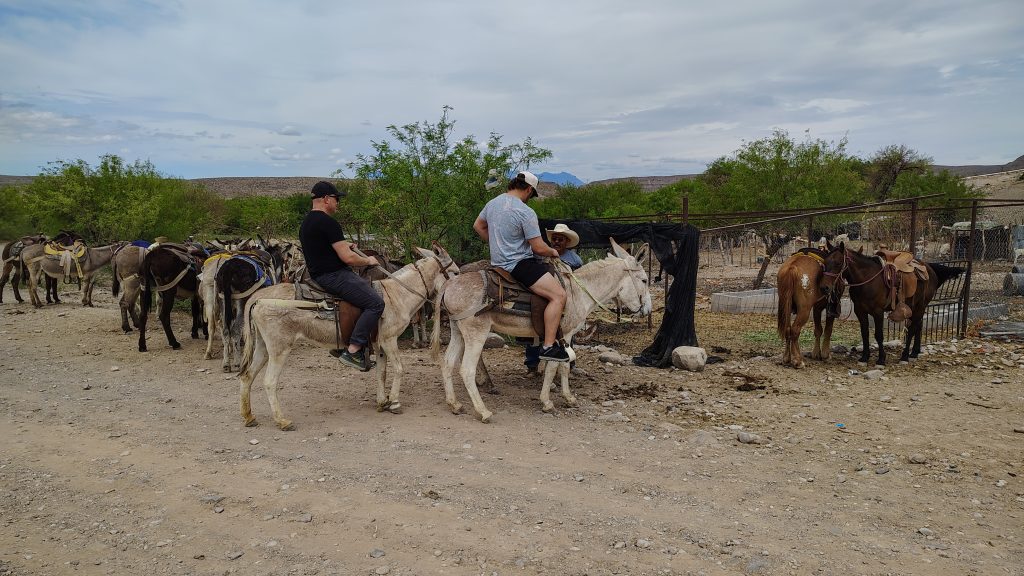
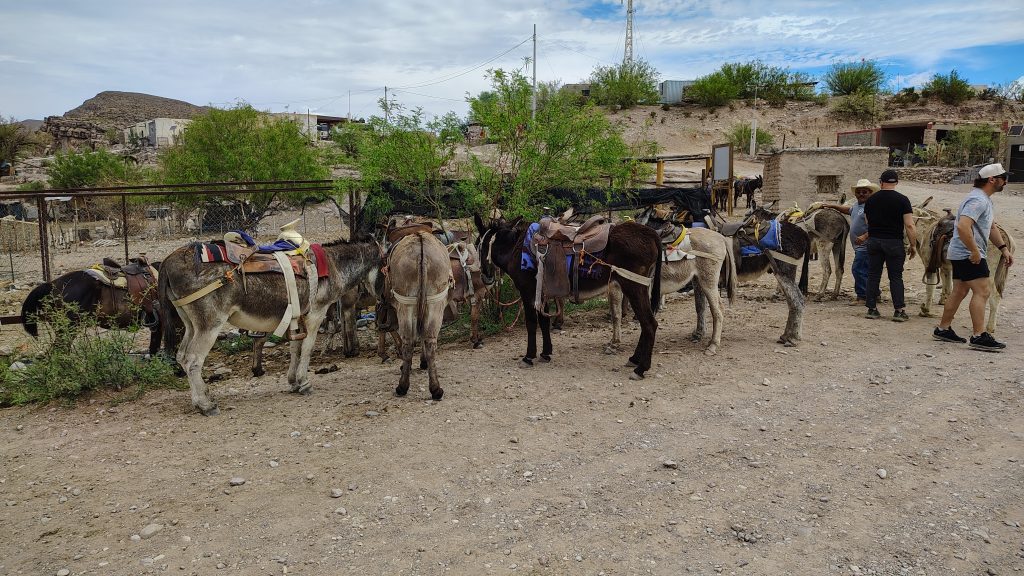
The main thing to actually do in Boquillas is to hire a donkey for the ride into and out of town. This looked fun, but I didn’t drink enough one-dollar Tecate to really need the ride back home 😅.
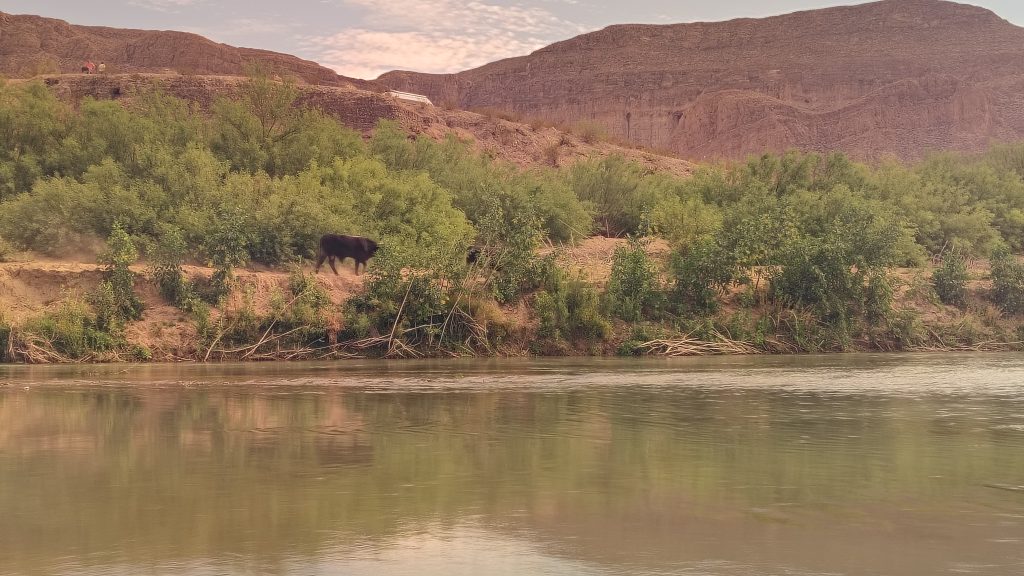
Cattle being driven to pasture along the riverbank.
Wait, shoot, that’s the American side:
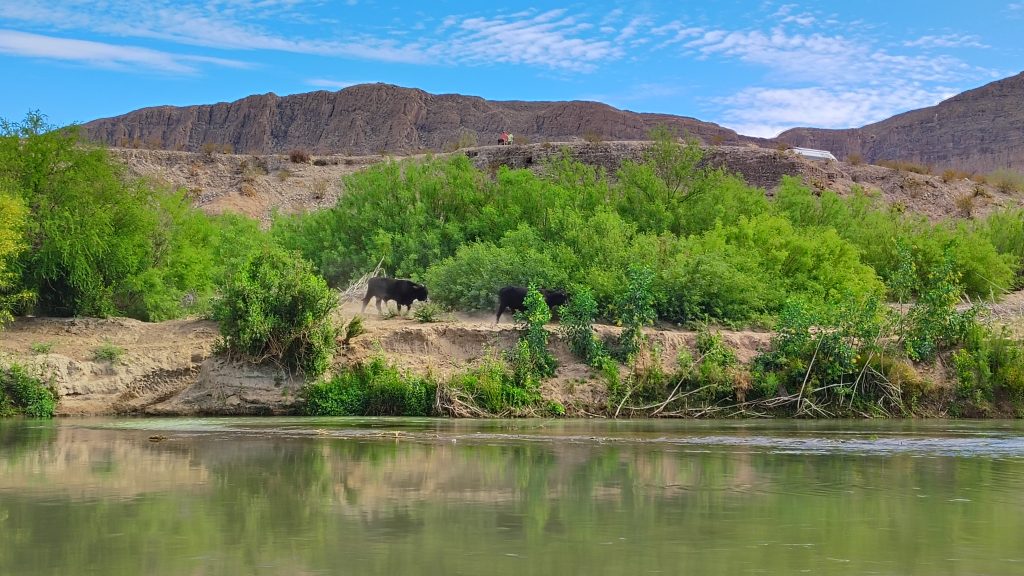
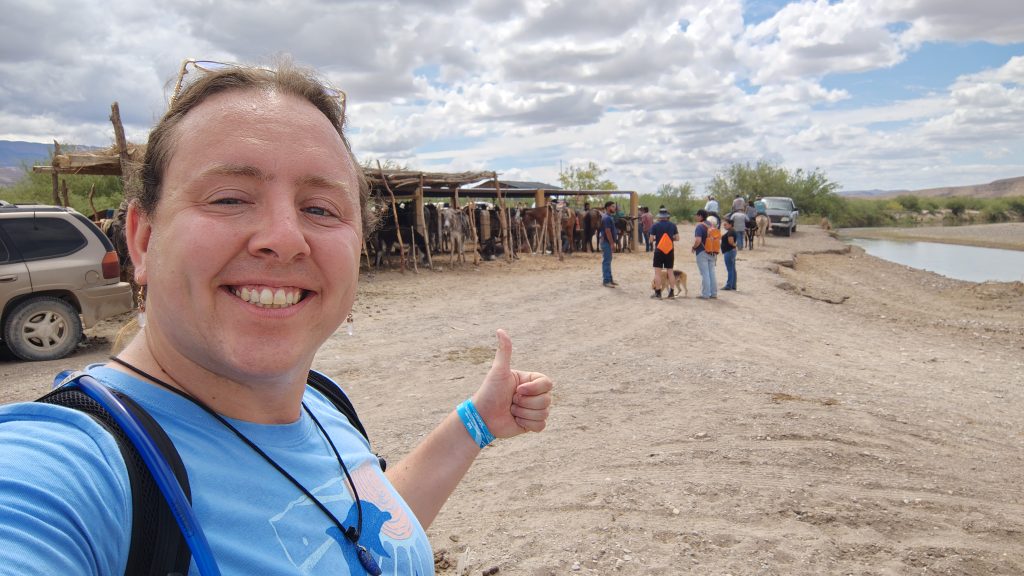
All told, it was a nice first trip to Mexico 🙂 I wandered back to the border around 2:00 in the afternoon and crossed back over relatively easily:
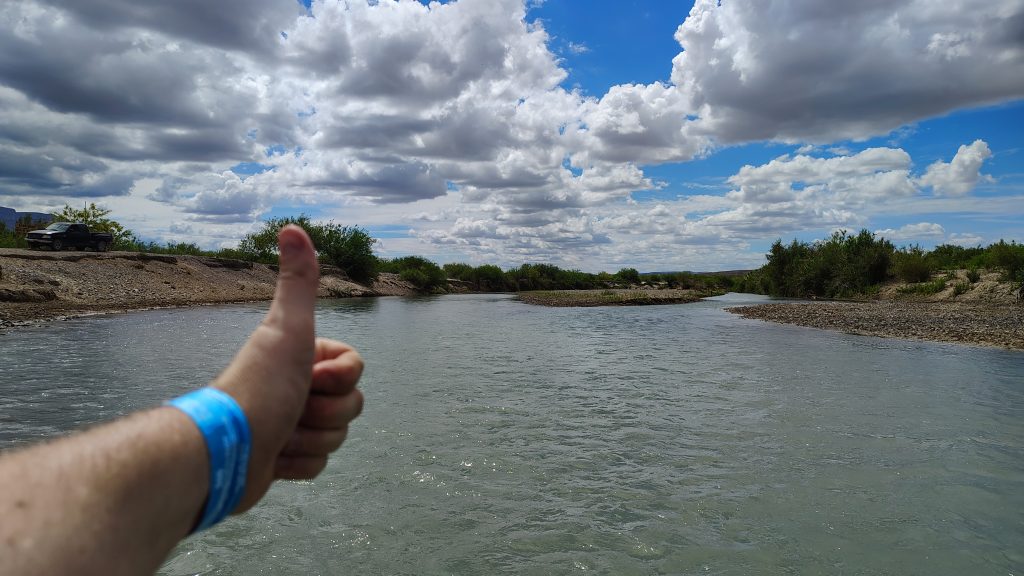
What joy there is, in water in the desert 💙
Unfortunately, this is the part of the narrative where the foreshadowing reaches the present tense. After getting back to my campsite and hanging out for a while, the rain started to fall:
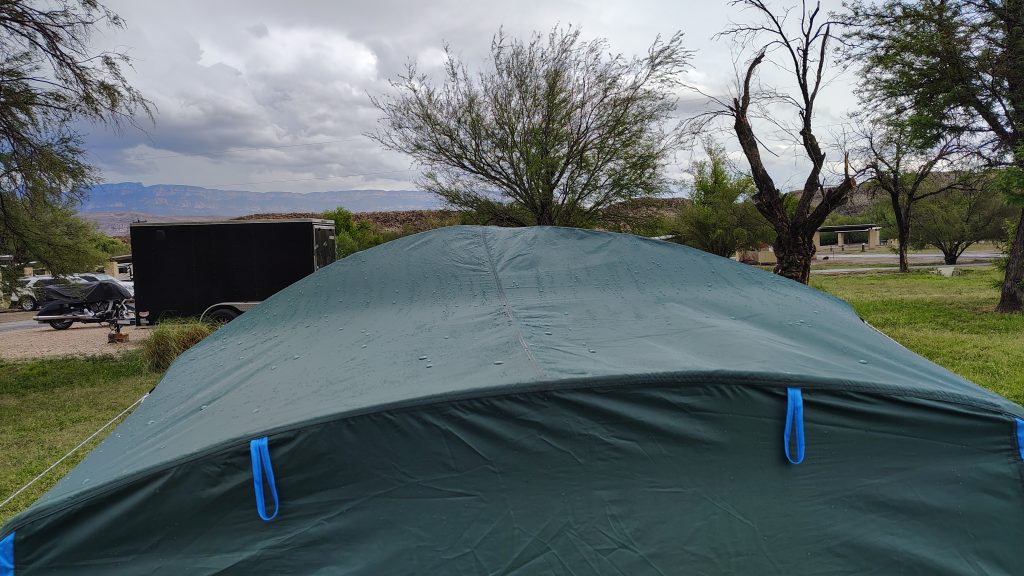
No big deal at first, right? Well, then it started to pour. And then the wind started to really, really howl:
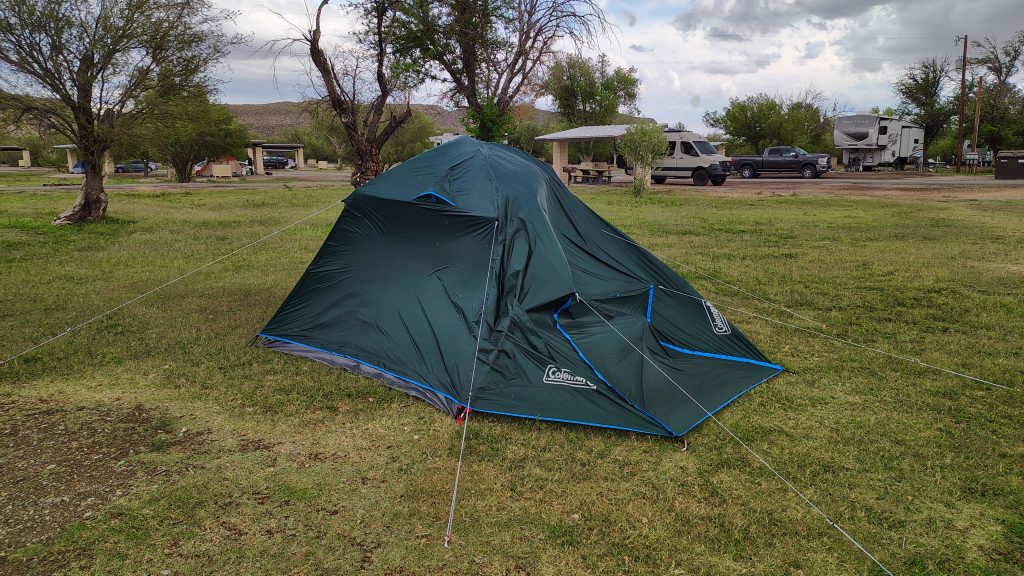
After about an hour and half an inch of rain, a main pole broke in my tent. The storm was still picking up, and I was afraid of another pole breaking, so I broke down the tent as far as I could and lashed it to the ground:
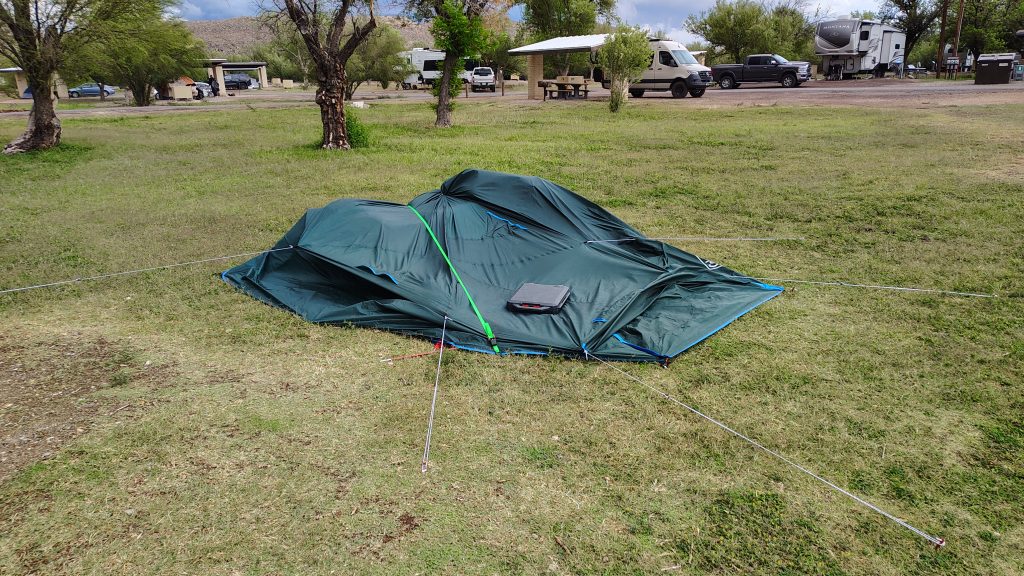
Yes, I literally had to ratchet-strap my tent down. About 4 tents were ripped clear from the Earth and blown into the neighboring trees; several people took down their tents entirely and packed up for the Chisos Lodge.
This strategy kind of worked. My tent didn’t get blown away or damaged further, but every part of it in contact with the ground was soaked to the gills. In total, two inches of rain fell in about 3 hours; an astounding amount when you consider that Big Bend usually only gets 10 inches of rain per year.
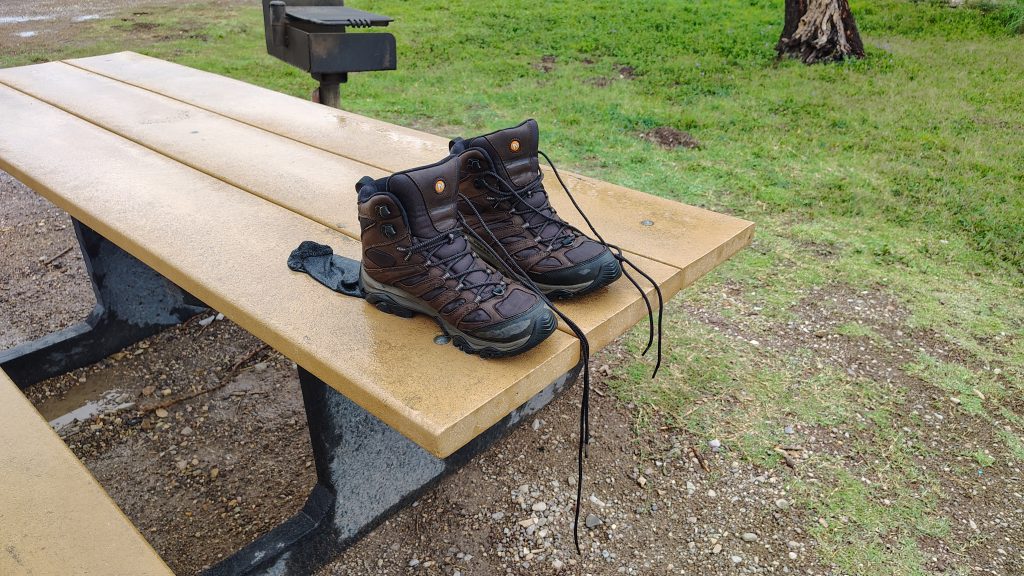
Would you believe that I originally set out these boots to dry?
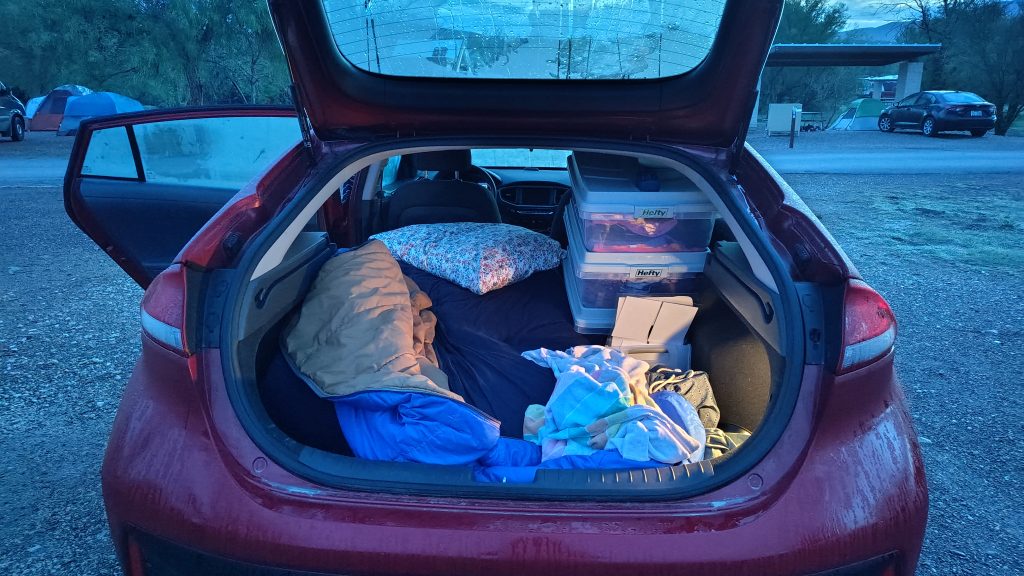
Tent underwater, this became my sleeping arrangement for the night. Ah well ¯\_(ツ)_/¯.
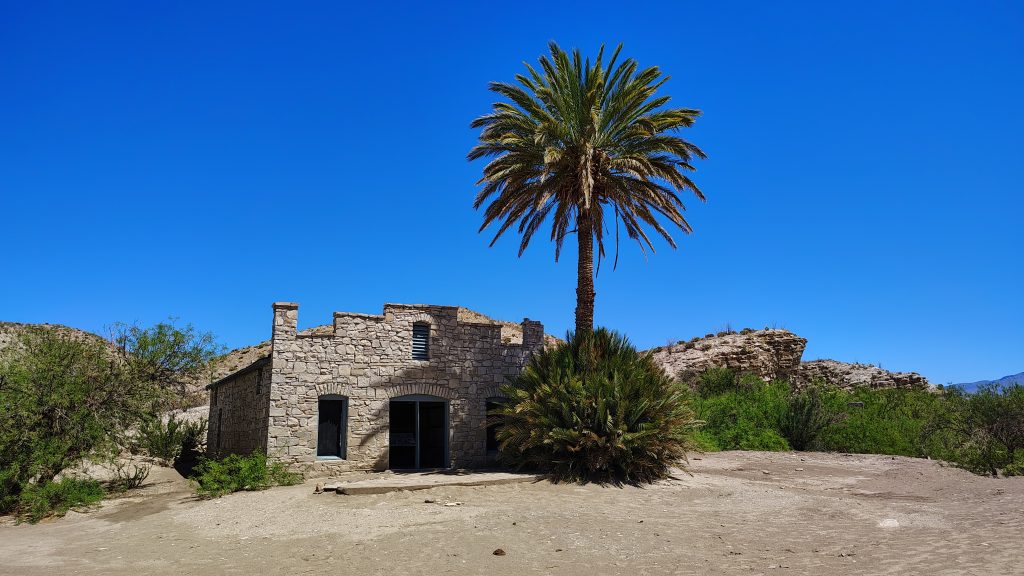
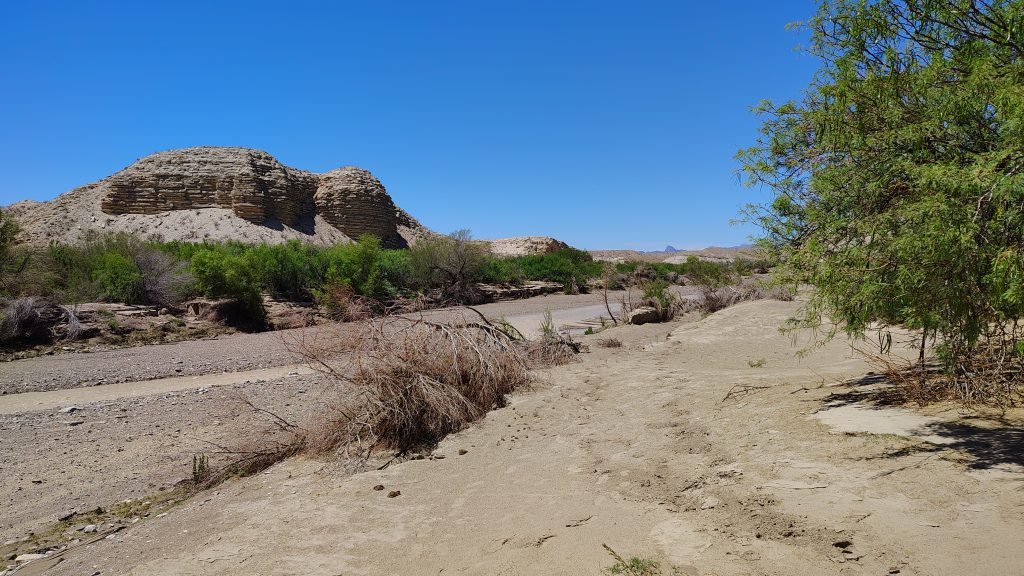
The effects of rain in the desert are hard to underestimate. Because it rains so infrequently, the soil in this area is not accustomed to soaking up the rainfall, and flash floods are the result. Here are some photos from a hot springs in the area that I had visited two nights before:
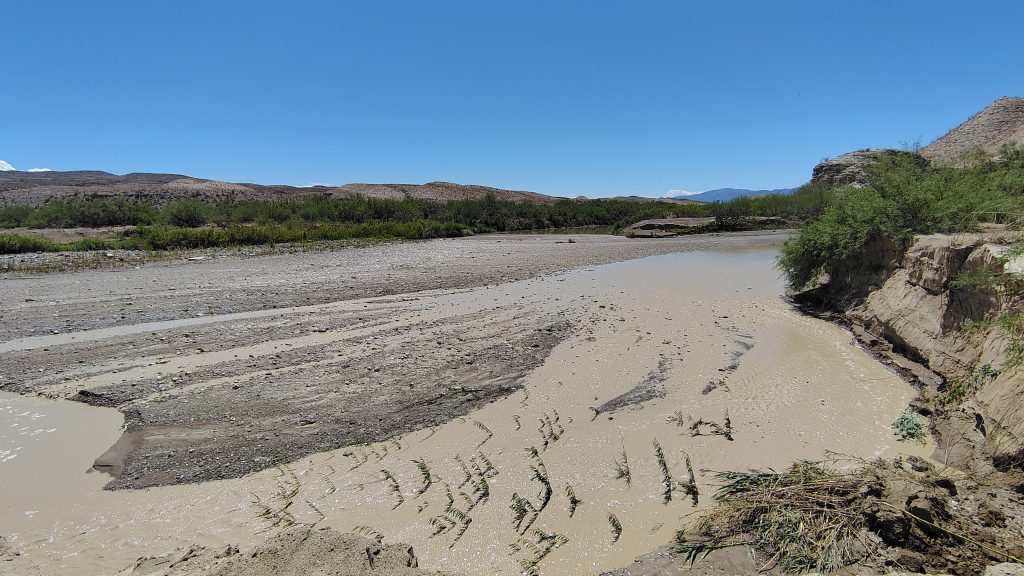
Two days before, this wash was completely dry. Frankly, it looked like there had never been water in it. The day after the flood, it was swifter and wider than the Rio Grande itself.
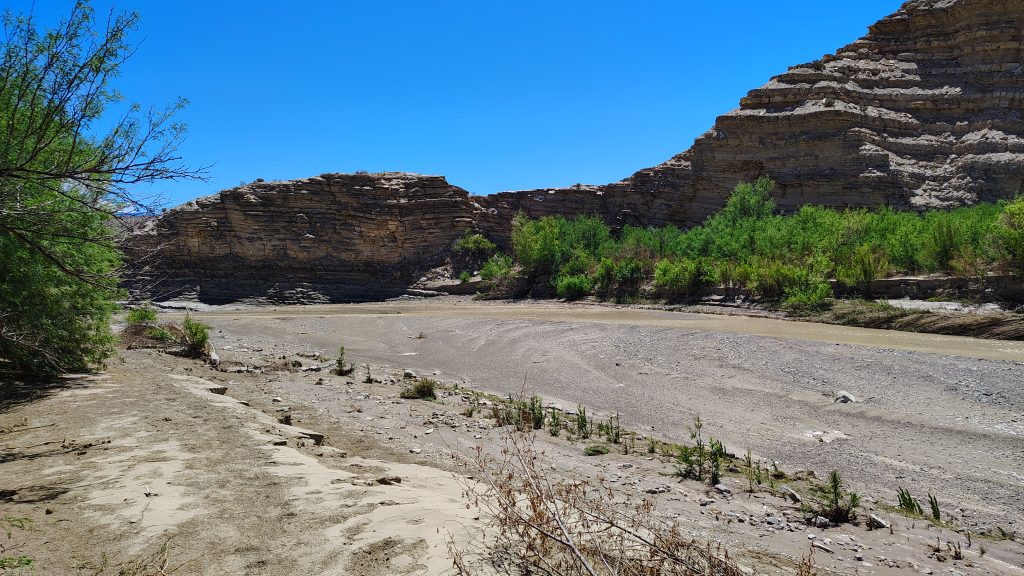
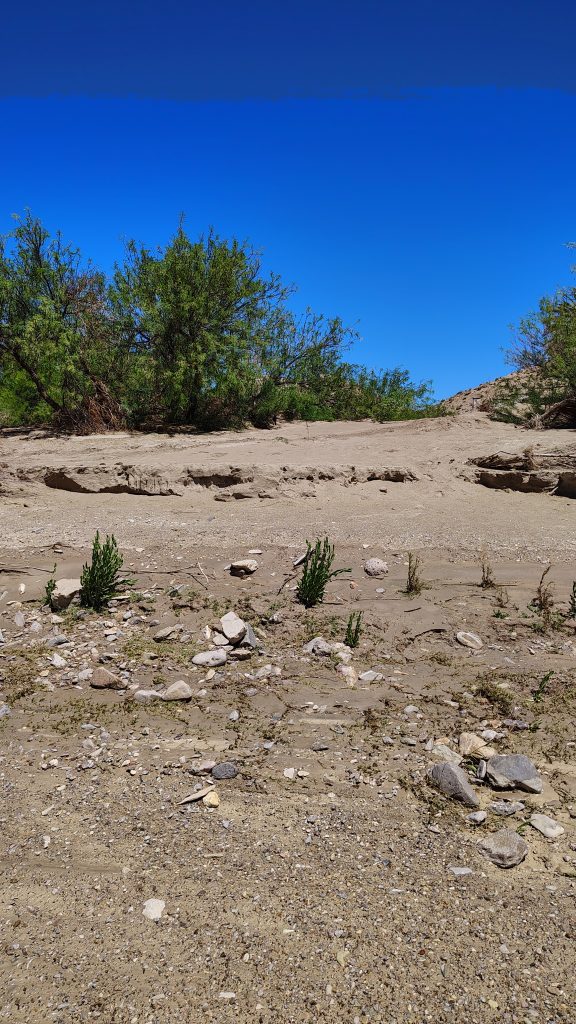
The wet part of the riverbank was about 24″ inches high, indicating that the water had risen and fallen more than 2′ in barely 18 hours.
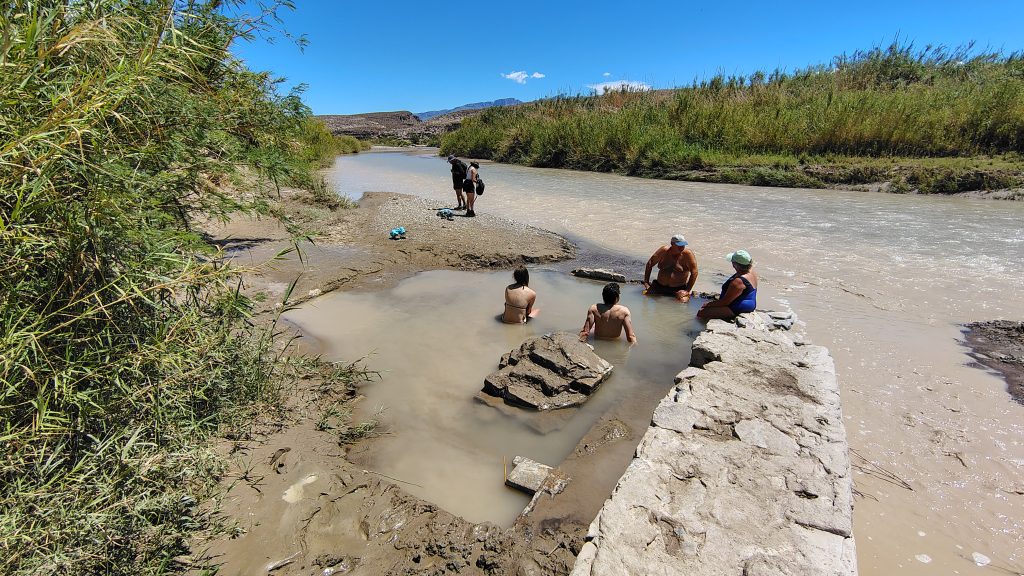
Here is the hot spring itself. Two nights earlier, this was a clear, square 18″-deep pool with a gravel bottom and a low retaining wall.
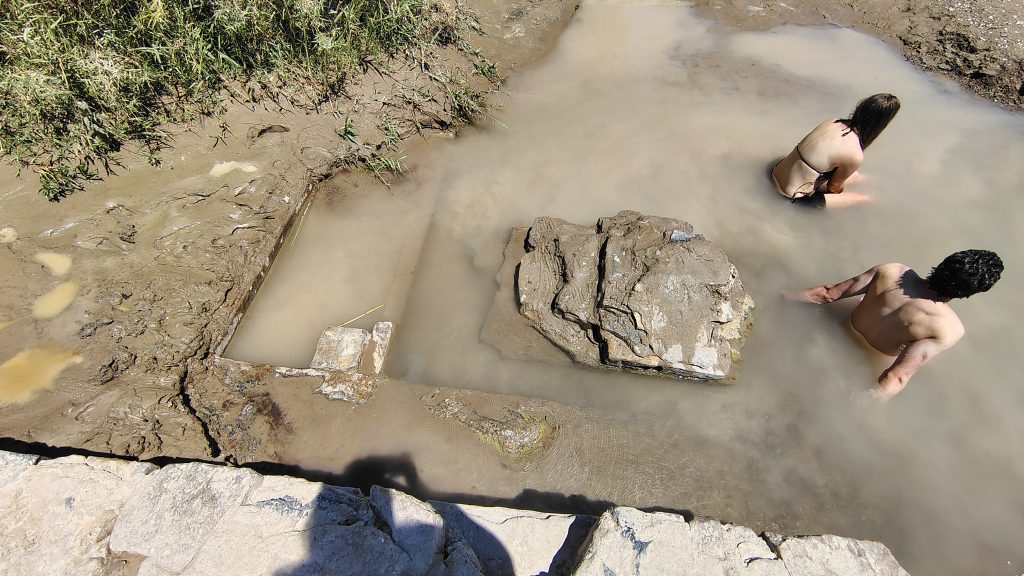
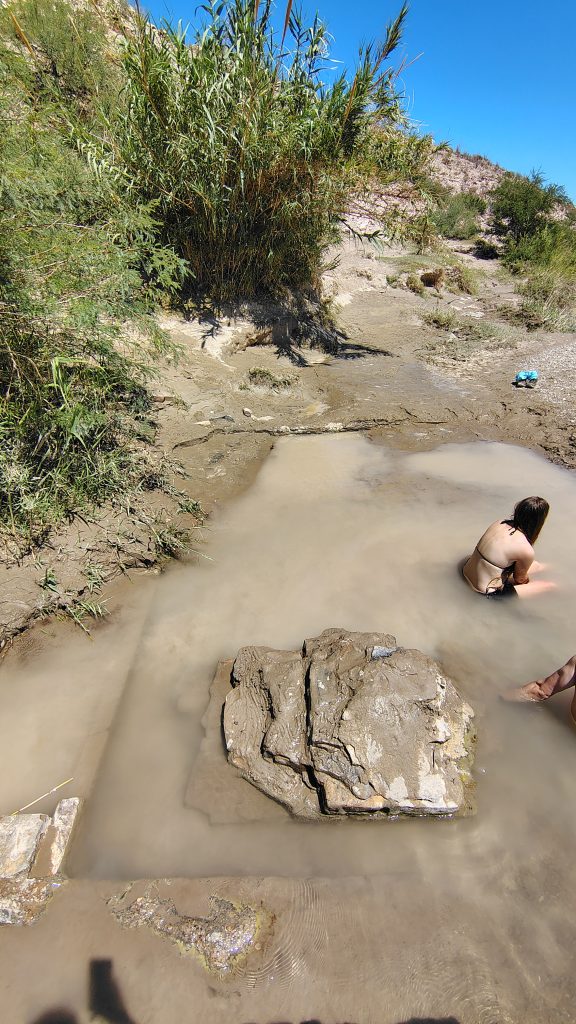
The day after the flood, the retaining wall was mostly buried and enough dirt had flowed in to double the pool area, but cut the depth down to 6″.
The power of water in the desert. Stunning, isn’t it?
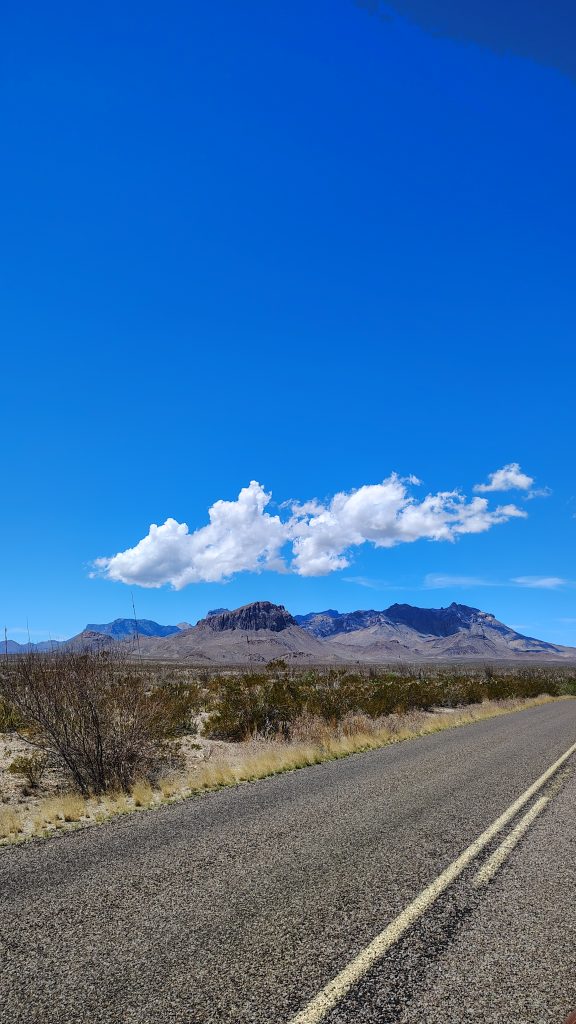
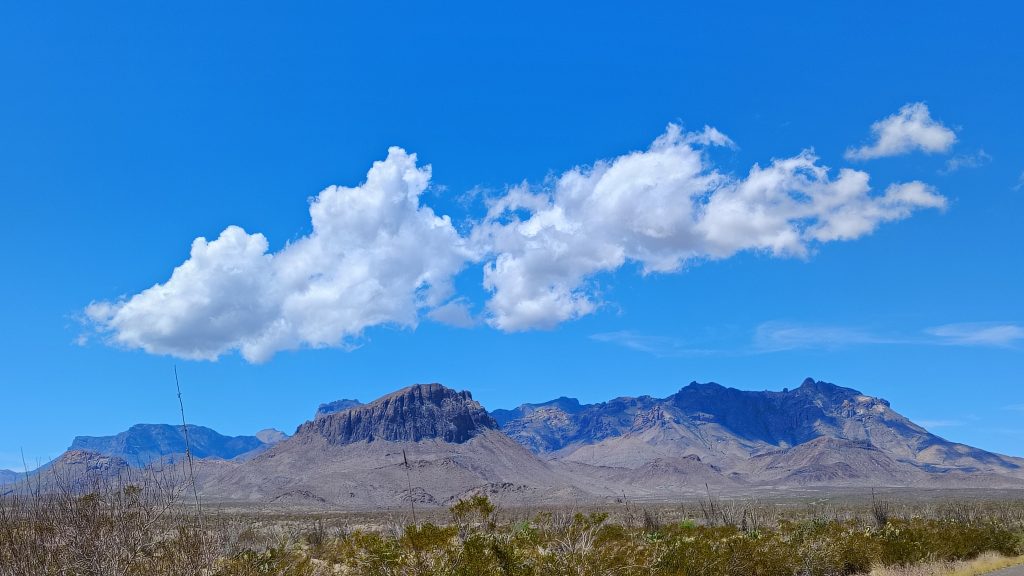
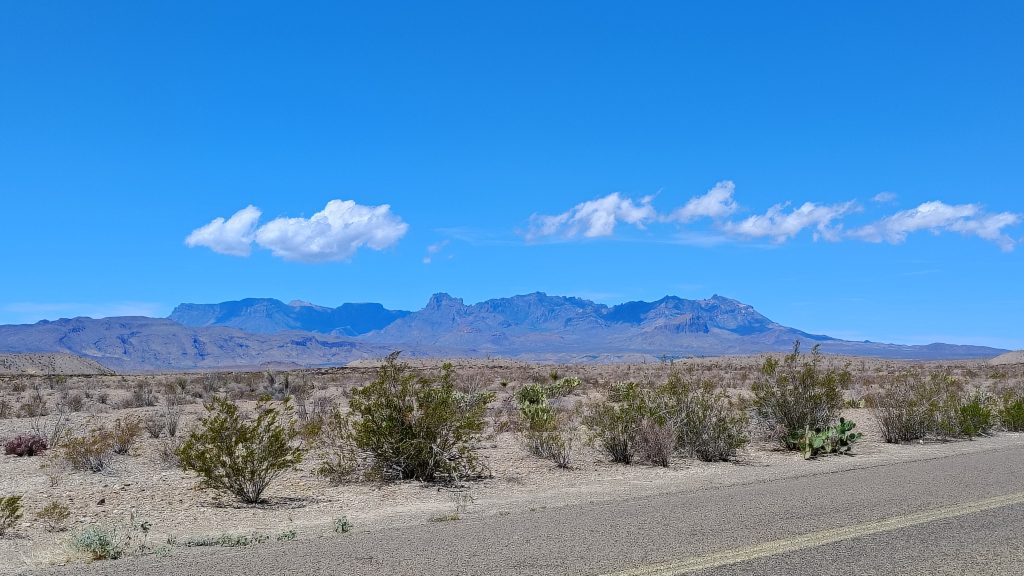
Clouds tend to form and hover directly over the Chissos Mountains due to the higher water retention and lower temperatures in those areas.
But eventually, it was time to move on. I had a grand old time in Big Bend National Park; I highly recommend that you visit it between December and March when it’s appreciable cooler, and no later than mid-April if that’s all you can swing. And visit sooner rather than later; everyone I spoke to in the park, newbies, regulars, rangers, all of them agree that this state of affairs is probably coming to an end before 2029. See it while you can!
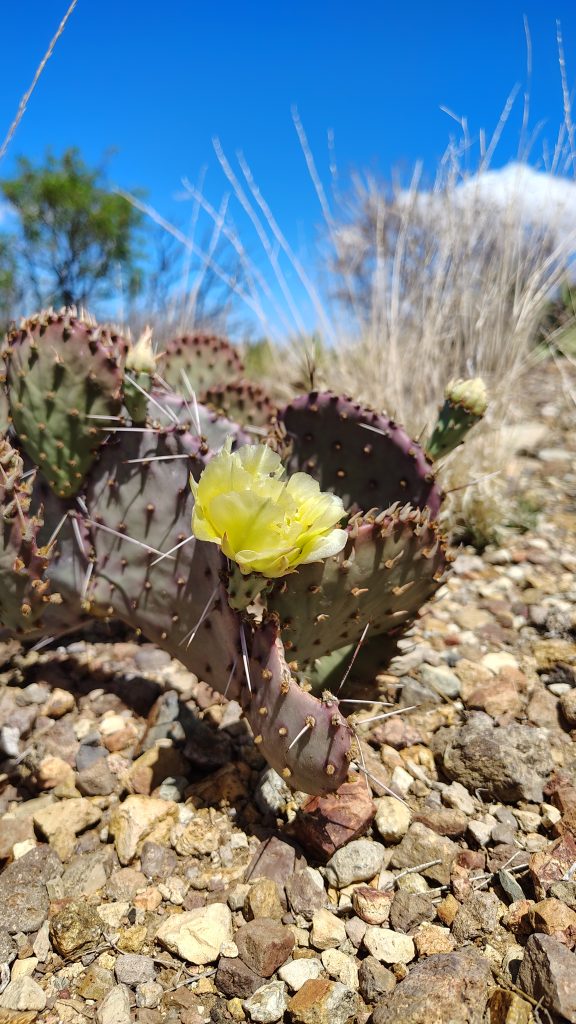
As I drove out of Big Bend, I was greeted by one more beauty: yellow cactus flowers in full bloom.
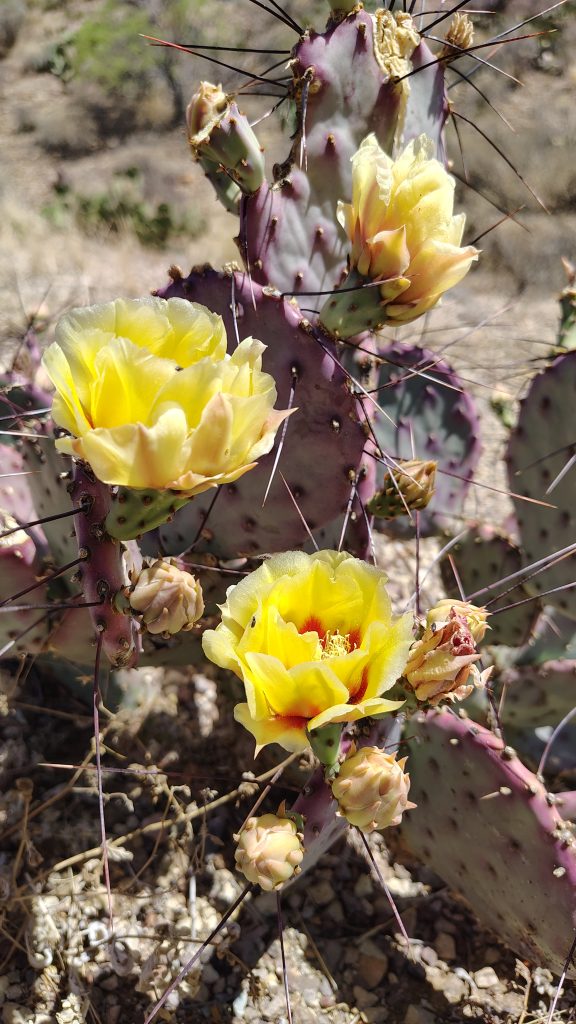
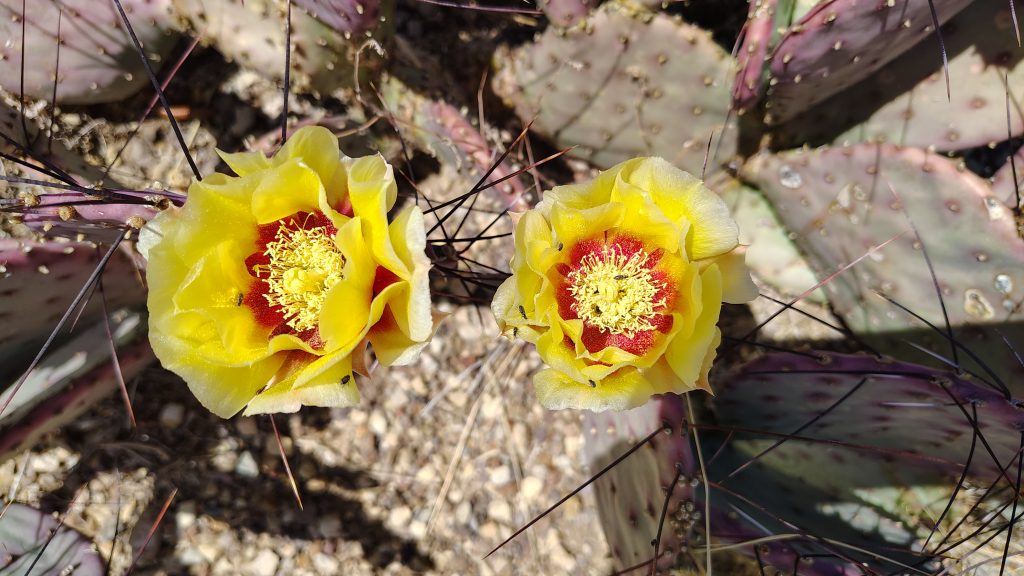
Aren’t they so perfect? Don’t they just look like they’re made out of sugar glass? I see why they are shrouded in spines, so great is the need to protect somethign so beautiful and delicate.
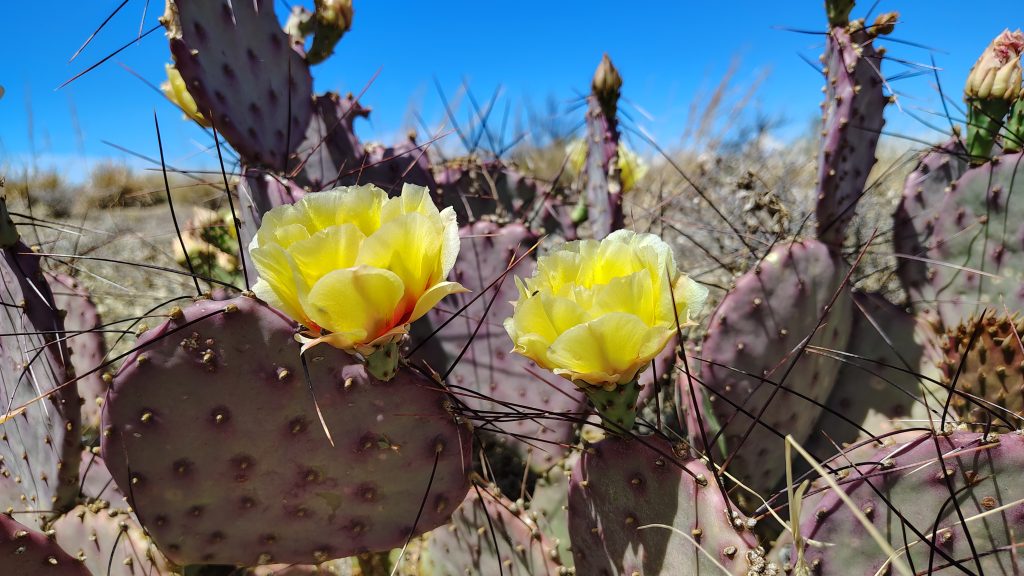
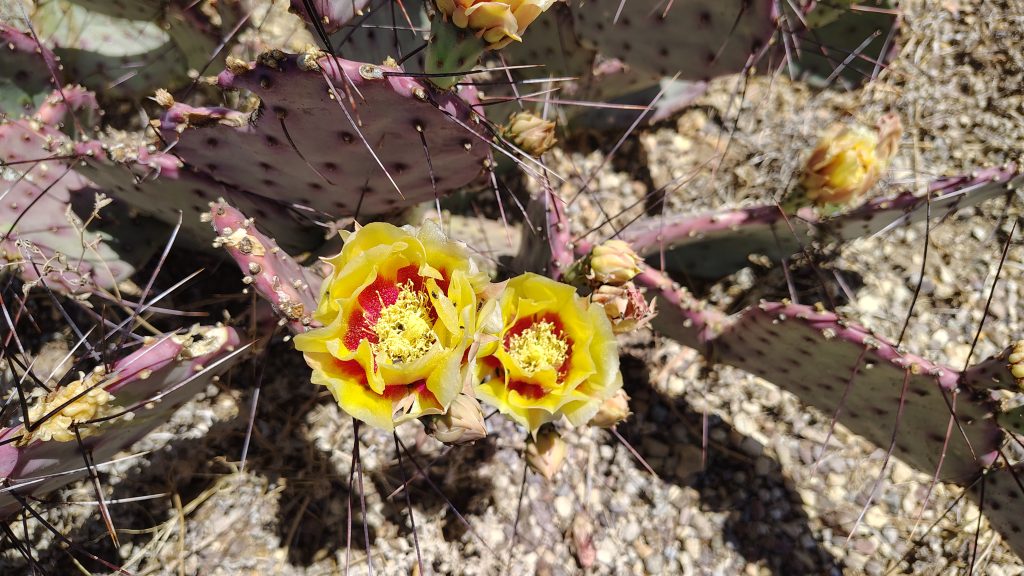
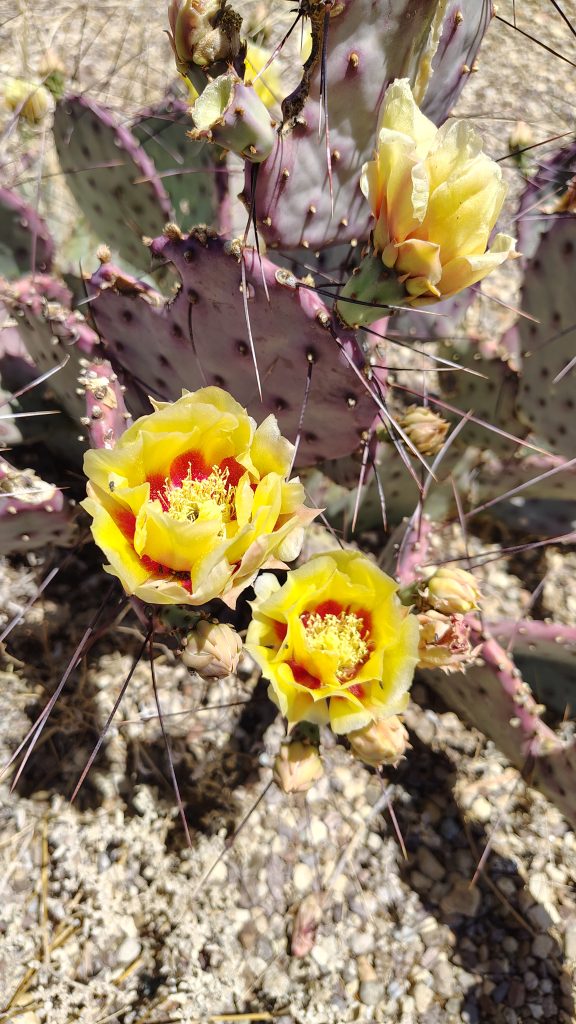
Who doesn’t want to protect something this beautiful? This wonderful fruit of water in the desert?
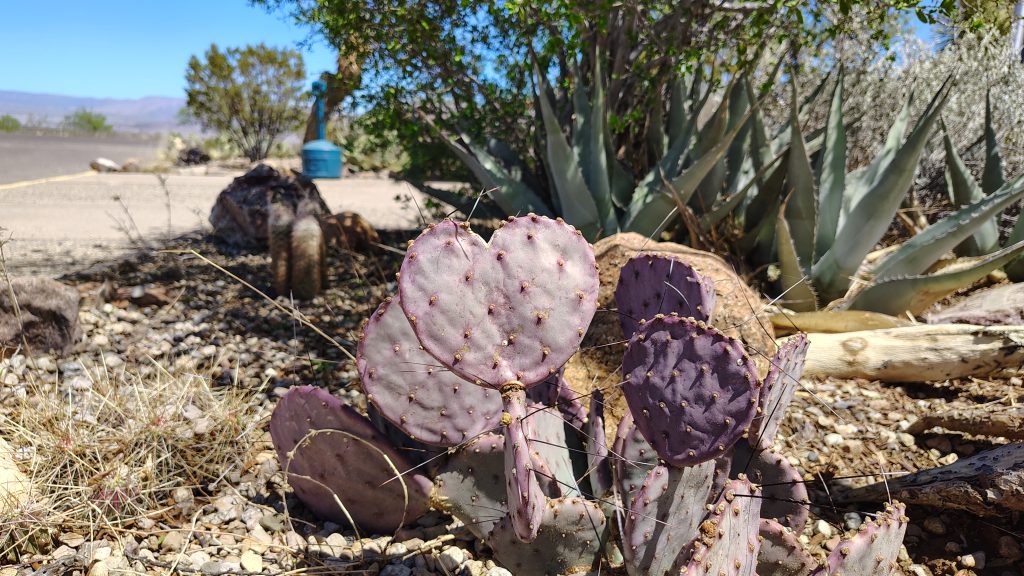
I know I do 💜.
That’s all for now,
Stay well everyone,
Evan 💙