Dear Friends and Family,
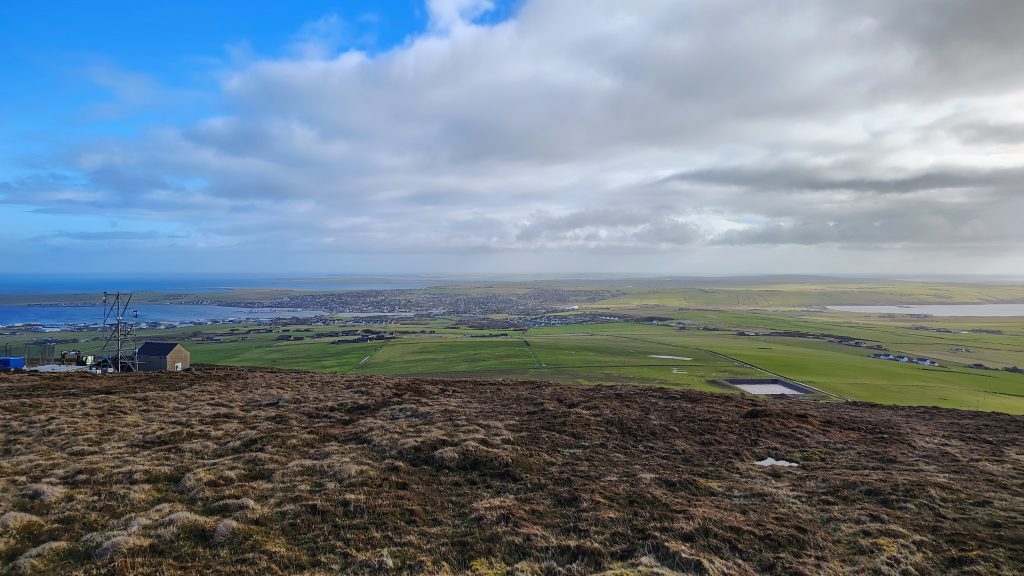
So, the whole of Orkney lies beneath my feet and tires. What was it like exploring it?
For those unawares, Orkney is a series of islands off the very northern tip of Scotland. You may have heard the phrase “from John o’ Groats to Land’s End” to mean “encompassing the entirety of a very big thing” (i.e. like saying “from New York to LA” to roughly mean “covering the whole country”); Orkney is actually off the coast of the John O’ Groats, meaning it’s basically at the edge of the world as far as I’m concerned.
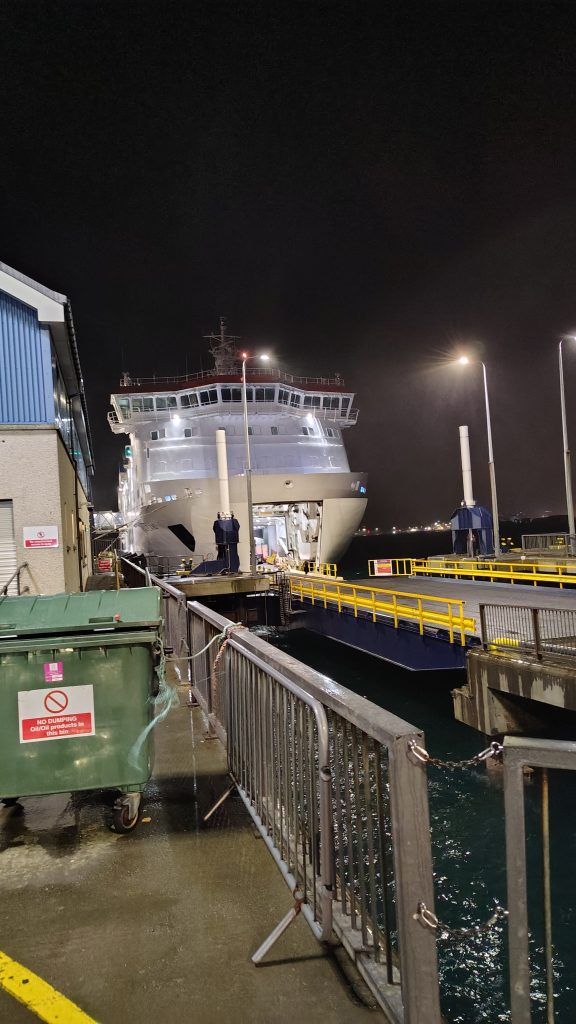
Besides an eight-hour transatlantic flight and ninety-minute puddle jumper from London to Aberdeen, the ferry to Orkney from Aberdeen takes about 6 hours. It’s way out there.
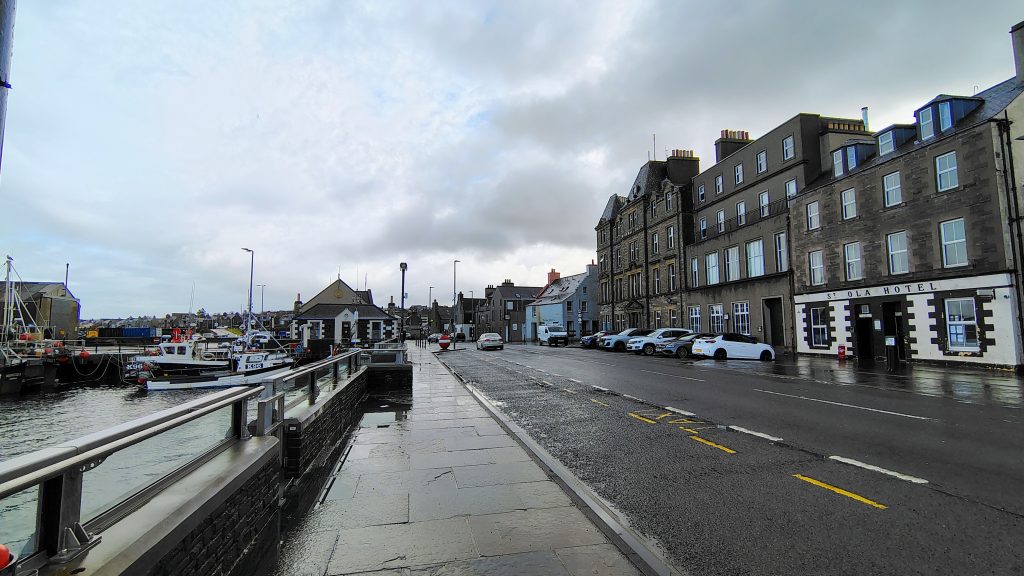
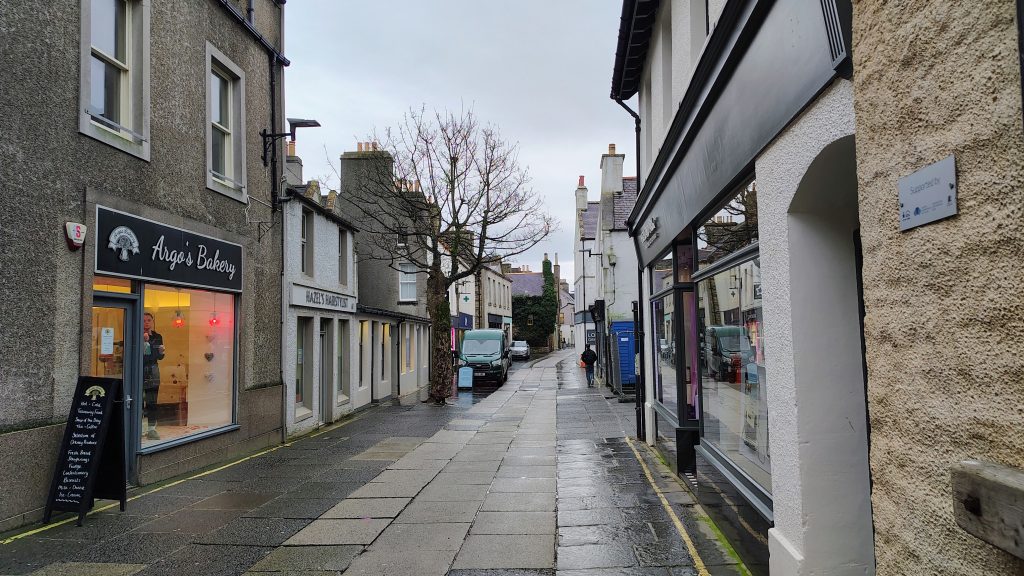
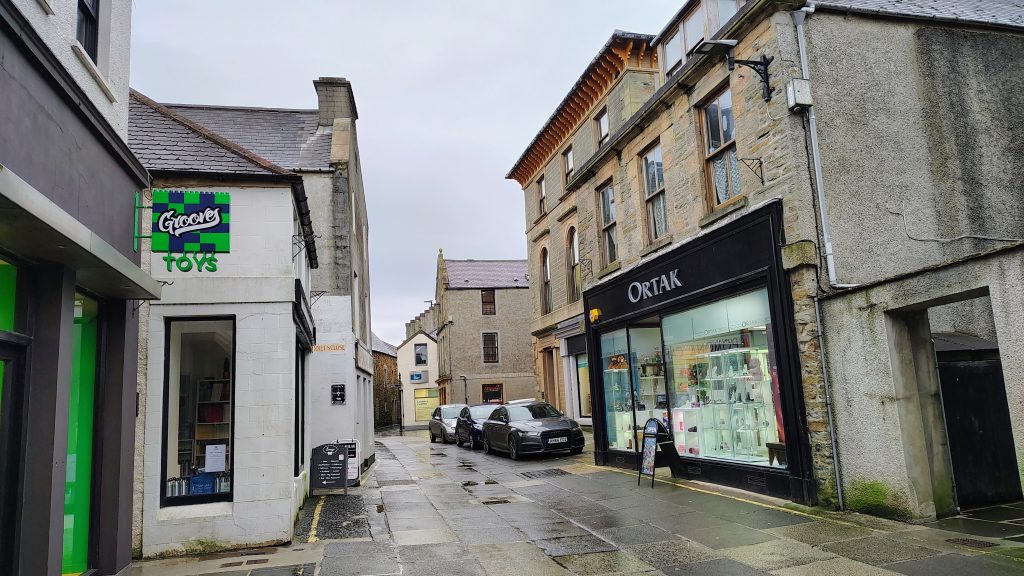
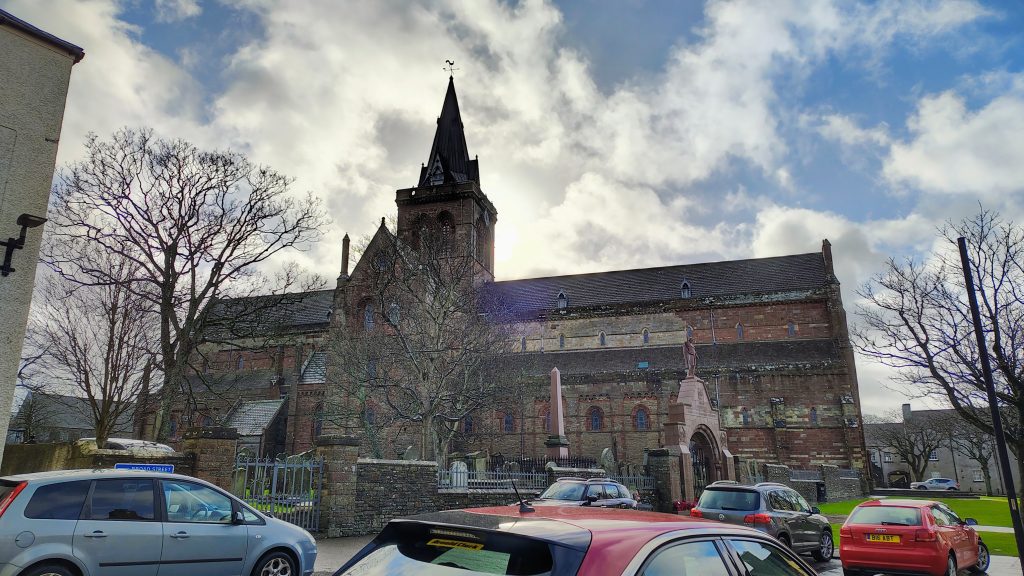
The main town on Orkney is Kirkwall, a charming little city of about 10,000 people. The people were beyond friendly; I wandered into a kabob shop on my first night in town (it was the only place that was open) and within two minutes a girl gave me a free pendant and asked me what my pronouns were!
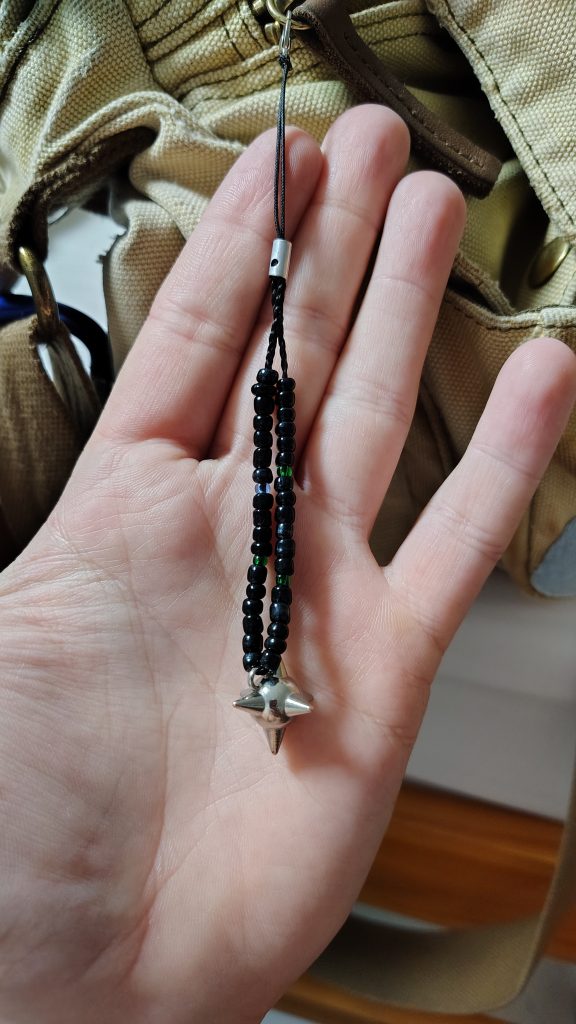
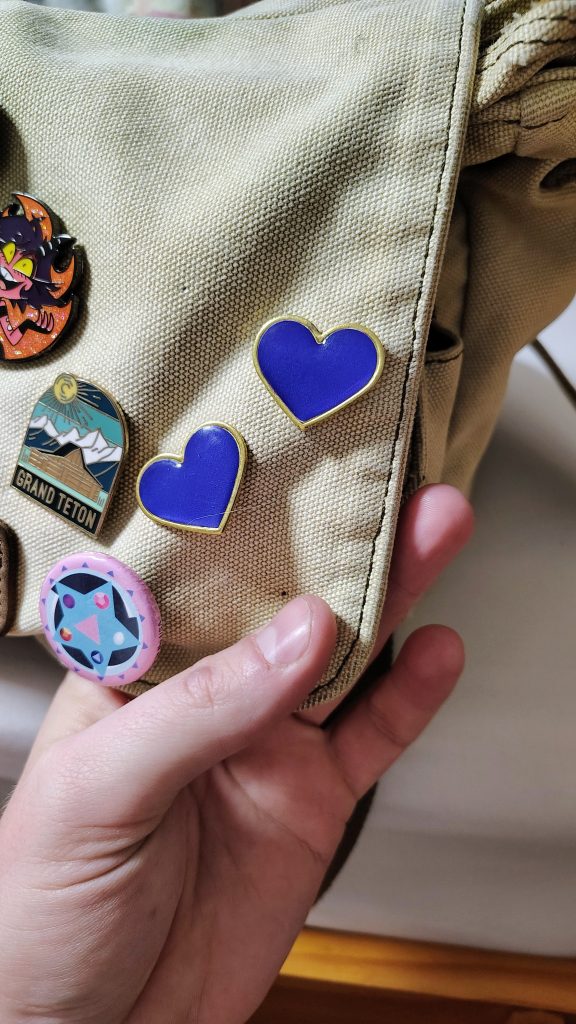
What a great town! 🏳️🌈 I gave her one of my blue heart pins in return 🙂
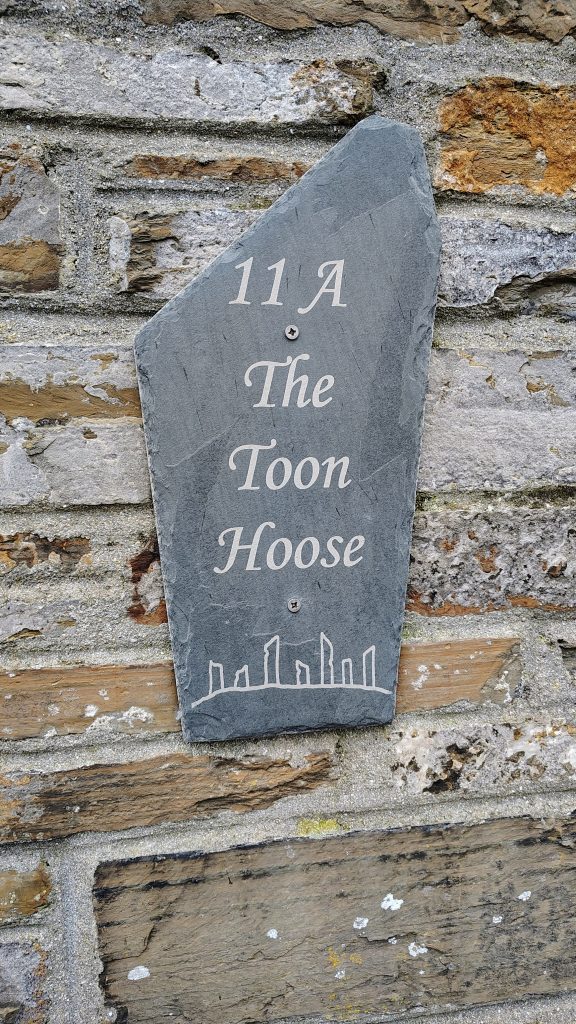
The local accent is thicc, to say the least, but I managed.
But as charming as Kirkwall is, that’s not the main reason I came to Orkney! I started my journey here because it is positively littered with neolithic sites.
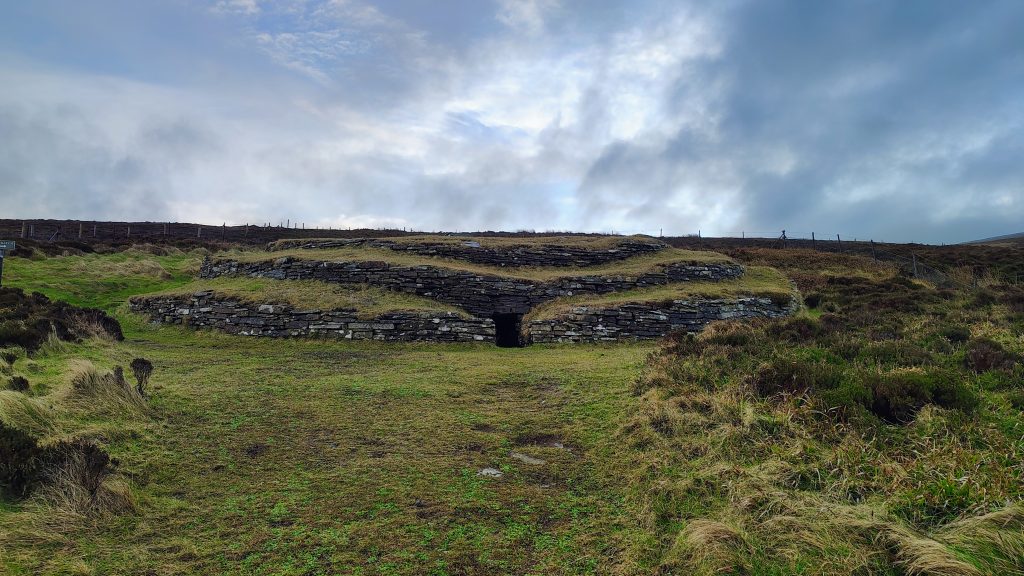
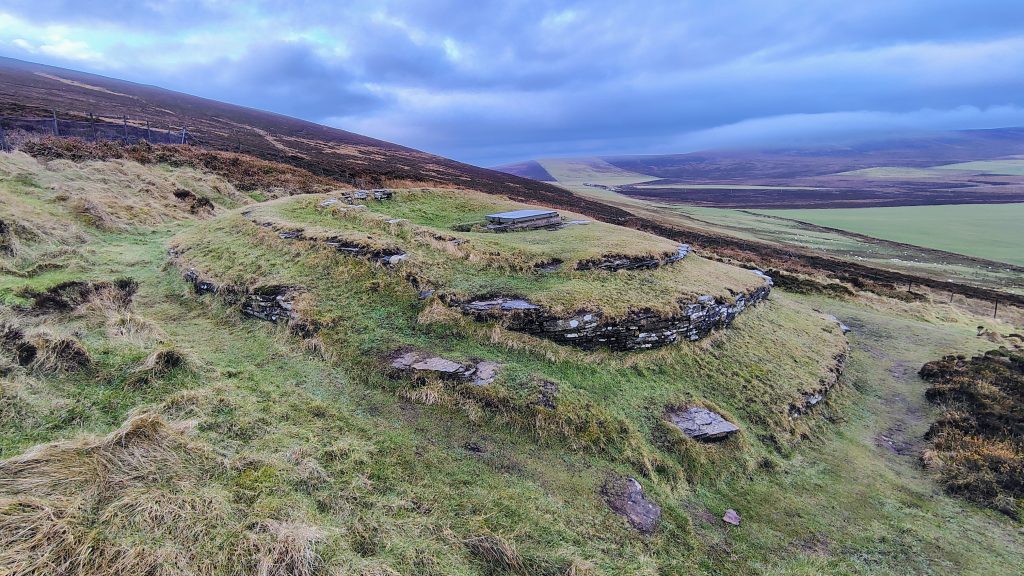
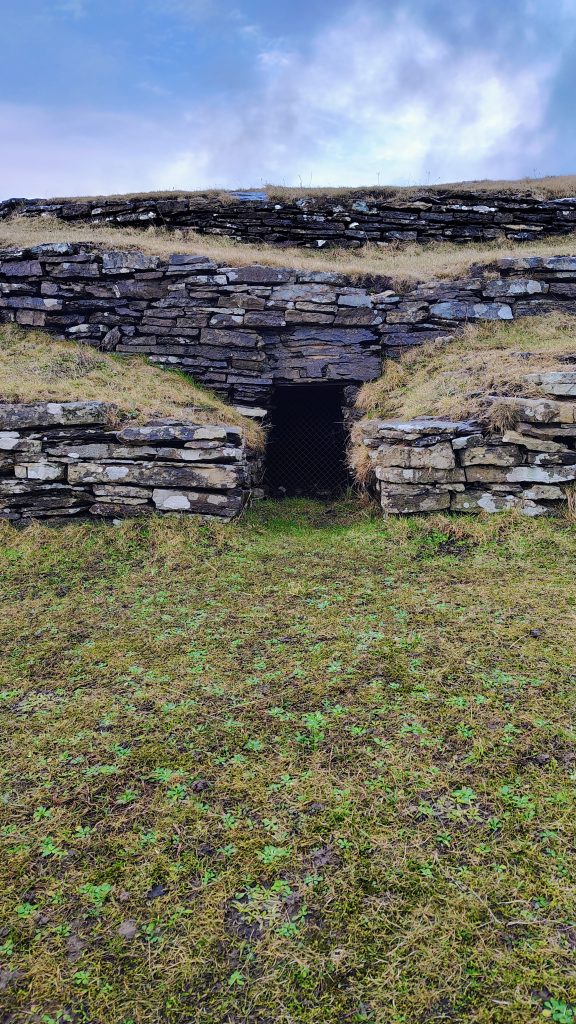
Here, for example, is Wideford Hill Chambred Cairn. This is a neolithic burial chamber found on a hill above KIrkwall. It is 1,000 years older than the Pyramids at Giza, being constructed sometime between 3500 and 3000 BC.
And about 400 yards down the hill is a 3-bedroom rambler and a flock of sheep:
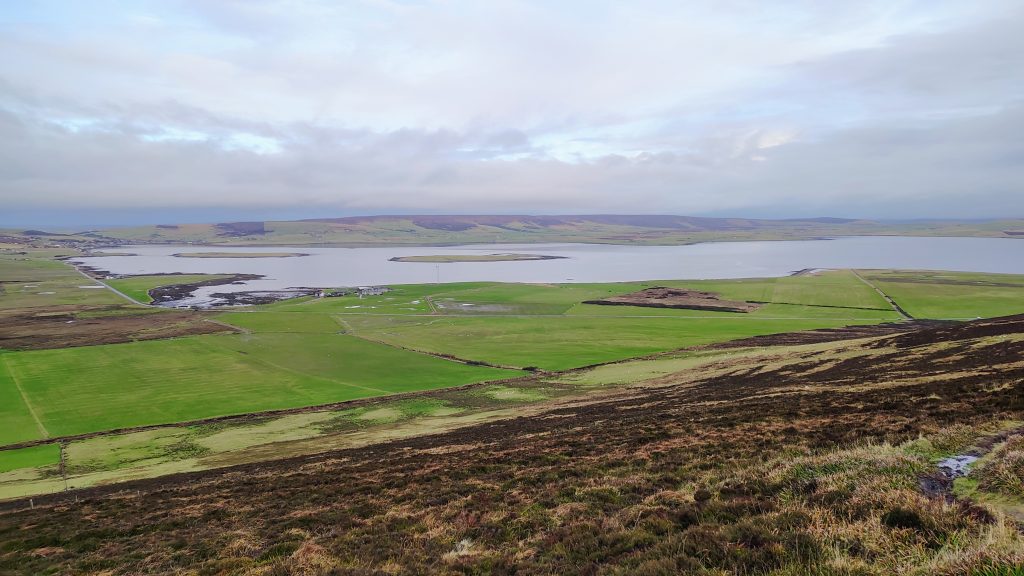
It’s difficult to wrap your head around how insanely ancient, but also insanely common the sites on Orkney are. Wideford Hill Cairn is absolutely not the most popular cairn on the island, and it’s located in the functional equivalent of just a county park. If this was the USA, something this ancient and impressive (if it existed at all, surviving the intentional destruction most of our ancient sites suffered), would be 3 hours drive deep into completely inhospitable wilderness. On Orkney, it’s within sight of a Tesco’s!
But I’m getting ahead of myself! What is a cairn? Well, on Orkney, it refers to a kind of stone tomb that was built in the neolithic period, mostly between 3500 and 2500 BC. This is a place where the ancient Orcadians kept their dead:
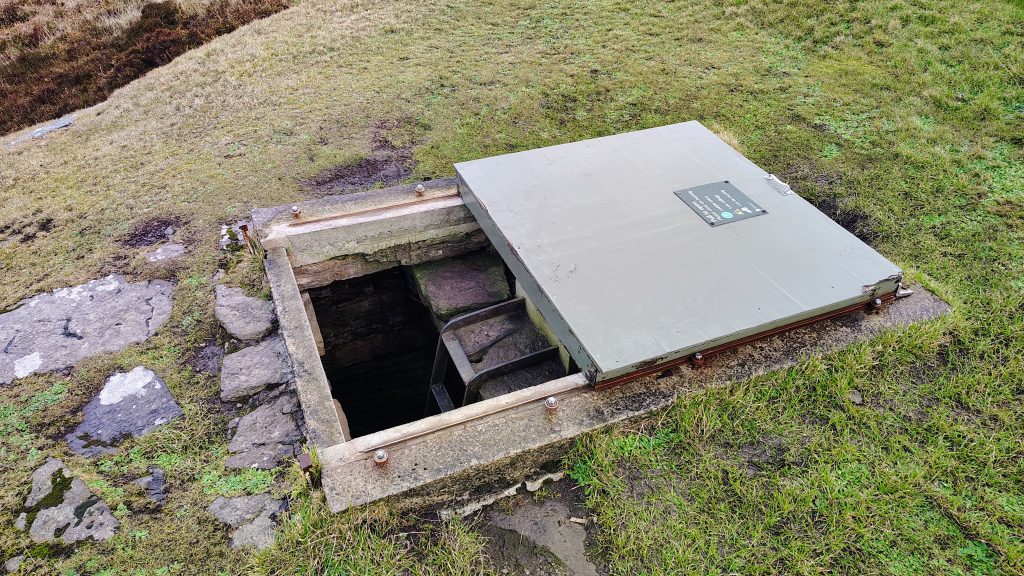
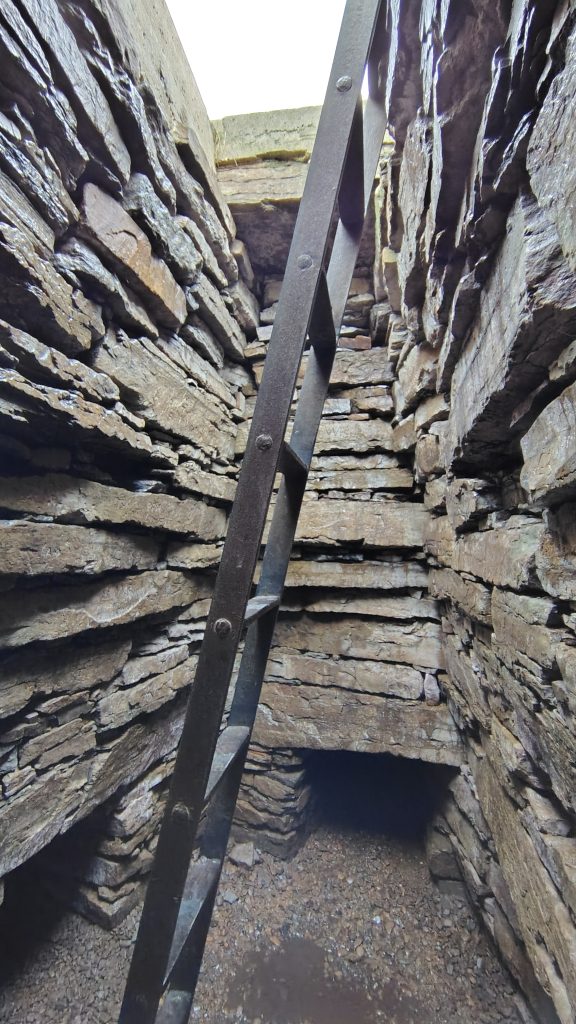
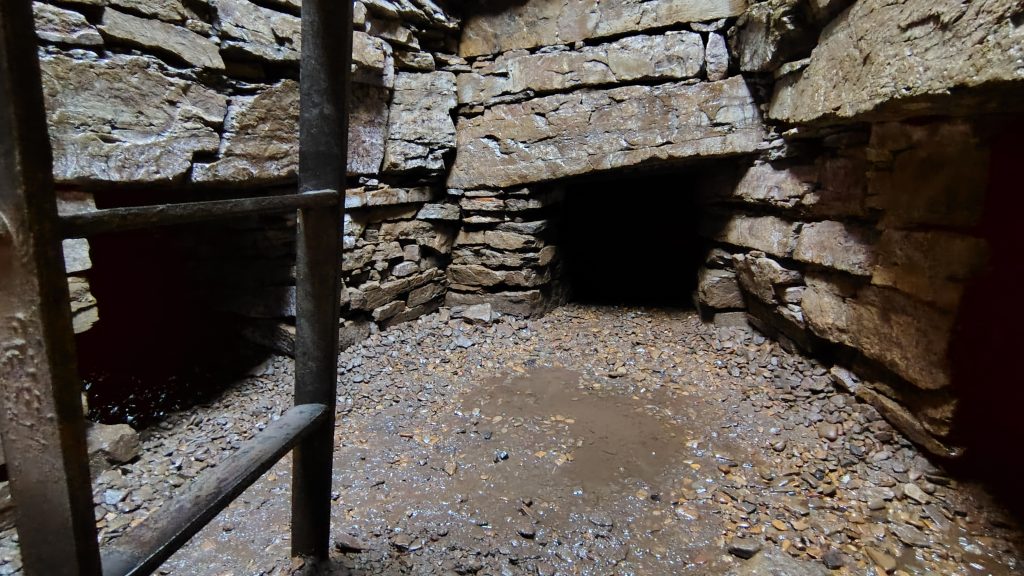
Down the hatch! (The hatch and ladder are modern).
When you died on Orkney, the typical burial practice was to leave your body out in the weather for several weeks until you were reduced to bones. Your descendants would then take your bones and deposit them in the local cairn; typically, every village had a cairn where the bones of the dead were kept. Cairns varied considerably in style, construction, and other aspects, but many were “chambered cairns” that contained separate compartments within them in which the bones were stored. These are the dark, square holes in the photos you see above.
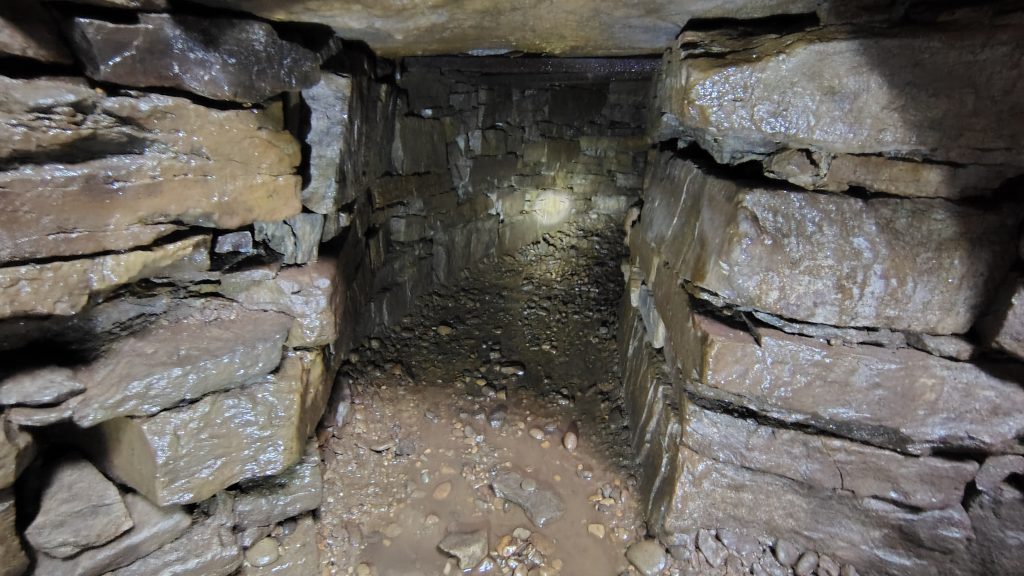
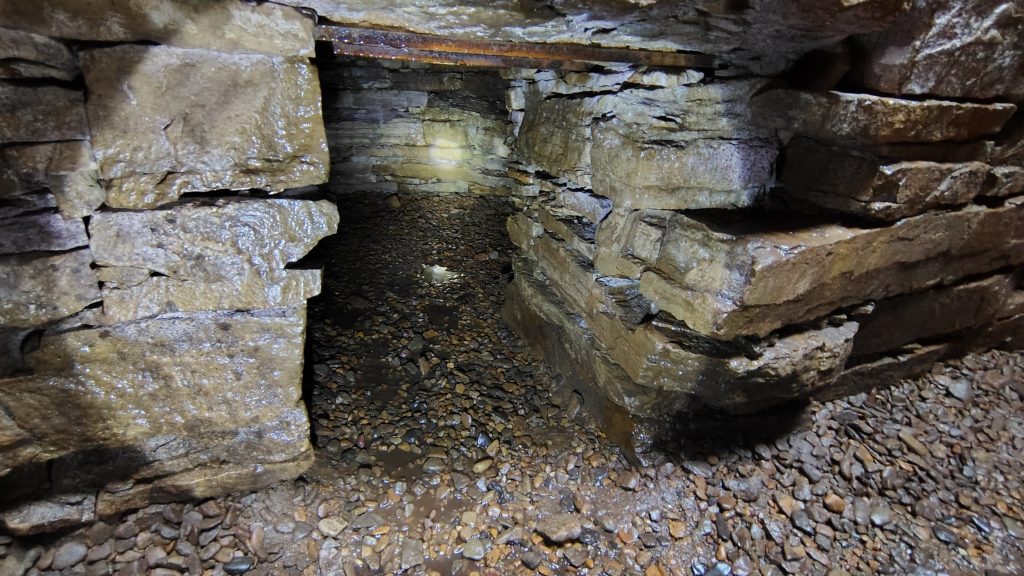
Looking into the chambers within Wideford Hill Cairn.
Most cairns were entered via a small passageway cut through the side of the cairn through which you had to hunch or crawl to enter:
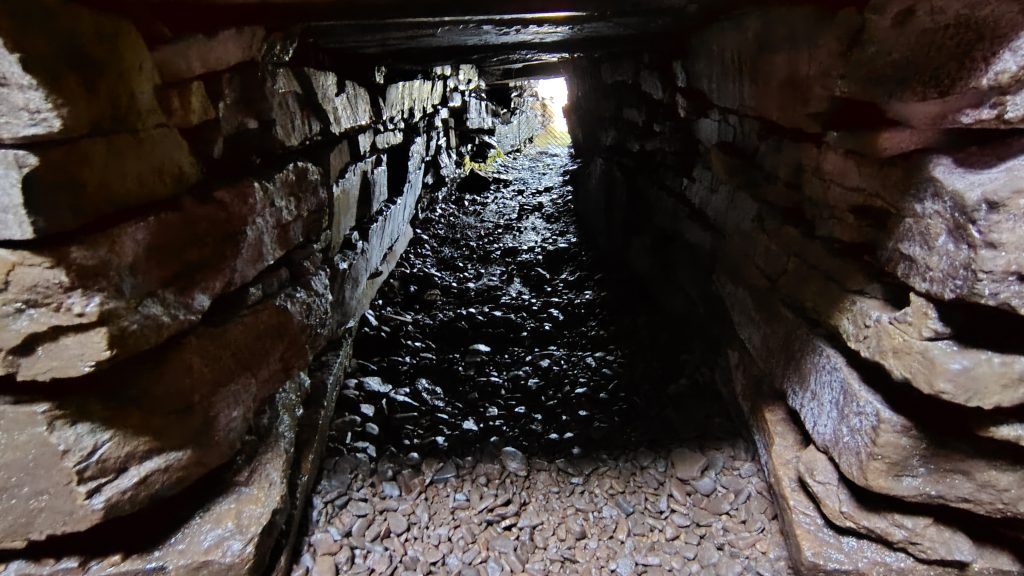
Looking through the original entrance to Wideford Hill Cairn.
And most impressively, most cairns had Astronomical alignments! The entrances to the cairns were constructed such that they were only illimunated by the sun at certain times on certain days of the year. Wideford Hill Cairn was typically illuminated by the setting sun for a few days around the vernal equinox, although it’s construction is a bit tougher compared to other cairns on the island.
To really see cairn construction at its absolute finest, you have to see Maeshowe Cairn:
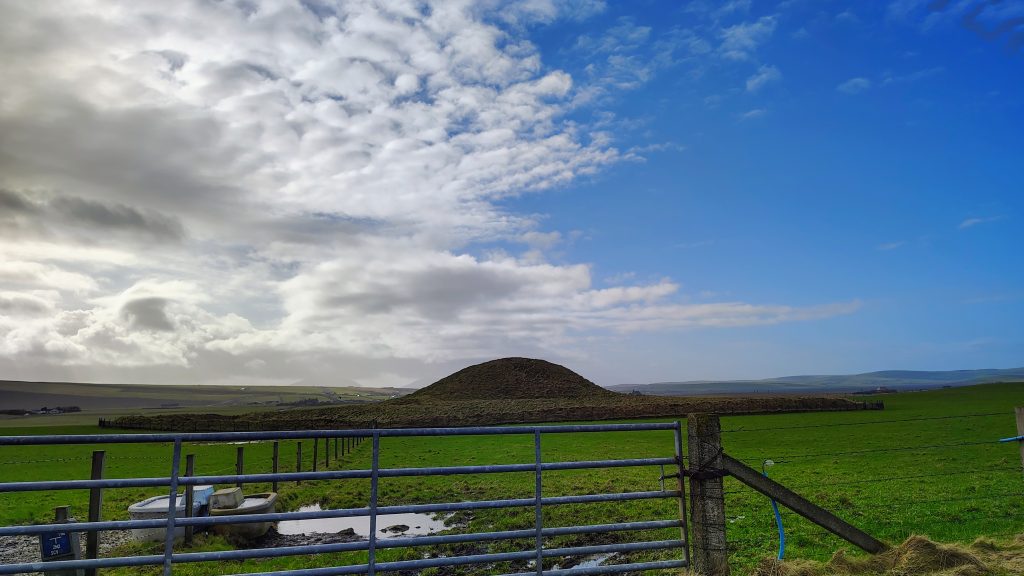
As usual for Orkney, pretty undiscerning right? Just a grassy hill in a field by a lake, surrounded by sheep or sheep-like creatures.
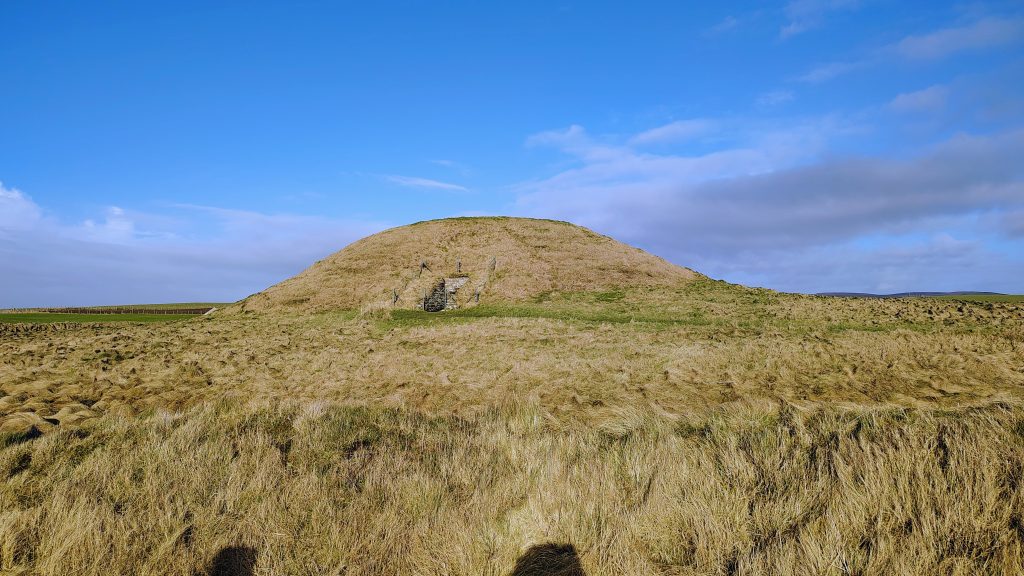
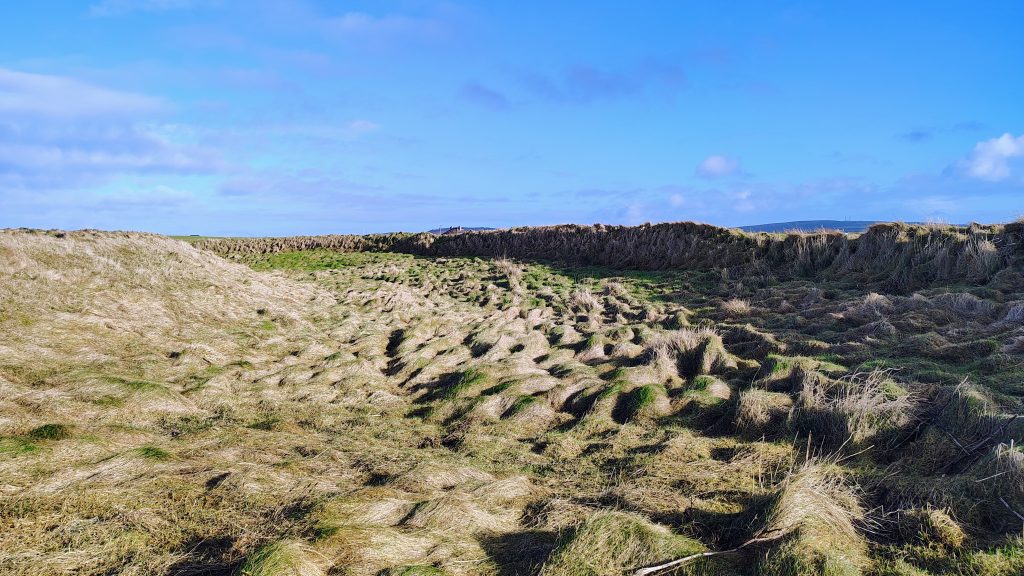
But as you get closer, you notice that this cairn is a good bit larger than the Wideford Hill one! Not only is this completely constructed from the ground up (rather than into the side of a hill), it’s also surrounded by a moat dug out of the bedrock.
Now unfortunately, you can’t take photos inside Maeshowe Cairn. So here is a photo of a placard from the UNESCO World Heritage Site info board nearby, which I will use to gush about this cairn for a severely long time:
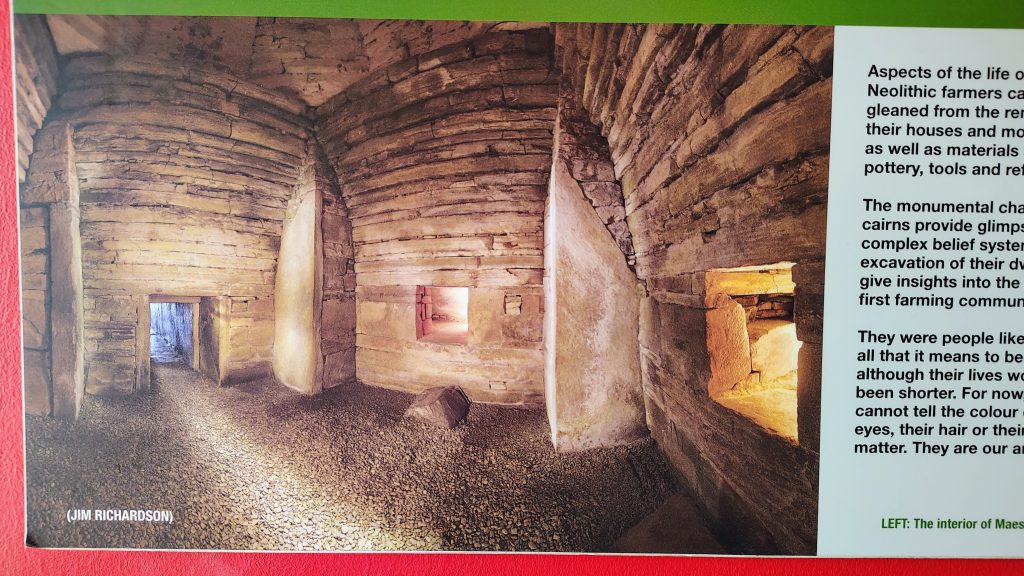
Maeshowe Cairn is beyond impressive. The entire cairn is a 15′ by 15′ square chamber with gently sloping walls rising to about 20′ above you. At he corners of the room are these huge 10′-high flagstones with diagonal tops that hold up the roof and retaining walls. The cairn itself is constructed out of even more flat, wide stones weighing up to 8 tons!
The cleverness and precision of construction of this cairn cannot be understated. All of the flat stones that make up the cairn walls are canted 3-4 degrees downwards on the far end, meaning any water that leaks in flows away from the center of the cairn and keeps it from flooding; the entire structure is also capped with a thick layer of clay to prevent any rainwater intrustion. The chambers within the cairn are three L-shaped compartments with entrance holes about 3′ x 3′ and opening to spaces about 4.5′ high, 5′ deep, and 7′ long. In front of each entrance hole is a keystone-shaped stone that is the same size and roughly the same shape as the entrance hole.
Now here is the interesting thing; archeologist can tell from the lack of wear on the chamber entrance holes and the keystones themselves that the keystones were never actually fit into the entrance holes. The keystones were simply placed in front of the entrance holes to evoke the idea of a door/plug/cap guarding the entrance to the chambers. What I learned from this (and many other amazing stories from the tour guide) is that the ancient Orcadians possessed deep and impressive understanding of ritual and symbolism.
But what about the astronomical alignments I discussed earlier? Well, possibly because it was the most technically impressive of the of all the cairns on Orkney, Maeshowe Cairn also has the most impressive astrononimal alignment! Sunlight only shines through the entrance passage all the way back to the bone compartments for just a few minutes on one day per year: January 5th.
Wait, what? Why January 5th? Interesting reason! When it was built 5000 years ago, Maeshowe Cairn actually illuminated on the sunset of the winter solstice! But in the impossibly log intervening time, the axis of the entire fucking Earth has shifted several degrees meaning that the moment of illumination comes several days later than intended.
There’s so much more that’s technically impressive about Maeshowe Cairn: there was no north star when it was erected (Polaris wouldn’t come to sit atop the north pole for several thousand more years), so the Orcadians used other techniques entirely for finding the astronomical alignment. If you light a small fire in the center of the cairn, the smoke rises in a helical pattern towards the ceiling before escaping, evoking the feeling of souls rising into some skyward afterlife. The cairn even has built-in acoustic properties that reverberate deep, rumbling sounds and chants. When the Paris Freaking Opera House was finished in 1875, the chief architect admitted to having no clue whatsoever why the building had good acoustic properties; the Orcadians were designing for it a millenium before the pyramids went up!!!!
Pardon my French, but is that fucking nuts?!?!?!?! That’s goddamn incredible!!!
I could barely contain my excitemet while talking to the tour guide. I eventually stammered out that the chief or family of leaders buried there must have been very influential.
“Oh, no, everyone was buried here!” Said the tour guide.
“Wait, what, everyone?” I responded.
“Yeah, pretty much everyone! We DNA tested the bones from this and other cairns and none of them segregate any of the bones by any characteristic. Each chamber has old and young bones, male and female and androgynous bones, bones of farmers and herdsmen and laborers alike. They aren’t organized into kinship or familial groups as far as we can tell. The grave goods that accompanied them were also uniformly distributed, indicating their was little to no social heirarchy that we would recognize today.”
Now THAT blew me out of the water! I thought for certain any monument this impressive would have been built for a ruler, or a priest, or for someone or something of note.
“Nope!” Continued the tour guide, “their society was almost completely egalitarian. How else would you convince people to help build something this impressive and work-intensive if they weren’t going to get something out of it themselves?”
And I honestly didn’t have any answer for that! I don’t pay my taxes because I like the services I receive for them (although I do like things like roads and bridges and schools and libraries); at a very fundamental level, I pay my taxes because I don’t want to go to jail! To think that the Orcadians solved this dichotomy 5000 freaking years ago blew away my understanding of their whole society.
God, what an amazing place!
An hour in the cairn was not enough; a semester of learning about the cairn would probably not be enough for me, but the tour only lasts so long, and I had to move on.
But not move very far!
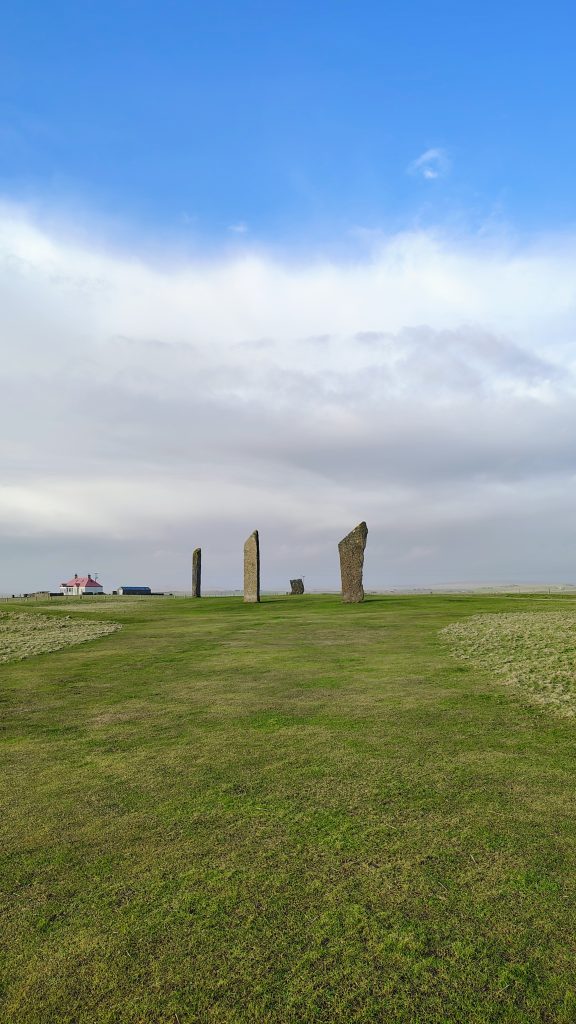
Barely 300 freaking yards from Maeshowe Cairn are the stones of Stenness, a henge of standing stones:
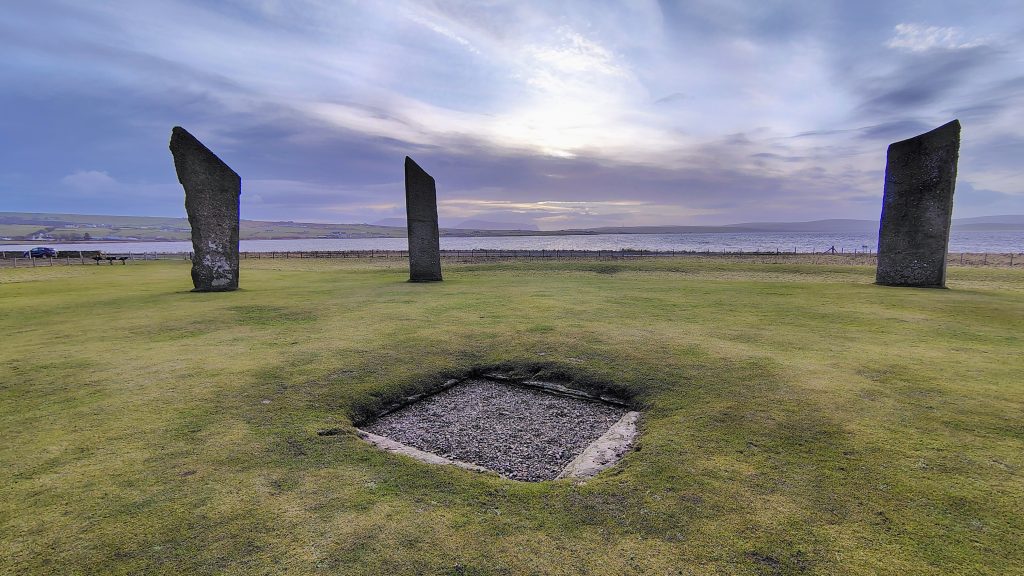
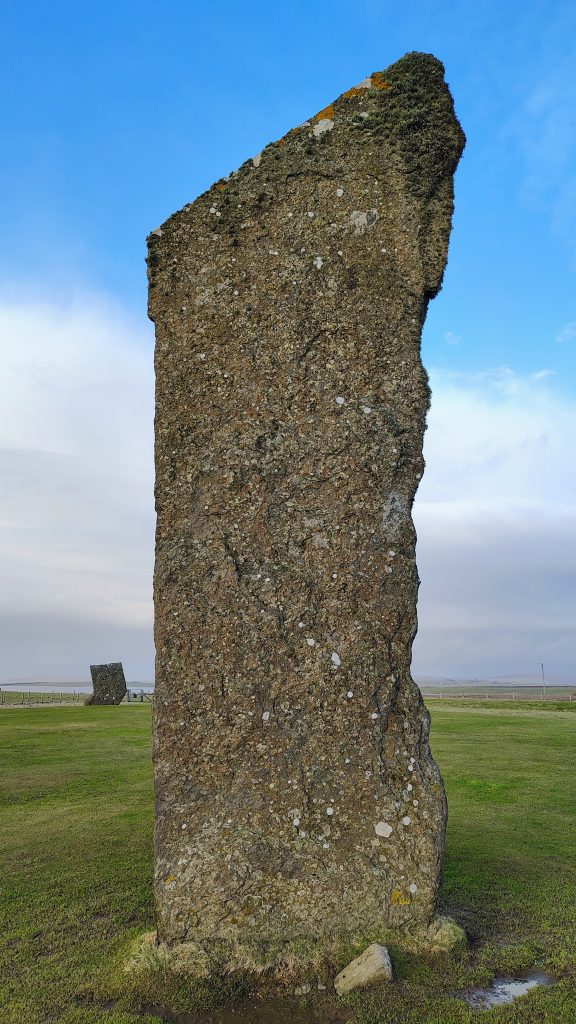
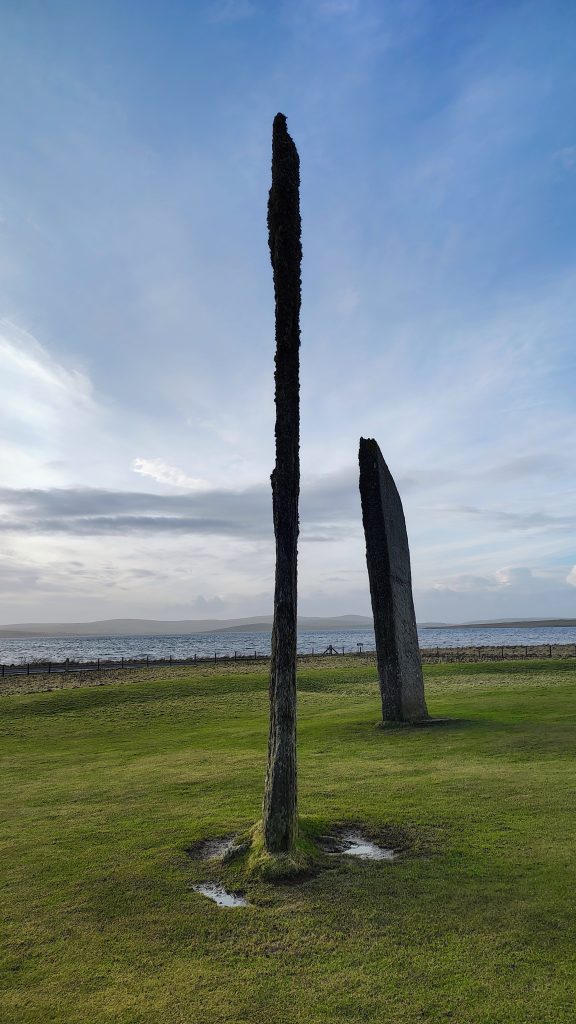
The stones are huge, wide flags made out of sandstone and arranged in a circle around a central fire pit. There is an astronomical alignment to these stones, but it wasn’t used as some giant calender a la Stonehenge, the Stones of Stenness only indicated a few solstices, equinoxes, and other dates throughout the year. Archeological evidence suggests that the stones were used as a common gathering place where townsfolk would meet, greet, and eat together periodically throughout the year.
Wait, townsfolk?
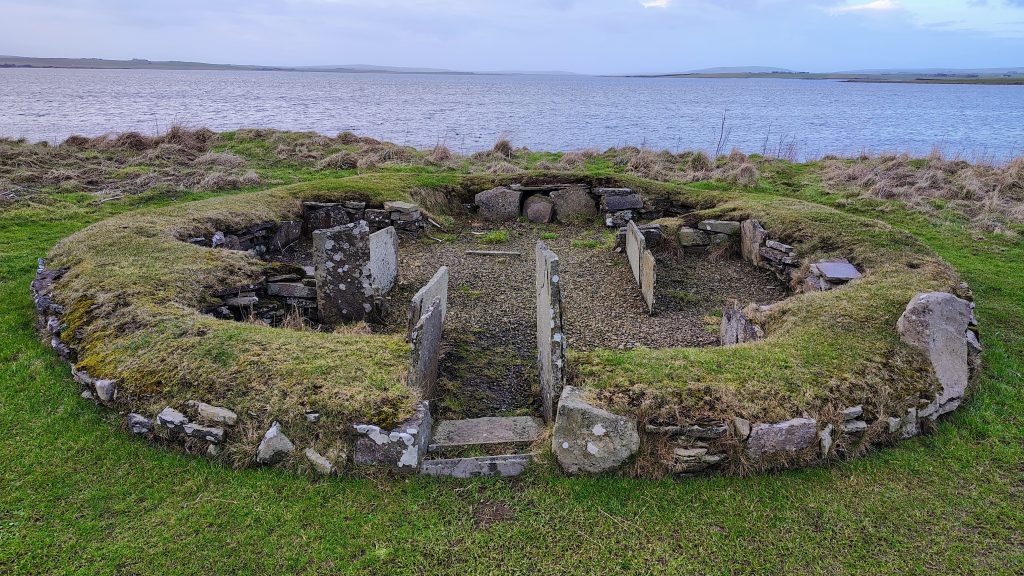
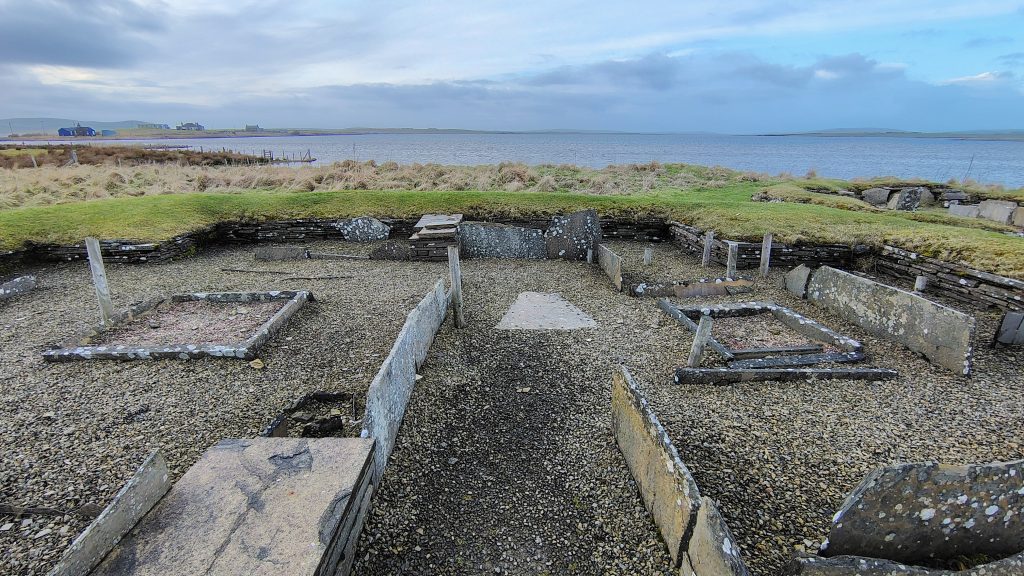
Yup, townsfolk! Because barely two hundred feet from the Stenness Stones is Barnhouse Village, a contemporaneous site which hosted a dozen or so families!
And you know what’s just a two-minute drive from that? The Ness of Brodgar, the oldest and largest neolithic village yet discovered on the islands, hosting several dozen families!
And you know what’s just a five-minute walk from that?
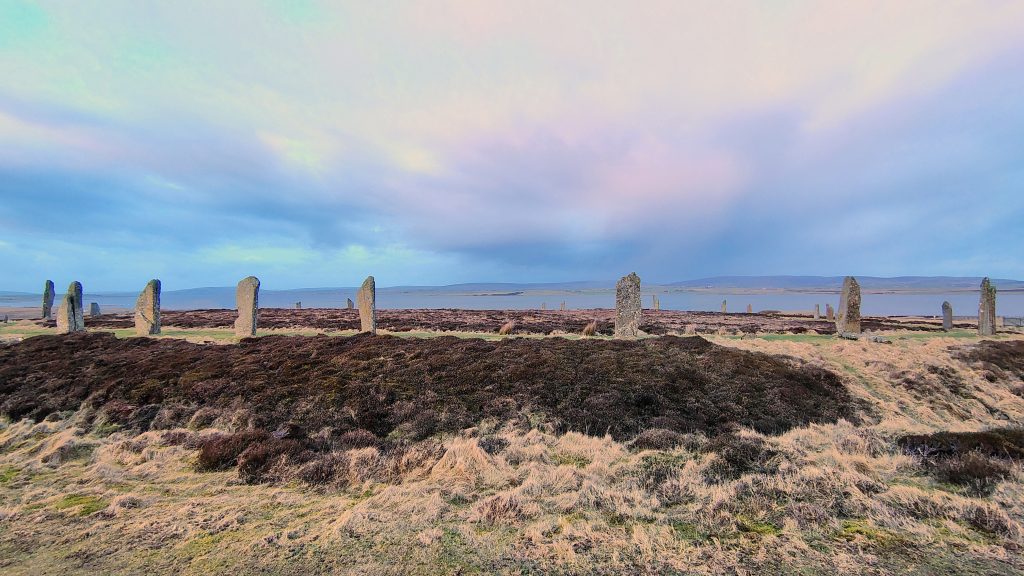
The Ring of Brodgar, a henge of 60 multi-ton stones marking dozens of ceremonial and ritual days throughout the neolithic calendar!
And these keep going on and on! There are dozens upon dozens of these ancient sites all within walking distance of one another! There’s something like 450 excavated sites on the island itself! Again, I cannot stress enough, these islands are positively LITTERED with the ancient world!!!!!!!
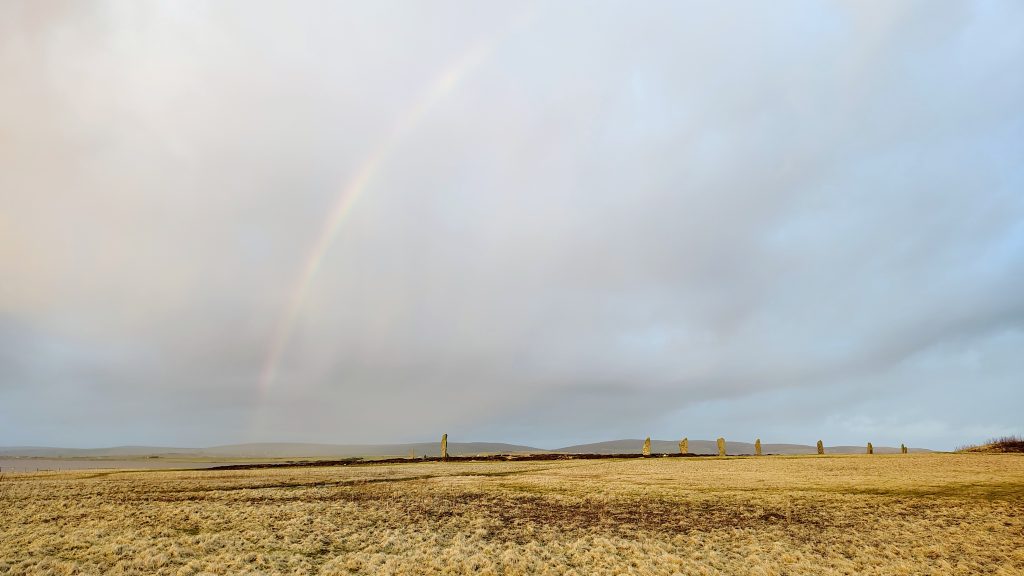
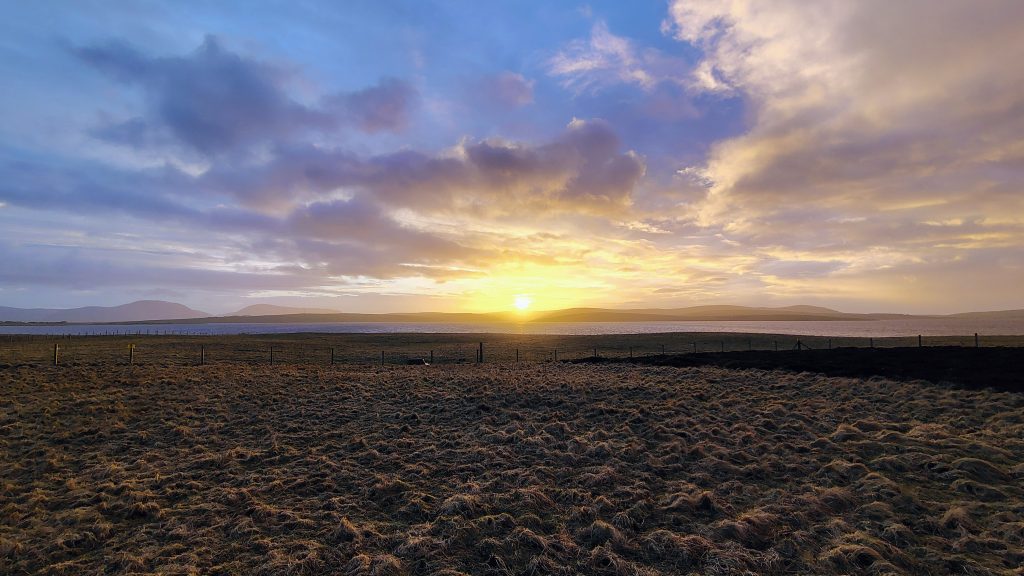
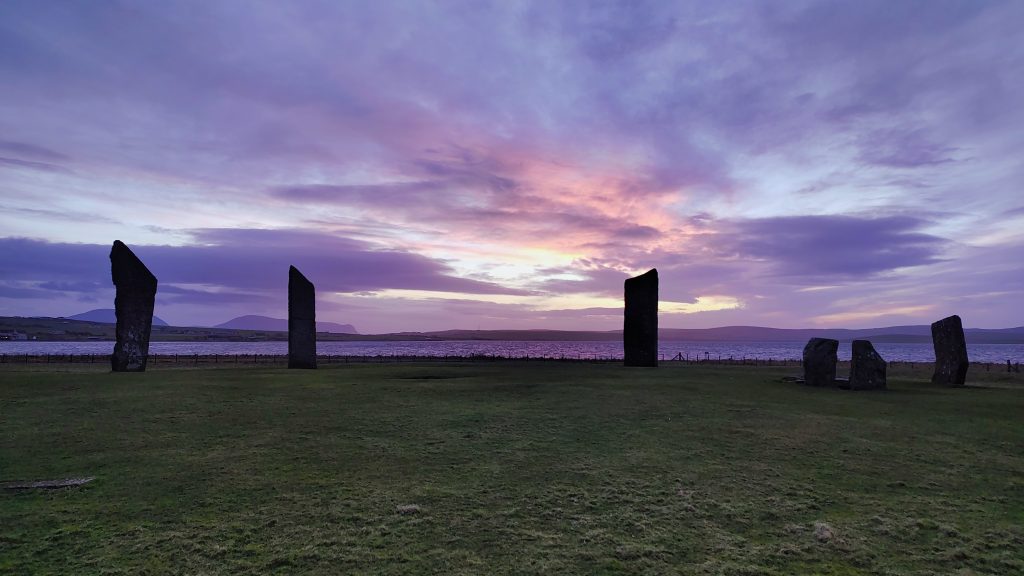
Guys, I lost my freaking mind seeing it all. It was beyond belief; there is a place in the world were you can walk through the houses, towns, and graves of people who lived five millenia ago without so much as paying a state park entrance fee. How is this possible? How does this physically exist? How did all this survive in a way and extent that we can appreciate it so thoroughly? How can we learn and know and feel so much about a people who did not write, whose spoken language we will never know, whose descendants too are sunk forever in the depths of time immemorial?
How many more times will I mix up the turn signal and the windshield wiper in this righthand-drive rental car???
These and other mysteries, we may just never know the answers to ¯\_(ツ)_/¯.
I asked this cat, but he didn’t know either (probably because he’s orange).
I could gush and gush and gush about Maeshowe Cairn for hours and hours and hours. And I probably will! It’s my blog, after all 😉 Did you notice how the slanted tops of the Stones of Stenness matched the slants in the four main flagstones of Maeshowe Cairn? I really thing that was intentional, that the builders of each were trying to evoke a motif of rising and growing and transitioing into another space, as fuel and air and fire transition into light and heat and smoke! You’ll see that motif repeated in a lot more photos on these beautiful islands! But so I don’t bore you via text any more than I could bore you in real life, here is one more aspect of the cairns of Orkney on which I want to equivocate:
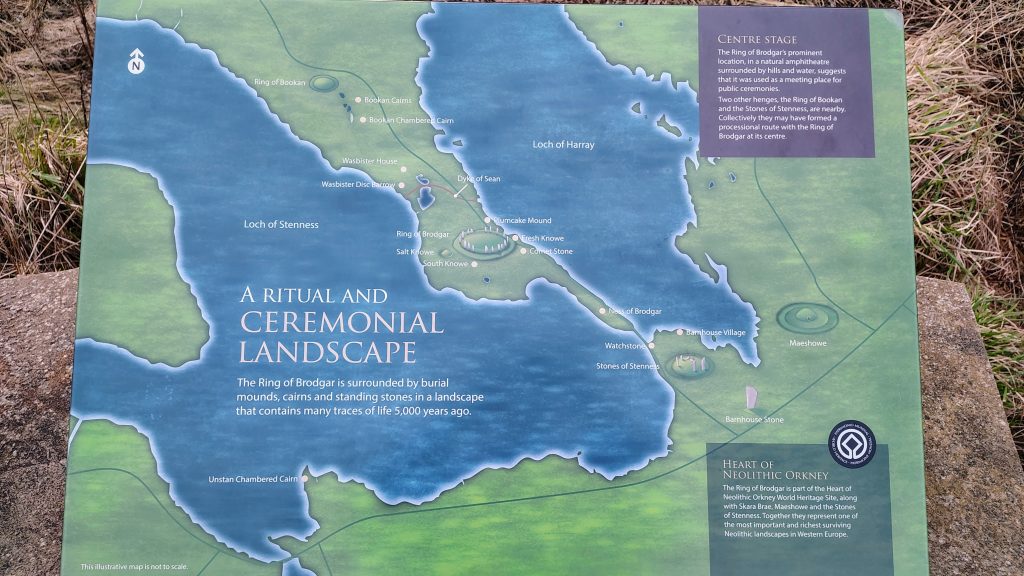
Maeshowe Cairn, the Barnhouse Village, the Stenness Stones, the RIing of Brodgar, they’re all built on this narrow isthmus between two lakes. The shorelines were slightly lower 5000 years ago, so the isthmus was a bit wider, but also muddier and swampier at its narrowest point. It’s very much this precipice between the land and the water, where these opposing forces meld and morass together. It’s not hard to imagine game trails bottlenecking through this area, animals and fish alike passing through in opposing, but intersecting directions. Birds probably followed course, and humans after that sometime after the glaciers retreated.
Maeshowe Cairn is built on a slight rise above the lakes, adding a third, skyward dimension to the landscape. It’s made out of stone, out of land, rising up in to the sky. Maybe that moat filled up with water after a heavy rain of some kind. More intersection, more precipice.
Maeshow Cairn was only illuminated by the sun at sunset (the precipice between day and night) on the winter solstice (the precipice of light and dark, when the days start to get longer again). Imagine waiting for an entire year, to the very end of the year, to the end of the day, waiting for the waning light to break through those clouds, to shine through the Cairn-door at the only moment it could, and bring life and warmth and heat back into the graves and bones and souls of your loved ones again.
And maybe, just maybe, as all these axes of Earth and sea and sky and season and day and night and time converged, all meld, all morass, all peace and precipice, the paths of the living and the dead would intersect once more, and you wouldn’t be some lone soul standing at the edge of the world; you’d be part of the continuum of it all, its witness and its bearer, its future and its past and its all-encompassing present.
I couldn’t be happier that I get to be a part of it all 💙.
Thats all for now,
Stay well everyone,
Evan 💙